Summary

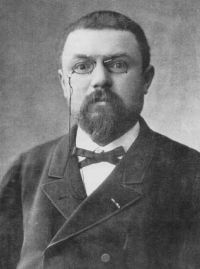
Portrait of Henri Poincaré Henri Poincaré The Foundations of Science — SCIENCE AND HYPOTHESIS (1913)

What is the service of a philosophy of science, when it is certain that the philosophy of science which is best suited to the needs of one generation must be superseded by the advancing insight of the next generation? Why must that which endlessly grows, namely, man’s knowledge of the phenomenal order of nature, be constantly united in men’s minds with that which is certain to decay, namely, the theoretical formulation of special knowledge in more or less completely unified systems of doctrine?
Source: Wikisource

Portrait of Henri Poincaré Henri Poincaré The Foundations of Science — SCIENCE AND HYPOTHESIS (1913)

Never has there been better reason than there is to-day to be content, if rational man could be content, with a pure positivism. The splendid triumphs of special research in the most various fields, the constant increase in our practical control over nature—these, our positive and growing possessions, stand in glaring contrast to the failure of the scientific orthodoxy of a former period to fix the outlines of an ultimate creed about the nature of the knowable universe.
Source: Wikisource

Portrait of Henri Poincaré Henri Poincaré The Foundations of Science — SCIENCE AND HYPOTHESIS (1913)

If this is indeed the lesson, then the decline of theoretical orthodoxy in science is—like the eclipse of dogma in religion—merely a further lesson in pure positivism, another proof that man does best when he limits himself to thinking about what can be found in human experience, and in trying to plan what can be done to make human life more controllable and more reasonable.
Source: Wikisource

Get perspective with Kwize: daily news enlightened by great literature