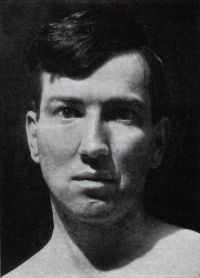
Robert Graves

Robert Graves

Summary

Portrait of Robert Graves Robert Graves,  On English Poetry

“ I have often heard it said that a poet in intervals between inspirations should keep his hand in by writing verse-exercises, but that he should on such occasions immediately destroy what he has written.
That seems all wrong, it is an insult to the spontaneity of true poetry to go through a ritual farce of this sort and the poet will only be blunting his tools. He ought not to feel distressed at the passage of time as if it represented so many masterpieces unwritten. If he keeps mentally alive and has patience, the real stuff may arrive any moment
”
Source: Gutenberg

Portrait of Robert Graves Robert Graves,  On English Poetry

“ Between verse, bad poetry and fake poetry, there is a great distinction. Bad poetry is simply the work of a man who solves his emotional problems to his own satisfaction but not to anybody else’s. Fake poetry, the decay of poetry, corresponds exactly with fake magic, the decay of true magic. It happens that some member of the priestly caste, finding it impossible to go into a trance when required, even with the aid of intoxicants, has to resort to subterfuge. ”
Source: Gutenberg

Portrait of Robert Graves Robert Graves,  On English Poetry

“ Now, I had been long pondering about certain paradoxical aspects of Poetry and, particularly, contrasting the roaring genius of Christopher Marlowe with that of his gentle contemporary Shakespeare; so, standing there watching the ceremonial drill, I fancifully made the officer in command of the guard, a young terror from Sandhurst, into a Marlowe strutting, ranting, shouting and cursing—but making the men move; then I imagined Shakespeare in his place. Shakespeare would never have done to command a guard of honour, and they would have hated him at Camberley or Chelsea. ”
Source: Gutenberg

Get perspective with Kwize: daily news enlightened by great literature