Aristippus of Cyrene

Definition and stakes

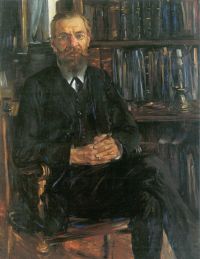
Portrait of John Lemprière John Lemprière A classical dictionary (1904)

Aristippus, the elder, a philosopher of Cyrene, disciple to Socrates, and founder of the Cyrenaic sect. He was one of the flatterers of Dionysius of Sicily, and distinguished himself for his epicurean voluptuousness, in support of which he wrote a book, as likewise a history of Libya. When travelling in the deserts of Africa, he ordered his servants to throw away the money they carried, as too burdensome.
Source: Gutenberg

J. Marshall A Short History of Greek Philosophy

Among his notable disciples were his daughter Arete, her son named Aristippus after his grandfather, Ptolemaeus the Aethiopian, Antipater of Cyrene, and a long succession of others.
Aristippus was a man of considerable subtlety of mind, a ready speaker, clever in adapting himself to persons and circumstances. On one occasion, being {125} asked what benefit he considered philosophy had conferred upon him, he answered, "The capacity of associating with every one without embarrassment."
Source: Gutenberg

conte Baldassarre Castiglione The Book of the Courtier (1901)

Aristippus, (flor. 400 B.C.) , was a Greek philosopher, whose school took its name from his birthplace, Cyrene in Africa. He was for some time a follower of Socrates, and afterwards lived at the court of Dionysius, tyrant of Syracuse. Diogenes Laertius relates that when Aristippus was asked what was the greatest thing he had gained from philosophy, he replied: “The power to meet all men with confidence.”
Note 119 page 60. Among Plutarch’s works is a tract entitled “How to Tell Friend from Flatterer.” In 1532 Erasmus published a Latin version of it dedicated to Henry VIII of England.
Source: Gutenberg

Get perspective with Kwize: daily news enlightened by great literature