“ Hitherto we have been considering Irish evidence for the existence and nature of early Celtic culture, and chiefly that afforded by literary monuments. It is upon documents, partly literary, partly historical, collated with and controlled by folk-usage, that a suggestive and brilliant attempt to penetrate to the myth and ritual of the Continental Celts is based. ”
Celtic culture
Definition and stakes
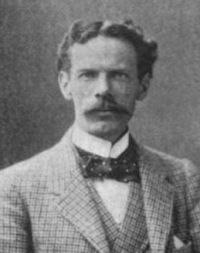
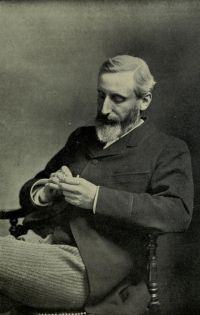
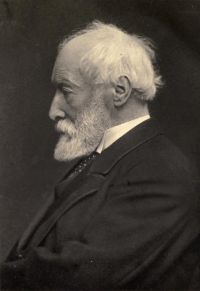
Celtic culture encompasses the traditions, beliefs, and artistic expressions of the ancient Celtic peoples, spanning regions from Britain to continental Europe. Scholars such as Harold Peake explored its Bronze Age origins, while Ruth Ellis Messenger underscored its impact on medieval learning. The 1911 Encyclopædia Britannica observed Celtic art’s intricate, nature-inspired designs, and J.
A. MacCulloch stressed its mythological depth, including depictions of an Otherworld. From folklore to religious iconography, Celtic culture reveals a complex interplay of oral tradition, ritual, and artistic ingenuity, as demonstrated by its lasting influence in literature and historical study.
Quotes about “Celtic culture”
Portal:The Folk-Lore Society, Folk-Lore (1897)
“ I believe that the fairy creed, this ancient source of inspiration, of symbolic interpretation of man's relation to nature, is not yet dried up, and that English literature, with its mixed strain of Teutonic and Celtic blood, with its share in the mythologies of both these races, and in especial with its claim to the sole body of mythology and romance, the Celtic, which grew up wholly unaffected by classic culture, is destined to drink deeply of it in the future as in the past, and to find in it the material for new creations of undying beauty. ”
Ruth Ellis Messenger, The Medieval Latin Hymn
“ Carolingian culture not only in the specific field of literature but in the broader sense afforded a medium for the spread of Celtic, Byzantine and Germanic genius. The Celtic portion of the poetry in the early monastic cycles has already been described in connection with the Old Hymnal. Prior to the eighth century, a transfer of Celtic scholarship to the continent began to take place. The missionaries, Columbanus, Gall, Foilan, Disibod and others, came first, during the seventh and eighth centuries. ”
1911 Encyclopædia Britannica, Volume 4… (1911)
“ In art, these tribes possessed a native Late Celtic fashion, descended from far-off Mediterranean antecedents and more directly connected with the La-Tène culture of the continental Celts. Its characteristics were a flamboyant and fantastic treatment of plant and animal (though not of human) forms, a free use of the geometrical device called the “returning spiral,” and much skill in enamelling. Its finest products were in bronze, but the artistic impulse spread to humbler work in wood and pottery. The late Celtic age was one which genuinely delighted in beauty of form and detail. ”
Harold Peake,
The Bronze Age and the Celtic World
“ Though after the close of Azilian times the culture of Celtic lands changed more than once and in more respects than one, we have at present no reason for suspecting the introduction of fresh racial elements before the beginning of the Bronze Age. The origin of Campignian culture, which seems to have flourished over the northern part of Celtic lands, in one form or another, from about 5000 to 3500 B.C., is still a matter of dispute, but it is doubtful whether the solution of the problem is likely to introduce a fresh element into the population of the Celtic lands. ”
D. H. Lawrence,
Sea and Sardinia
“ Ah, those old, drystone walls dividing the fields—pale and granite-blenched! Ah, the dark, sombre grass, the naked sky! the forlorn horses in the wintry morning! Strange is a Celtic landscape, far more moving, disturbing than the lovely glamor of Italy and Greece. Before the curtains of history lifted, one feels the world was like this—this Celtic bareness and sombreness and air. But perhaps it is not Celtic at all: Iberian. Nothing is more unsatisfactory than our conception of what is Celtic and what is not Celtic. ”
Alfred Trübner Nutt,
Studies on the Legend of the Holy Grail
“ Celtic tradition is not only rich and varied beyond all others in this respect, it often thus secures its chief artistic effects. The talismans of Celtic romance, the fairy branch of Cormac, the Ga-bulg of Cuchullain, the sounding-hammer of Fionn, the treasures of the Boar Trwyth after which Prince Kilhwch sought, the glaives of light of the living folk-tale, have one and all a weird, fantastic, half-human existence, which haunts and thrills the imagination. ”
William Duguid Geddes,
Historical characteristics of the Celtic race
(1885)
“ This brings us to say a word on the kindred theme of the religious sentiment of the Celtic race, their inborn reverential feeling, one of their most prominent and honourable characteristics. Like the romantic sentiment we have just been considering, which has drawn the Celtic mind toward the mystery of Nature, it is a plant rooted and grounded in the same soil, nurtured by the dews of the same Idealism. ”
J. A. MacCulloch, The Religion of the Ancient Celts
“ Many races have imagined a happy Other-world, but no other race has so filled it with magic beauty, or so persistently recurred to it as the Celts. They stood on the cliffs which faced the west, and as the pageant of sunset passed before them, or as at midday the light shimmered on the far horizon and on shadowy islands, they gazed with wistful eyes as if to catch a glimpse of Elysium beyond the fountains of the deep and the halls of the setting sun. In all this we see the Celtic version of a primitive and instinctive human belief. ”
John Arnott MacCulloch, The Mythology of All Races/Volume 3 (1918)
“ Some of them became the greater gods, while others assumed a darker character, perhaps because they were associated with sinister aspects of nature or with the dead. The Celts knew all these, and some still linger on in folk-belief. Fairy-like or semi-divine women seen by streams or fountains, or in forests, or living in lakes or rivers, are survivals of spirits and goddesses of river, lake, or earth; and they abound in Celtic folk-story as bonnes dames, dames blanches, fées, or the Irish Bé Find. ”
Lyra Celtica: An Anthology of Representative Celtic Poetry
“ After having exercised all the godly and worldly chivalries, sought with Pérédur the Holy Graal and the Beautiful, dreamed with Saint Brandan of mystical Atlantides, who knows what the Celtic genius would produce in the domain of the intelligence if it should embolden itself to make its entrance into the world, and if it subjected its rich and profound nature to the conditions of modern thought? Few races have had a poetical infancy as complete as the Celtic—mythology, lyricism, epic, romanesque imagination, religious enthusiasm, nothing have they lacked. ”
George William Russell,
AE in the Irish Theosophist
“ For so the eternal Beauty brings itself to the memory of man from time to time brooding over nations, as in the early Aryan heart, suffusing life and thought with the sun-sense of pervading Deity, or as in Greece where its myriad rays, each an intuition of loveliness, descended and dwelt not only in poet, sage and sculptor, but in the general being of the people. What has been called the Celtic renaissance in literature is one of the least of the signs. ”
Matthew Arnold,
Celtic Literature
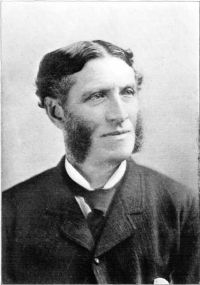
“ I, on certain terms, wish to make a great deal more of it than is made now; and I regard the Welsh literature,—or rather, dropping the distinction between Welsh and Irish, Gaels and Cymris, let me say Celtic literature,—as an object of very great interest. My brother Saxons have, as is well known, a terrible way with them of wanting to improve everything but themselves off the face of the earth; I have no such passion for finding nothing but myself everywhere; I like variety to exist and to show itself to me, and I would not for the world have the lineaments of the Celtic genius lost. ”
Matthew Arnold,
Celtic Literature
“ Few of us have any notion what a mass of Celtic literature is really yet extant and accessible. One constantly finds even very accomplished people, who fancy that the remains of Welsh and Irish literature are as inconsiderable by their volume, as, in their opinion, they are by their intrinsic merit; that these remains consist of a few prose stories, in great part borrowed from the literature of nations more civilised than the Welsh or Irish nation, and of some unintelligible poetry. ”
Matthew Arnold,
Celtic Literature
“ But, at any rate, let us consider that of the shrunken and diminished remains of this great primitive race, all, with one insignificant exception, belongs to the English empire; only Brittany is not ours; we have Ireland, the Scotch Highlands, Wales, the Isle of Man, Cornwall. They are a part of ourselves, we are deeply interested in knowing them, they are deeply interested in being known by us; and yet in the great and rich universities of this great and rich country there is no chair of Celtic, there is no study or teaching of Celtic matters; those who want them must go abroad for them. ”
William Duguid Geddes,
Historical characteristics of the Celtic race
(1885)
“ Yet, without claiming such superlative potency for the Celtic intellect and character, we may feel confident that it has a distinctive differentia of its own which makes it worthy of our homage, worthy, therefore, of our efforts to preserve it, a peculiar aroma attaching to it, a sparkling, yet tender old-world weirdness which the world ought not willingly to let die. ”
T. G. Tucker,
The foreign debt of English literature
(1907)
“ Not in Germany, not in Italy, not in Provence, not in Spain, did these stories of knightly loyalty and uttermost honour and devotion take their rise. It was in Northern France, where Franks and Normans were in contact with the large Celtic remnants of the Bretons. In all these legends there speaks the Celtic voice, rememberable and distinguishable everywhere by its prevailing melancholy, its devotion to a cause, be that cause right or wrong, be it strong or weak. ”
Matthew Arnold,
Celtic Literature
“ That is just the expansive, eager Celtic nature; the head in the air, snuffing and snorting; a proud look and a high stomach, as the Psalmist says, but without any such settled savage temper as the Psalmist seems to impute by those words. For good and for bad, the Celtic genius is more airy and unsubstantial, goes less near the ground, than the German. The Celt is often called sensual; but it is not so much the vulgar satisfactions of sense that attract him as emotion and excitement ”
Grant Allen,
Falling in Love; With Other Essays on More Exact Branches of Science
“ No trace remains behind to tell us now by what fierce onslaught the Celtic invaders—for the bronze-age folk were presumably Celts—swept through the little Ogbury valley, and brained the men of the older race, while they made slaves of the younger women and serviceable children. Nothing now stands to tell us anything of the long years of Celtic domination, except the round barrow on the bare down, just as green and as grass-grown nowadays as its far earlier and more primitive neighbour. ”
Elizabeth A. Sharp,
William Sharp (Fiona Macleod): A Memoir Compiled by His Wife Elizabeth A. Sharp
“ What is called ‘the Celtic Renascence’ is simply a fresh development of creative energy coloured by nationality, and moulded by inherited forces, a development diverted from the common way by accident of race and temperament. The Celtic writer is the writer the temper of whose mind is more ancient, more primitive, and in a sense more natural than that of his compatriot in whom the Teutonic strain prevails. The Celt is always remembering; the Anglo Saxon has little patience which lies far behind or far beyond his own hour. ”
Alfred Trübner Nutt,
Studies on the Legend of the Holy Grail
“ And no race has done this more unmistakably than the Celtic. Stories which go back to the first century, stories taken down from the lips of living peasants, have a kinship of tone and style, a common ring which no one who has studied this literature can fail to recognise. What stamps the whole of it is the prevailing and abiding spirit of romance. To rightly urge the Celtic character of the Arthurian romances would require the minute analysis of many hundred passages, and it would only be proving a case admitted by everyone who knows all the facts. ”
H. E. Marshall, English Literature for Boys and Girls
“ It is thus from Anglo-Saxon, and not from Gaelic or Cymric, that the language we speak to-day comes.Yet our Celtic forefathers have given something to our literature which perhaps we could never have had from English alone. The Celtic literature is full of wonder, it is full of a tender magic and makes us feel the fairy charm of nature, although it has not the strength, the downrightness, we might say, of the English. It has been said that every poet has somewhere in him a Celtic strain. ”
William Duguid Geddes,
Historical characteristics of the Celtic race
(1885)
“ The Celtic race, as we know, occupies the outlying promontories of Western Europe, having been pushed in the pressure of the ages into remote fastnesses and picturesque, but shadowy, glens overlooking the western main. Brittany, Ireland, Wales, and our Western Highlands stand out as the fortresses of the Gael, the bluffs and promontories to which the Celtic speech has now retired. But although the Celtic-speaking population is thus squeezed into a corner, the Celtic element in Europe is of much wider extension, and is not limited to the Celtic-speaking area. ”
Harold Peake,
The Bronze Age and the Celtic World
“ It is because the Celtic tongues, whether qu or p, are spoken chiefly by people of this small brunette type, that it is frequently called the Celtic race, and yet all the evidence of ancient authorities goes to show that 2,000 or 2,500 years ago the Celts were looked upon as a tall, fair people. ”
Lyra Celtica: An Anthology of Representative Celtic Poetry
“ Restricted by conquest to forgotten isles and peninsulas, the Celtic race has habitually striven to oppose an impassable barrier to all alien influences. It has ever trusted in itself, and in itself alone, and has drawn its mental and spiritual nurture from its own resources.Hence that powerful individuality, that hatred of the stranger, which up to our day has formed the essential characteristic of the Celtic peoples. The civilisation of Rome hardly reached them, and left among them but few traces. The Germanic invasion flowed back on them, but it did not affect them at all. ”
William Duguid Geddes,
Historical characteristics of the Celtic race
(1885)
“ At the dawn of recorded history, we find the Celt already occupying a vast area of Western Europe, and exercising a wide ascendancy. We know of no period during which he is not in possession; we find him always in the stream of history, never in the fountain. From low down the Danube, along by the ridges of the Alps, we discern his tribes entrenched; and the topography of Western and Middle Europe, in so far as its river names and mountain names are concerned, rests on a Celtic basis, and is unintelligible, unless from Celtic roots, even in regions from which the Celtic race has long retired. ”
Lyra Celtica: An Anthology of Representative Celtic Poetry
“ But, alas, a stronger law than that which man can make or unmake, or nations can resolve, is slowly disintegrating the subsoil wherefrom the roots of the Celtic speech draw the sole nurture which can give it the beauty and fragrance of life.Some idea of the vastness of the mass of the as yet untranslated Celtic literature may be had from the notes in books by Dr Douglas Hyde, J. F. Campbell, Alfred Nutt, and other specialists. ”
T. W. Rolleston,
Myths & Legends of the Celtic Race
“ The great difficulty in understanding the evolution of Celtic art lies in the fact that although the Celts never seem to have invented any new ideas, they possessed an extraordinary aptitude for picking up ideas from the different peoples with whom war or commerce brought them into contact. ”
Selections from Ancient Irish Poetry
“ Her sons, carrying Christianity and a new humanism over Great Britain and the Continent, became the teachers of whole nations, the counsellors of kings and emperors. For once, if but for a century or two, the Celtic spirit dominated a large part of the Western world, and Celtic ideals imparted a new life to a decadent civilisation until they succumbed, not altogether to the benefit of mankind, before a mightier system—that of Rome. ”
Immanuel Kant,
Literary and Philosophical Essays…
“ One can understand how greatly this invincible attraction to fables must have discredited the Celtic race in the eyes of nationalities that believed themselves to be more serious. It is in truth a strange thing, that the whole of the mediaeval epoch, whilst submitting to the influence of the Celtic imagination, and borrowing from Brittany and Ireland at least half of its poetical subjects, believed itself obliged, for the saving of its own honour, to slight and satirise the people to which it owed them. ”
Matthew Arnold,
Celtic Literature
“ Even the extravagance and exaggeration of the sentimental Celtic nature has often something romantic and attractive about it, something which has a sort of smack of misdirected good. The Celt, undisciplinable, anarchical, and turbulent by nature, but out of affection and admiration giving himself body and soul to some leader, that is not a promising political temperament, it is just the opposite of the Anglo-Saxon temperament, disciplinable and steadily obedient within certain limits, but retaining an inalienable part of freedom and self-dependence ”