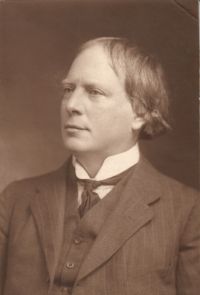
 Arthur Machen,
The Hill of Dreams
(1907)
Arthur Machen,
The Hill of Dreams
(1907)
“ This then was English fiction, this was English criticism, and farce, after all, was but an ill-played tragedy. ”
Arthur Machen,
The Hill of Dreams
(1907)
“ This then was English fiction, this was English criticism, and farce, after all, was but an ill-played tragedy. ”
 Agnes Repplier,
Essays in Miniature
(1892)
Agnes Repplier,
Essays in Miniature
(1892)
“ AMID the universal grayness that has settled mistily down upon English fiction, amid the delicate drab-colored shadings and half-lights which require, we are told, so fine a skill in handling, the old-fashioned reader misses, now and then, the vivid coloring of his youth. ”
Anonymous, How to Write a Novel: A Practical Guide to the Art of Fiction
“ Having secured the practical monopoly of literature, what do the novelists propose to do next? To what use will they put the unprecedented opportunity thrown in their way? It is quite plain that to a certain extent the material out of which the English novel has been constructed is in danger of becoming exhausted. Why do the American novelists inveigh against plots? Not, we may be sure, through any inherent tenderness of conscience, as they would have us believe; but because their eminently sane and somewhat timid natures revolt against the effort of inventing what is extravagant. ”
 Bram Stoker,
The Mystery of the Sea
(1902)
Bram Stoker,
The Mystery of the Sea
(1902)
“ It is not meat for little people or for fools; but for those who care for English fiction as a vehicle of the constructive intellect, building up types of living humanity for our study, it will be a new revelation of strength, and strange, serious beauty. ”
Richard Burton, Masters of the English Novel: A Study of Principles and Personalities
“ And the English Novel, written by so many tentatively during these fifty years when the form was a-shaping, culminates at the turn of the century in two contrasted authors compared with whom all that went before seems but preparatory; one a man, the other a woman, who together express and illustrate most conveniently for this study the main movements of modern fiction,—romance and realism,—the instinct for truth and the instinct for beauty; not necessarily an antagonism, as we shall have ample occasion to see, since truth, rightly defined, is only "beauty seen from another side." ”
Richard Burton, Masters of the English Novel: A Study of Principles and Personalities
“ Again, the seriousness which has always, in one guise or the other, underlain English fiction, soon crystalized in the contemporary eighteenth century novelists into an attempt to preach this or that by propaganda in story-form. ”
 George Saintsbury,
The English Novel
George Saintsbury,
The English Novel
“ A crowd of fantastic imaginings or additions, to supply the main substance, and a certain common-sense grasp of actual conditions and circumstances to set them upon, and contrast them with—these are the great requirements of Fiction in life and character. You must mix prose and poetry to get a good romance or even novel. The consciences of the ancients revolted from this mixture of kinds; but there was no such revolt in the earlier moderns, and least of all in our own mediæval forefathers. ”
William James Harris, The First Printed Translations into English of the Great Foreign Classics
“ These stories enjoyed a wide vogue in France and England, and formed matter for the exploitation of every class of our Elizabethan dramatists or writers of fiction. They have a particular interest to students of English literature as having furnished, whether directly or indirectly, the plots of 'Measure for Measure', and 'Othello'. ”
Reuben Post Halleck, History of American Literature
“ To-day we know that certain novels are as dangerous to the soul as leprosy to the body, but we have become more discriminating. We have learned that the right type of fiction, read in moderation, cultivates the imagination, broadens the sympathetic powers, and opens up a new, interesting, and easily accessible land of enjoyment.A quarter of a century before the Declaration of Independence, the great eighteenth-century English writers of fiction had given a new creation to the literature of England. ”
G. H. Mair, English Literature: Modern
“ The characteristic form of English fiction, that in which the requisite illusion of the complexity and variety of life is rendered by discursiveness, by an author's licence to digress, to double back on himself, to start may be in the middle of a story and work subsequently to the beginning and the end ”
Richard Burton, Masters of the English Novel: A Study of Principles and Personalities
“ It is because this modern form of fiction upon which we fix the name Novel to indicate its new features has seized the idea of personality, has stood for truth and grown ever more democratic, that it has attained to the immense power which marks it at the present time. ”
George Saintsbury,
The English Novel
“ All these things and others are signs of an awakened conscience—of a sense of the fact that fiction, to be literature, must be something more than the relation of a bare fact, tragic, comic, or neutral—that the novelist is a cook, and must prepare and serve his materials with a sauce as much his own as possible, of plot, arrangement, character-drawing, scenery, conversation, reflection, and what not. ”
Clayton Meeker Hamilton, Materials and Methods of Fiction
“ There is, to be sure, a type of novel, which is generally called in English "the novel with a purpose," the aim of which is to persuade the reader to accept some special thesis that the author holds concerning politics, religion, social ethics, or some other of the phases of life that are readily open to discussion. ”
 William J. Long,
Outlines of English and American Literature
William J. Long,
Outlines of English and American Literature
“ Compare now these old romances with Ivanhoe or Robinson Crusoe or Lorna Doone or A Tale of Two Cities. In each of the last-named novels one may find three elements: a story, a study, and an exercise of the creative imagination. A modern work of fiction must still have a good story, if anybody is to read it; must contain also a study or observation of humanity, not of superhuman heroes but of men and women who work or play or worship in close relationship to their fellows. ”
The Yellow Book, An Illustrated Quarterly…
“ These general considerations, already too far prolonged, become of immediate interest to us as soon as we attempt to apply them to the literature of our own half-century, and I propose concluding what I wished to say on the necessity of reticence by considering, briefly and without mention of names, that realistic movement in English literature which, under different titles, and protected by the ægis of [212] various schools, has proved, without doubt, the most interesting and suggestive development in the poetry and fiction of our time. ”
William J. Long,
Outlines of English and American Literature
“ Other critics arrange prose fiction in the following classes: novels of adventure (Robinson Crusoe, The Last of the Mohicans) , historical novels (Ivanhoe, The Spy) , romantic novels (Lorna Doone, The Heart of Midlothian) , novels of manners (Cranford, Pride and Prejudice) , novels of personality (Silas Marner, The Scarlet Letter) , novels of purpose (Oliver Twist, Uncle Tom's Cabin) .Still another classification arranges fiction under two heads, romance and realism. In the romance, which portrays unusual incidents or characters, we see the ideal, the poetic side of humanity ”
Richard Burton, Masters of the English Novel: A Study of Principles and Personalities
“ Certain other authors less distinguished than these, produced fiction of various kinds which also had some influence in the development, and further illustrate the tendency of the Novel to become a pliable medium for literary expression ”
George Saintsbury,
The English Novel
“ One of the best known, and one of the least intelligible, facts of literary history is the lateness, in Western European Literature at any rate, of prose fiction, and the comparative absence, in the two great classical languages, of what we call by that name. ”
 Samuel Johnson,
Lives of the English Poets
Samuel Johnson,
Lives of the English Poets
“ He had employed his mind chiefly on works of fiction, and subjects of fancy; and, by indulging some peculiar habits of thought, was eminently delighted with those flights of imagination which pass the bounds of nature, and to which the mind is reconciled only by a passive acquiescence in popular traditions. He loved fairies, genii, giants, and monsters; he delighted to rove through the meanders of enchantment, to gaze on the magnificence of golden palaces, to repose by the waterfalls of Elysian gardens. ”
Representative English Comedies…
“ But it seems clear enough that English folk-lore must be the mainstay of critics who think all is done for a work of literature when they have found out every possible and impossible source for plot, sideplot, and allusion. ”
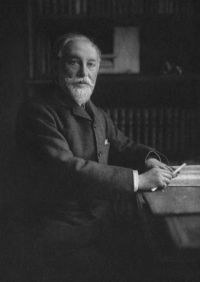 Frederic Harrison,
Studies in Early Victorian Literature
Frederic Harrison,
Studies in Early Victorian Literature
“ Much less do I permit myself to speak of those living lights of literature from whom we may yet receive work even surpassing that of those who are gone. My aim has been not so much to weigh each writer in the delicate balance of mere literary merit, but rather, from the point of view of the historian of ideas and of manners, to record the successive influences which, in the last fifty years or so, have moulded or reflected English opinion through printed books, be they of the dogmatic or of the imaginative order. ”
Clayton Meeker Hamilton, Materials and Methods of Fiction
“ Turning our attention from the epic and the drama, and confining it to the general type of fiction which in the last chapter was loosely named novelistic, we shall find it possible to distinguish somewhat sharply, on the basis of both material and method, between three several forms,—the novel, the novelette, and the short-story. The French, who are more precise than we in their use of denotative terms, are accustomed to divide their novelistic fiction into what they call the roman, the nouvelle, and the conte. ”
Osgood E. Fuller, Brave Men and Women: Their Struggles…
“ Standing, as we do, chin-deep in fictitious literature, the first question that many of the young people are asking me is, "Shall we read novels?" I reply, there are novels that [pg 164] are pure, good, Christian, elevating to the heart, and ennobling to the life. But I have still further to say, that I believe three-fourths of the novels in this day are baneful and destructive to the last degree. A pure work of fiction is history and poetry combined. It is a history of things around us, with the licenses and the assumed names of poetry. ”
George Saintsbury,
A History of Nineteenth Century Literature…
“ The lower kinds of literature admit of more apparent and striking freshness of exterior. And perhaps the most strikingly fresh, some might even say the distinctive, product of the nineteenth century, is its prose fiction. ”
 Edward Bulwer-Lytton,
Paul Clifford
(1830)
Edward Bulwer-Lytton,
Paul Clifford
(1830)
“ Politics, Essays, Travels, Biography, History;—are these subjects on which one is more likely to obtain a decent, a tolerably durable reputation, than one is by the composition of novels? I fear not. Let us look around! What encouragement to any of these subjects is held out to us? Are not writings of this sort far more the ephemerals of literature than writings of fiction? [3] Does the biography, or the essay, or the treatise, last even the year for which a novel endures? And if it does not exceed the novel in durability, it can scarcely equal it, you will allow, in popularity. ”
Clayton Meeker Hamilton, Materials and Methods of Fiction
“ And it is possible, as we have seen, that modern fiction should be at once epic and novelistic in content and in mood,—epic in resuming all aspects of a certain phase of life and in exhibiting a social struggle, and novelistic in casting emphasis upon personal details of character and in depicting intimate emotions. ”
 Charles Dudley Warner,
The Complete Essays of Charles Dudley Warner
Charles Dudley Warner,
The Complete Essays of Charles Dudley Warner
“ All we thought of asking was that allowance should be made for this expression and these peculiarities, as it would be made in case of other literatures and peoples. It might have occurred to our critics, we used to think, to ask themselves whether the English literature is not elastic enough to permit the play of forces in it which are foreign to their experience. Genuine literature is the expression, we take it, of life-and truth to that is the standard of its success. ”
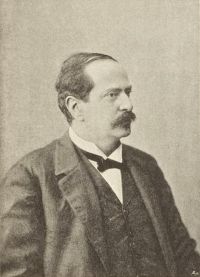 Karl Emil Franzos,
The Chief Justice: A Novel
Karl Emil Franzos,
The Chief Justice: A Novel
“ That will be selected which gives with most freshness and variety the different aspects of continental feeling, the only limits of selection being that a book shall be, on the one hand, amusing, and, on the other, wholesome.One difficulty which must be frankly faced is that of subject. Life is now treated in fiction by every race but our own with singular candour. ”
Grolier Club, One Hundred Books Famous in English Literature
“ Culture after culture, epoch by epoch, are laid bare as in [pg xxix] geologic strata,—mediæval tale and history, humanistic form, the Shakespearian age, Puritan, Cavalier, man scientific, reforming, reborn into a new natural, political, artistic world, man modern; and in every layer of imagination and learning lies, whole and entire, a buried English age. It is by virtue of its copiousness that English literature is so representative, both of man's individual spirit in its restless forms of apprehension and embodiment, and of its historic formulation in English progress as national power. ”
 Walter Lionel George,
A Novelist on Novels
Walter Lionel George,
A Novelist on Novels
“ Whatever be their greatness or their littleness, they are the men who will, for the University Extension Lecturer of 1950, represent the English novel in a given period; they are not the most literary of their contemporaries; they have not more ideas than some of their contemporaries, and all of them have their faults, their mannerisms, and their lapses, but yet, in a rough and general way, these five men combine more ideas with more style than any who are beyond their group. ”
William J. Long,
English Literature
“ So the novel was born, expressing, though in a different way, exactly the same ideals of personality and of the dignity of common life which were later proclaimed in the American and in the French Revolution, and were welcomed with rejoicing by the poets of the romantic revival. To tell men, not about knights or kings or types of heroes, but about themselves in the guise of plain men and women, about their own thoughts and motives and struggles, and the results of actions upon their own characters,--this was the purpose of our first novelists. ”
Sir Alfred C. Lyall, Studies in Literature and History
“ If, as has been often asserted, literature be the collective expression of the ideas and aspirations, the tastes, feelings, and habits of the generation which produces it, we may not be altogether wrong in treating the short highly finished story, whether of adventure or manners, as the impress and reflection of modern English society. ”
 Nephi Anderson,
A Plea for Fiction
(1898)
Nephi Anderson,
A Plea for Fiction
(1898)
“ The statement made by critics that fiction reigns supreme in the literature of the day is no doubt true. In the list of published books, the novel takes the lead. Fiction comes in a continuous stream from the press of the country, and it reaches all classes of society. ”
 Charles Kingsley,
Daily Thoughts: selected from the writings of Charles Kingsley by his wife
Charles Kingsley,
Daily Thoughts: selected from the writings of Charles Kingsley by his wife
“ Thrift of the heart, thrift of the emotions—how are they wasted in these days in reading sensation novels! while British literature—all that the best hearts and intellects among our forefathers have bequeathed to us—is neglected for light fiction, the reading of which is the worst form of intemperance—dram-drinking and opium-eating, intellectual and moral. ”
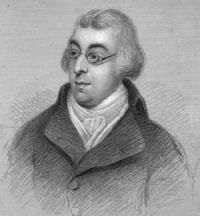 Isaac Disraeli,
Amenities of Literature
Isaac Disraeli,
Amenities of Literature
“ Romance, from the light fabliau to the voluminous fiction, has admitted, in the luxury of our knowledge and curiosity, not only of critical investigation, but of its invention, by tracing it to a single source. ”
Charlotte M. Mason, Parents and children (1897)
“ Think of how the better half of English literature has a local colouring; think of the thousand spots round which there lingers an aroma of poetry and of character, which seems to get into your brain somehow, and leave there an image of the man, a feeling of his work, which you cannot arrive at elsewhere. ”
L. Dougall, The Summit House Mystery; Or, The Earthly Purgatory
“ Unquestionably there are two forms of fiction—the one in which art, and style, and character are pre-eminent, and control the course of the story, and the one in which "the story's the thing," and often the only thing. ”
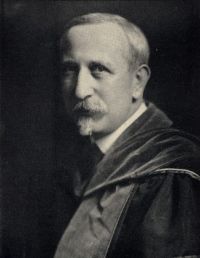 William Allan Neilson,
The Harvard Classics Vol. 51
(1914)
William Allan Neilson,
The Harvard Classics Vol. 51
(1914)
“ The attempt has here been made to outline some of the main principles of the art of fiction without adopting the partisan attitude of any one school. Within the limits of these principles there is room for a great variety of type, for realism and romance, for chronicles of the commonplace and annals of adventure, for stirring tales of action and subtle psychological analysis. The endless variety of human life supplies an equally endless variety of themes ”
Henry James, Partial Portraits
“ In England, where the fashion of fiction still sets mainly to the country house and the hunting-field, and yet more novels are published than anywhere else in the world, that thick twilight of mediocrity of condition has been little explored. ”
William J. Long Brander MatthewsGrolier ClubG. H. MairWilliam Allan Neilson
 Edward AlbertA. R. OrageGeorge Saintsbury
 R. W. ChurchArthur MachenFrederick LawtonAgnes RepplierSir Alfred C. LyallCharles Dudley Warner
 Oscar WildeHenry JamesWalter Lionel George