Euclidean space

Definition and stakes

Portrait of Arthur Eddington Arthur Eddington,  Space Time and Gravitation: An outline of the general relativity theory… (1920)

“ You keep some notion of a space which is superior to measurement, and are ready to throw over the measures rather than let this space be distorted. Even if there were reason for believing in such a space, what possible reason could there be for assuming it to be Euclidean? Your sole reason for believing space to be Euclidean is that hitherto your measures have made it appear so; if now measures of certain parts of space prefer non-Euclidean geometry, all reason for assuming Euclidean space disappears. Mathematically and conceptually Euclidean and non-Euclidean space are on the same footing ”
Source: Wikisource

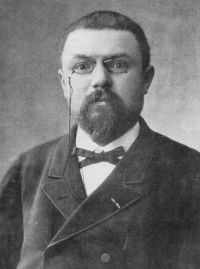
Portrait of Henri Poincaré Henri Poincaré,  Science and Hypothesis (1905)

“ Can we maintain that certain phenomena which are possible in Euclidean space would be impossible in non-Euclidean space, so that experiment in establishing these phenomena would directly contradict the non-Euclidean hypothesis? I think that such a question cannot be seriously asked. To me it is exactly equivalent to the following, the absurdity of which is obvious:—There are lengths which can be expressed in metres and centimetres, but cannot be measured in toises, feet, and inches; ”
Source: Wikisource

Portrait of Thomas Cool Thomas Cool,  Definition & Reality in the General Theory of Political Economy

“ I take the position that the human mind apparently is able to conceptualise Euclidean space - and that this actually defines our concept of space. If we take a non-Euclidean geometry - such as a globe - then this still can be imagined to exist within Euclidean space. Pythagoras’s theorem is invalid for triangles drawn on a globe, but to hold that space is a globe would be erroneous - since our definition of space would be Euclidean. ”
Source: Gutenberg

Get perspective with Kwize: daily news enlightened by great literature