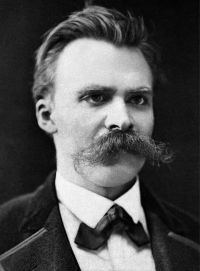
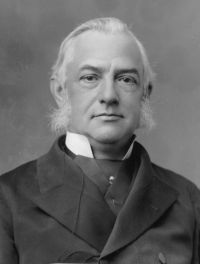
The German language, a West Germanic linguistic system, has long captivated scholars and writers alike due to its structural intricacy and cultural significance. From Nietzsche's assertion of its spiritual importance to Schurz's remark on its ability to incorporate global literary traditions, writers have highlighted its distinctive role as both a carrier of intellectual depth and an emblem of German identity.
While Raleigh contrasts its lexical efficiency with English flexibility, others stress its etymological richness and the difficulties of achieving dialectal unity. These viewpoints together portray the German language as a vibrant medium, connecting historical continuity with broad intellectual exchange.
 Owen Wister,
The Pentecost of Calamity
Owen Wister,
The Pentecost of Calamity