Germanic languages

Definition and stakes

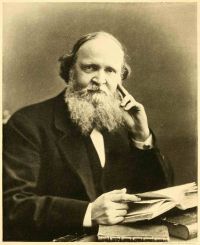
R. G. Latham,  A Handbook of the English Language

“ English language is Germany; and the Germanic languages are those that are the most closely connected with our own. In Germany, languages and dialects allied to each other and allied to the mother-tongue of the English have been spoken from times anterior to history; and these, for most purposes of philology, may be considered as the aboriginal languages and dialects of that country. ”
Source: Gutenberg

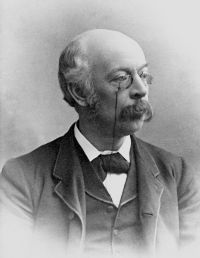
Portrait of Leon Dominian Leon Dominian,  The Frontiers of Language and Nationality in Europe

“ German was to become the language of central Europe. Interposed between the territories of Romanic and Slavic languages, the area of German speech occupies a magnificently commanding position. Originally the language spoken west of the Elbe and Saale rivers, it had advanced considerably to the east in the first century of the Christian era. The imposition of Teutonic language on Slavic populations is one of the results of this ancient expansion of Germanic peoples. During the past thousand years very little change in the distribution of the main German dialects is believed to have taken place. ”
Source: Gutenberg

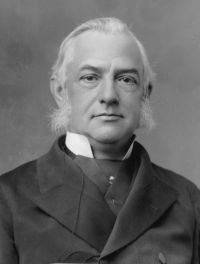
Portrait of James Harvey Robinson James Harvey Robinson,  An Introduction to the History of Western Europe

“ Those German peoples who had continued to live outside of the Roman Empire, or who, during the invasions, had not settled far enough within its bounds to be led, like the Franks in Gaul, to adopt the tongue of those they had conquered, naturally adhered to the language they had always used, namely, the particular Germanic dialect which their forefathers had spoken for untold generations. From the various languages spoken by the German barbarians, modern German, English, Dutch, Swedish, Norwegian, Danish, and Icelandic are derived. ”
Source: Gutenberg

Get perspective with Kwize: daily news enlightened by great literature