“ The dwellings of men of wealth, the palaces of the bygone dynasties, the very Temple of Heaven in Peking, the Great Wall itself, are impermanent structures largely put together with wet earth which is a sad substitute indeed for cement. It is as if, having an unlimited supply of dirt-cheap labor and a great paucity of good materials, the Chinese find something reprehensible in building too solidly, a waste of valuable substance as against inexpensive toil, perhaps a feeling that to build too well to-day will be unjust to those who will want work to-morrow. ”
Great Wall of China
Definition and stakes
The Great Wall of China, a series of fortifications constructed along historical northern borders, functioned as a defensive barrier against nomadic invasions. Authors like John Thomson regarded it as a symbol of Chinese isolation, while Pierre Loti highlighted its formidable physical presence against the landscape.
Elizabeth Kimball Kendall contrasted its original purpose with modern railways, casting doubt on its continued significance. W.A.P. Martin praised its lasting legacy as a reflection of imperial aspirations. These differing viewpoints emphasize the Wall’s dual nature—as both a practical defense and a cultural landmark—illustrating evolving perceptions of China’s identity and its connection to the rest of the world.
Quotes about “Great Wall of China”
Ada Woodruff Anderson, The Rim of the Desert
“ The great wall of China's nothing but a line of ninepins to the Chugach and St. Elias wall. The Almighty builds strong, and he set that wall to hold the Pacific Ocean back. Imagine peaks piled miles high and cemented together with glaciers; the Malispina alone has eighty miles of water front; and there's the Nanatuk, Columbia, Muir; but the Government ain't found names for more'n half of 'em yet, nor a quarter of the mountains. Now imagine a man getting his family over that divide, driving his little bunch of cattle through, packing an outfit to keep 'em going the first year or so. ”
 Pierre Loti,
The Last Days of Pekin
Pierre Loti,
The Last Days of Pekin
“ There is something about these mountains in this sunshine, in this limpid air, that recalls the shores of the Mediterranean on autumn mornings. Not far away an old gray structure rises among the trees, twisted, crooked, bristling with dragons and monsters. It is a pagoda. The interminable line of ramparts which winds about and finally loses itself behind the summits of the mountains in the distance, is the Great Wall of China, which forms the boundary of Manchuria. ”

Related terms
Authors who wrote about “Great Wall of China”
 Mary Gaunt
 Herbert Allen Giles
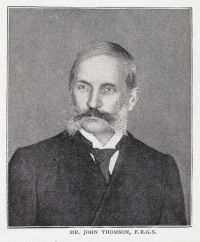 John Thomson
 Herbert C. White
 Arthur Judson Brown
 Rebecca MacKinnonW. A. P. Martin
 Arthur Henderson SmithE. G. KempPierre Leroy-BeaulieuPhilip Lake, Richard Lydekker…Lady Florence Mary Cecil
 Douglas MacArthur
 Walter Henry MedhurstJohn Stuart ThomsonYat-sen Sun
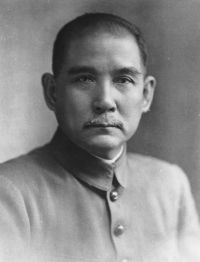 Sun Yat-sen
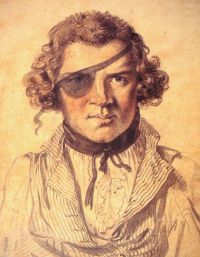 William Alexander
 Louise Jordan MilnEthel Gwendoline Vincent