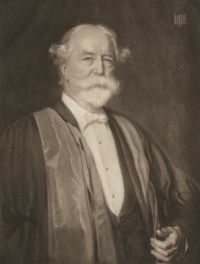
Guy de Chauliac

Definition and stakes

James J. Walsh,  Old-Time Makers of Medicine

“ Nicaise has emphasized the principles which guided Guy de Chauliac in the choice and interpretation of his authorities by a quotation from Guy himself, which is so different in its tone from what is usually supposed to have been the attitude of mind of the men of science of the time that it would be well for all those who want to understand the Middle Ages better to have it near them. ”
Source: Gutenberg

Vincenzo Guerini,  A History of Dentistry from the most Ancient Times until the end of the Eighteenth Century (May 3, 2016 [EBook #51991])

“ So that the two middle incisors were then called duales; the lateral incisors were called quadrupli, because, together with the middle ones, they formed a series of four teeth. Guy gives the name of caysales (caisseaux) to the last two molars; but Joubert, one of the translators and commentators of Guy de Chauliac, tells us that the molars in general were called in Languedoc caisseaux: “Les cinq molaires sont appelées en Languedoc caisseaux, parce qu’elles servent à casser les choses dures, comme les noix et semblables.” ”
Source: Gutenberg

Albert H. Buck,  The growth of medicine from the earliest times to about 1800 (1917)

“ My professional brethren must not expect to find any new and startling facts [Paré is speaking here of his treatise on surgery] , but simply here and there some little addition to our previous stock of knowledge; for the good Guy de Chauliac has taught us that we are like the child who sits astride the giant’s neck; that is, we can see all that he sees and just a little more—or, in other words, we are able, through the aid afforded by the writings of our predecessors, to learn all that they have learned, and may at the same time acquire a little further knowledge through our own observations. ”
Source: Gutenberg

Get perspective with Kwize: daily news enlightened by great literature