Hebrew literature

Definition and stakes

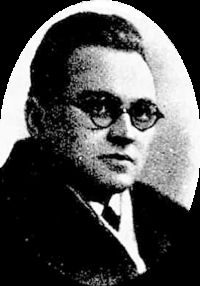
Portrait of Nahum Slouschz Nahum Slouschz,  The Renascence of Hebrew Literature…

“ Hebrew literature, faithful to its Biblical mission, has within it the power of replenishing the moral resources of the masses and making their hearts thrill with enthusiasm for justice and the ideal. It is the focus of the rays vivifying all that breathes, that struggles, that creates, that hopes within the Jewish soul.
To misunderstand this moral bearing of the renascence of the Hebrew language is to fail to know the very life of the better part of Judaism and the Jew.
”
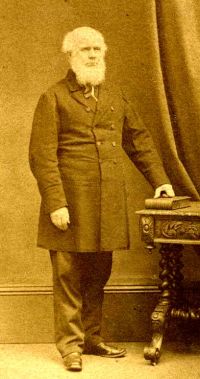
Source: Gutenberg

Anne C. Lynch Botta,  Handbook of Universal Literature…

“ Indeed, the Hebrew poets soar far above all others in that energy of feeling, impetuous and irresistible, which penetrates, warms, and moves the very soul. They reveal their anxieties as well as their hopes; they paint with truth and love the actual condition of the human race, with its sorrows and consolations, its hopes and fears, its love and hate. They select their images from the habitual ideas of the people, and personify inanimate objects—the mountains tremble and exult, deep cries unto deep. Another characteristic of Hebrew poetry is the strong feeling of nationality it expresses. ”
Source: Gutenberg

Portrait of Nahum Slouschz Nahum Slouschz,  The Renascence of Hebrew Literature…

“ It introduced a new epoch, the modern epoch, in the history of Hebrew literature. The master stands revealed by every touch. Everything betrays his skill—the style, at once elegant, significant, and precise, recalling the pure style of the Bible, the fresh and glowing figures of speech, the original poetic inspiration, and the thought, which bears the imprint of a profound philosophy and a high moral sense, and is free from all trace of mystical exaggeration. ”
Source: Gutenberg

Get perspective with Kwize: daily news enlightened by great literature