High Court

Definition and stakes

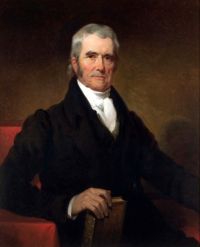
Portrait of Frederic Austin Ogg Frederic Austin Ogg,  The Governments of Europe

“ Inferior judges are appointed normally for life, but under conditions prescribed by law they may be dismissed or relieved of their duties by decision of the High Court. Finally, the High Court constitutes a tribunal before which, upon charges brought by either the sovereign or the lower chamber, members of the States-General, heads of the ministerial departments, governors-general, members of the Council of State, and commissioners of the crown in the provinces, may be prosecuted upon charge of offenses committed in office. ”

Source: Gutenberg

Parliament of the United Kingdom,  Administration of Justice Act 1960 (1960)

“ Where a person who has been sentenced for an offence by a magistrates’ court or, on appeal against conviction or sentence, by quarter sessions applies to the High Court for an order of certiorari to remove the proceedings of the magistrates’ court or the court of quarter sessions into the High Court, and the High Court determines that the magistrates’ court or court of quarter sessions had no power to pass the sentence, the High Court may, instead of quashing the conviction, amend it by substituting for the sentence passed any sentence which the magistrates' court had power to impose. ”
Source: Wikisource

William Feilden Craies,  1911 Encyclopedia Britannica (1911)

“ Appeals from the local courts of record which still survive in certain cities, towns and districts are in a somewhat anomalous position. The general rule is that, unless a statute regulates such appeal, it may be brought in the king’s bench division of the High Court on notice of motion in any case in which, before the Judicature Acts, the court of king’s bench could have reviewed the decision of the inferior court by writ of error. ”
Source: Wikisource

Get perspective with Kwize: daily news enlightened by great literature