Homeric epic

Definition and stakes

Various,  Blackwood's Edinburgh Magazine…

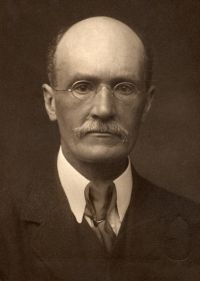
“ We possess nothing but the ancient epic itself, without any independent evidence: had it been an age of records, indeed, the Homeric epic, in its exquisite and unsuspecting simplicity, would probably never have come into existence. Whoever, therefore, ventures to dissect Homer, Arctinus, and Lesches, and to pick out certain portions as matters of fact, while he sets aside the rest as fiction, must do so in full reliance on his own powers of historical divination, without any means either of proving or verifying his conclusions. ”
Source: Gutenberg

Lascelles Abercrombie,  The Epic

“ But "literary" epics are as necessary as Homer. We cannot go on with courage as the solitary valuation of life. We must have the foundation, but we must also have the superstructure. Speaking comparatively, it may be said that the function of Homeric epic has been to create imperishable symbolism for the actual courageous consciousness of life, but the duty of "literary" epic has been to develop this function, answerably to the development of life itself, into symbolism of some conscious idea of life—something at once more formalized and more subtilized than the primary virtue of courage. ”
Source: Gutenberg

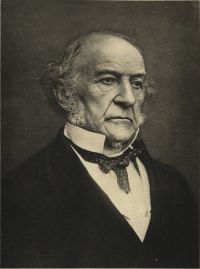
Portrait of W. E. Gladstone W. E. Gladstone,  Studies on Homer and the Homeric Age…

“ The failure in the Æneas of Virgil cannot be compared with the case of any modern romance, such as the Waverley or Old Mortality of Scott, where the hero may be an insipid person. All the greater modern inventors have been compelled to lay [509] their foundations in the palpable breadth of some historic event: it was the prouder distinction of the Homeric epic, that it had a living centre; it hung upon a man; there was enough of vital power in Homer for this end: his Achilles and his Ulysses were each an Atlas, that sustained the world in which they also moved. ”
Source: Gutenberg

Get perspective with Kwize: daily news enlightened by great literature