House of Luxembourg

Definition and stakes

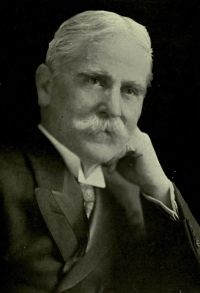
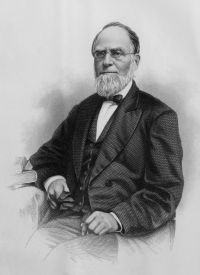
Portrait of John S. C. Abbott John S. C. Abbott The Empire of Austria; Its Rise and Present Power

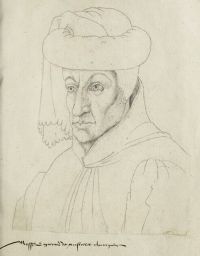
Around these great families, who had gradually, by marriage and military encroachments, attained their supremacy, the others of all degrees rallied as vassals, seeking protection and contributing strength. The house of Bavaria, reigning over that powerful kingdom and in possession of the imperial throne, ranked first. Then came the house of Luxembourg, possessing the wide-spread and opulent realms of Bohemia.
Source: Gutenberg

D. W. Bartlett Paris: With Pen and Pencil

The two pictures, it seemed to me, teach a useful lesson. It is that men are to be saved through love, and not through fear. Let men see God's beauty and loveliness, and you will more surely win them from error than by showing them the horrors of hell.
The origin of the Luxembourg palace was as follows: about the middle of the sixteenth century, one Robert de Harley erected a large house in the middle of the gardens. In 1583 the house was bought and enlarged by the duke of Luxembourg, and in 1612 Marie de Medicis bought it for ninety thousand francs, and then commenced the present palace.
Source: Gutenberg

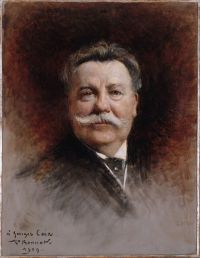
Portrait of Henry Van Dyke Henry Van Dyke Fighting for peace

The existence and status of Luxembourg in Europe before the war are not universally understood in America, and it may be useful to say a few words about it. The grand duchy is a tiny independent country, about 1,000 square miles of lovely hills and dales and table-lands, clothed with noble woods, watered by clear streams, and inhabited by about 250,000 people of undoubted German-Keltic stock and of equally undoubted French sympathies. The land lies in the form of a northward-pointing triangle between Germany, Belgium, and France.
Source: Gutenberg

Get perspective with Kwize: daily news enlightened by great literature