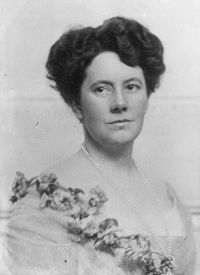
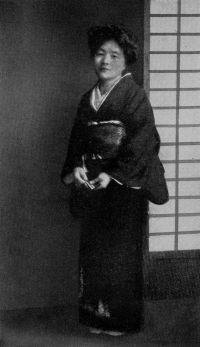
“ A cultivated Japanese can tell you not only what species of raw fish he is tasting, but the number of hours it has been away from the sea. A conscientious Japanese chef would no more think of serving a vegetable not scrupulously fresh than he would drown it in a heavy sauce. Furthermore, he would most prefer to serve it entirely raw, thereby preserving intact all its subtle natural flavor and texture.Japanese cuisine, which is a water-based art as compared to the oil-based cooking of China or the butter-based dishes of France, is now known and appreciated worldwide. ”
Japanese cuisine
Definition and stakes
Quotes about “Japanese cuisine”
“ The almost universal Western attitude toward Japanese cuisine was voiced many centuries ago by the European visitor Bernardo do Avila Giron, who declared, "I will not praise Japanese food for it is not good, albeit it is pleasing to the eye, but instead I will describe the clean and peculiar way in which it is served."2 Beauty counts as heavily as taste at a formal table, and to say Japanese food is "served" is like calling the members of a string quartet fiddlers. The Japanese devote more artistic resources to the rites of food than any other people on earth. ”
Eliza Ruhamah Scidmore,
Jinrikisha Days in Japan
(1891)
“ The fish dinners of Enoshima are famous, and the Japanese, who have the genius of cookery, provide more delicious fish dishes than can be named. At the many tateba set up in temple yards or balanced on the edges of precipices, conch-shells, filled with a black stew like terrapin, simmer over charcoal fires. This concoction has a tempting smell, and the pilgrims, who pick at the inky morsels with their chopsticks, seem to enjoy it; but in the estimation of the foreigner it adds one more to the list of glutinous, insipid preparations with which the Japanese cuisine abounds. ”
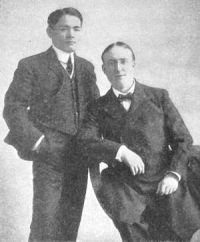
H. Irving Hancock,
Japanese Physical Training
(1903)
“ As nervous disorders are seldom encountered among these little people, their claim is entitled to some respect. Tomatoes and carrots are held in high esteem, and although the Japanese are undoubtedly the most polite people in the world, few of them let a week go by without eating two or three dishes of sliced raw onions. There are some features of the Japanese cuisine that are sure to seem odd to American housewives. While onions are never served in the cooked state—as the Japanese contend that heat destroys their food value—cucumbers are boiled and served hot. ”
Frank Schloesser, The greedy book (1906)
“ From China to Japan is not a far cry, but I fear you cannot dine Japanesily in the East; you must come West, and even then [Pg 120] engage a special cook from the Legation or the Japanese Club. Still it is to be done, and this menu gives a series of titbits which are in themselves most appetizing. You may feel inclined afterwards to go elsewhere and eat a chop, but that is not the fault of the Japanese cuisine, but of your own large appetite. MENU Luimano. (Fish Soup.) ”
Basil Hall Chamberlain,
Things Japanese
(1905)
“ Quiet, well-to-do people, living at home, may have a couple of dishes at each meal—a broiled fish perhaps, and some soup, or else an omelette, besides pickles to help the rice down with. The Oriental abstemiousness which figures so largely in travellers tales, is no part of Japanese manners at all events. To make up for the comparative lightness and monotony of their food, the Japanese take plenty of it. ”
Ernest W. Clement,
A Handbook of Modern Japan
“ Indeed, we must not fail to take notice of the change that is taking place in the diet of the Japanese. Bread and meat, which were long ago introduced into the diet of the army and the navy, are pretty generally popular; and many other articles of “foreign food” are largely used. It is quite a common custom in well-to-do families to have at least one “foreign meal” per day; and “foreign restaurants,” especially in the large cities, are well patronized. It is said, indeed, that first-class “foreign cooking” is cheaper than first-class “Japanese cooking.” ”
Adelia B. Beard, Indoor and Outdoor Recreations for Girls
“ The Japanese do not have bread, butter, milk, or coffee, and never any meat, but they cultivate a mammoth radish which is cut up, pickled and eaten with relish. For dinner they take pale tea, rice, and fish, and for supper fish, pale tea, and rice. ”
Julian Street,
Mysterious Japan
“ The diet of ancient Japan was even less varied than that of to-day, for more than a thousand years ago the Japanese became vegetarians, and for some centuries thereafter adhered scrupulously to the Buddhistic injunction against killing living creatures. For several hundred years they even abjured fish, but by degrees they have fallen away from the strict observance of the vegetarian doctrine, until to-day a Japanese who is at all sophisticated will thoroughly enjoy a dinner in the European style, beef and all. ”
Basil Hall Chamberlain,
Things Japanese
(1905)
“ Japanese dishes fail to satisfy European cravings. Imagine a diet without meat, without milk, without bread, without butter, without jam, without coffee, without salad or any sufficient quantity of nicely cooked vegetables, without puddings of any sort, without stewed fruit and with comparatively little fresh fruit, the European vegetarian will find almost as much difficulty in making anything out of it as the ordinary meat-eater. ”
J. W. Robertson Scott, The foundations of Japan
“ Further, the rice eater picks up now and then from a small saucer a piece of pickle which may have either a salty or a sweet fermented taste. The nutrition gained at a Japanese meal is largely in soups in which the bean preparations, tofu and miso, and occasionally eggs, are used. And there is no country in the world where more fish is eaten than in Japan. The coast waters and rivers team with fish, and fish—fresh, dried and salted, shell-fish and fish unrecognisable as fish after all sorts of ingenious treatment—is consumed by almost everybody. ”
J. W. Robertson Scott, The foundations of Japan
“ Although, for economy's sake, a considerable amount of barley is eaten with or instead of rice, it may be said in a general way that the Japanese people, like so many millions of other Asiatics, have rice for breakfast, rice for lunch and rice for dinner. If they have anything to eat between meals it is as like as not to be rice cakes—- to the foreigner's taste a loathly, half-cooked compost of rice flour or pounded rice and water, a sort of tepid underdone muffin. ”
Elizabeth Bisland,
The Life and Letters of Lafcadio Hearn…
“ You know Japanese food is raw fish and fresh fish, rice, bean-curds (they look like custard) , seaweed, dried cuttle-fish,—rarely chicken or eggs. In short, of five hundred Japanese dishes, the basis is rice, fish, beans, lotus, various vegetables, including bamboo shoots, and seaweed. Confectionery is eaten between meals only, and sparingly. Tea is never allowed to become strong: it is a pale straw-colour, without sugar or milk, and once used to it, you cannot bear the sight of European tea any more. ”
William Jennings Bryan,
The Old World and Its Ways
“ Japanese food is so different from American food that it takes the visitor some time to acquire a fondness for it, more time than the tourist usually has at his disposal. With the masses rice is the staple article of diet, and it is the most palatable native dish that the foreigner finds here. The white rice raised in Japan is superior in quality to some of the rice raised in China, and the farmers are often compelled to sell good rice and buy the poorer quality. ”
Mihai Nadin, The Civilization of Illiteracy
“ It also reflects the awareness of the world in which the Japanese constitute themselves. Japanese food is focused on what life on an island affords, plus/minus influences from other cultures, resulting from the mobility of peoples. The more concrete writing system of the Far East and the more down-to-earth nourishment, i.e., the closeness to what each source of nutrition is (raw fish, seaweed, rice, minimal processing, strict dietary patterns based on combinations of nutritional ideograms) , are an expression of the unity of the pragmatic framework within which they result. ”
Isabella Lucy Bird Bishop, Unbeaten Tracks in Japan — LETTER IV (1880)
“ The fact is that, except at a few hotels in popular resorts which are got up for foreigners, bread, butter, milk, meat, poultry, coffee, wine, and beer, are unattainable, that fresh fish is rare, and that unless one can live on rice, tea, and eggs, with the addition now and then of some tasteless fresh vegetables, food must be taken, as the fishy and vegetable abominations known as "Japanese food" can only be swallowed and digested by a few, and that after long practice. ”
Adelia B. Beard, Indoor and Outdoor Recreations for Girls
“ Often the fish is cooked, sweetmeats are served and pickled radish also, but frequently the breakfast consists of merely a bowl of cold rice. These unique people do not seem to think or care much about their food; many times they deny themselves a meal that they may spend the money on a feast of flowers in some garden where they can enjoy gazing upon masses of exquisite cherry blossoms, chrysanthemums, or other flowers. No nation in the world loves flowers more than the Japanese, and none can rival them in the beautiful arrangement of their blossoms. ”
Elizabeth Cooper, The Harim and the Purdah: Studies of Oriental Women
“ The manner in which they can sit upon their feet for hours impresses a foreigner. At the larger stations tea in tiny pots, with a little porcelain cup, is brought in by the salesmen, and “bento,” the lunch of cold rice, pickles, and fish of some description, is sold in neat boxes, the dainty lunch only costing ten cents, including a pair of new wooden chopsticks. The Japanese masses, like their prototypes everywhere, enjoy eating in public, and the car is filled with the divers and sundry odours of fruit, sweets, tea, and food. ”
Marie Carmichael Stopes, A Journal from Japan: A Daily Record of Life as Seen by a Scientist
“ My saucepan (the little one I have carried in all my walking and many other tours, and that I bought in beloved München and made jam in) has also become proverbial. I told every one to bring one, but they all laughed the advice to scorn, and now grudgingly acknowledge the service mine does, though it runs itself off its legs to provide them with cocoa, and to turn hard uneatable meat into soup.The hotels we have stopped at have been fairly good, but Japanese cooking does not always coincide with our tastes. ”
R. Van Bergen, A Boy of Old Japan
“ It is inexpensive, becoming, and leaves our limbs to their natural action; what more do we want? As to your food, I acknowledge that a meat diet is more strengthening than our usual bill of fare, and most of us indulge in it once a day. But to prepare dishes merely to tickle the palate, is both [Pg 232] foolish and wicked. We want no waste. That is the reason why I prefer dressing in haori, hakama, and Kimono, and why I prefer to live in a Japanese house. If I, or any other Japanese, visit your country, we conform with your customs and habits, because we do not wish to give offense. ”
Ernest W. Clement,
A Handbook of Modern Japan
“ The Japanese may be called vegetarians, for it is only within a recent period that meat has come to play any part in their diet. Fish, flesh, and fowl were once strictly forbidden as articles of food by the tenets of Buddhism, but gradually, one after another, came to be allowed as eatables. Even now meat, though becoming more and more popular as an article of diet, is not used in large quantities at one meal. Chicken, game, beef, ham, and pork may be found on sale in most large towns and cities. ”
Amy Ella Blanchard,
The four Corners in Japan
“ The little lacquered tables from which the Japanese take their meals, and which you have so often seen, are placed on the altar to hold the food served to the spirits of the departed. In the very poor houses, these offerings of food are sometimes merely wrapped in a leaf and laid on the fresh mats. Wine is not given, neither do they give fish nor meat to the departed friends, but they offer fresh, pure water and give them tea every hour. They serve the meals exactly as they would to living guests, even supplying chop-sticks. ”
Isabel Anderson,
The Spell of Japan
“ Cows are few, but we were able to get our own milk and butter from a local dairy. My husband is very fond of Japanese food, and as I like it too, often of an evening when we were alone or had friends who also enjoyed it, we would have Japanese dinners at the Embassy, served upon the table but in the pretty lacquer bowls on little lacquer trays. Eels with rice and soy was a favourite dish. ”
J. W. Robertson Scott, The foundations of Japan
“ Among the covered lacquer dishes on the little table set Page 81 before each kneeling breakfaster, luncher or diner in Japan there is one which is empty. This is the rice bowl. When the meal begins—or in the case of an elaborate dinner at the rice course—the maid brings in a large covered wooden copper-bound or brass-bound tub or round lacquered box of hot rice. This rice she serves with a big wooden spoon, the only spoon ever seen at a Japanese meal. A man may have three helpings or four in a bowl about as big as a large breakfast cup. ”
“ A new condiment is not sought so much as a new color, and a new sauce is of less interest than a new saucer. Indeed, a fine restaurant may prize its ceramics almost as much as its chef.Yet for all its beauty, the food seems to be oddly deficient in pronounced flavors. This characteristic a Japanese will be the first to admit, but with pride rather than apology. Strong flavors are to a modern Japanese what bold colors were to the Heian aesthetes—unrefined, obvious gratifications for those lacking in cultivated discernment. ”
H. Irving Hancock,
Japanese Physical Training
(1903)
“ The grain comes to the table—which, in Japan, is usually the floor—soft, steaming, and a palatable food that requires no condiments to make it highly acceptable to the stomach. When the rice is boiled it is never stirred. When the rice is steamed it of course requires no stirring. Of late years an attempt has been made to introduce white wheat flour into Japan. While a few of the natives have added this to their diet wheat flour is still unpopular. The Japanese find rice more palatable, more healthful, and productive of greater strength and energy. ”
J. W. Robertson Scott, The foundations of Japan
“ It is illustrative of the extent to which pickle is consumed in Japan that a family in Sapporo was found to have eaten no fewer than 283 daikon in a year. [261] The reader must put away the impression which this table gives of a varied dietary. Few Japanese have such a range of food. The average man habitually lives on rice, bean products (tofu, bean jelly and miso, soft bean cheese) , pickles, vegetables, tea, a little fish and sometimes eggs. People of narrow means see little of eggs and not much fish, unless it be katsubushi. ”
Basil Hall Chamberlain,
Things Japanese
(1905)
“ Of beverages the chief are tea, which is taken without sugar or milk, and sake, an alcoholic liquor prepared from rice, whose taste has been not inaptly compared to that of weak sherry which has been kept in a beer-bottle. It is generally taken hot, and at the beginning of dinner. Only when the drinking-bout is over, is the rice brought in: at a long dinner, one is apt never to reach it. When dining quietly in the home circle, the Japanese habitually drink tea only. Besides that drunk out of a cup, it is rather usual to have a little poured over the last bowlful of one's rice. ”
John Finnemore, Peeps at Many Lands: Japan
“ A favourite subject is a branch of blossoming cherry, and this, painted upon white silk, gives an effect of wonderful freshness and beauty. There is no chimney, for a Japanese house knows nothing of a fireplace. The simple cooking is done over a stove burning charcoal, the fumes of which wander through the house and disperse through the hundred openings afforded by the loosely-fitting paper walls. To keep warm in cold weather the Japanese hug to themselves and hang over smaller stoves, called hibachi, metal vessels containing a handful of smouldering charcoal. ”
Basil Hall Chamberlain,
Things Japanese
(1905)
“ The first is founded on the climate, the best-flavoured fruits being produced in dry climates, whereas in Japan the heat and wet come together, and make the fruit rot instead of mellowing. Thus European stock, which has improved in America and Australia, rapidly deteriorates in Japan. The second cause—itself partly dependent on the first is that the national taste for fruit is unformed, fruit never having been here regarded as a regular article of diet, and circumstances having accustomed the Japanese to prefer that such fruit as they do take should be hard. ”