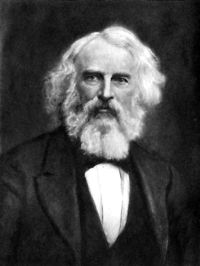
 Henry Wadsworth Longfellow,
Courtship of Miles Standish
“ Whene’er a noble deed is wrought, Whene’er is spoken a noble thought, Our hearts, in glad surprise, To higher levels rise. ”
Henry Wadsworth Longfellow,
Courtship of Miles Standish
“ Whene’er a noble deed is wrought, Whene’er is spoken a noble thought, Our hearts, in glad surprise, To higher levels rise. ”
Mrs. J. C. Yule, Poems of the Heart and Home
“ How canst thou stand, empty-handed, In the presence of thy King? Lo! the field is white for harvest, And the laborers are few; Canst thou, then, oh, slothful servant. Find no work that thou canst do? Angels wait to bear the tidings Of some good that thou hast done ”
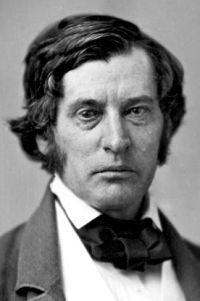 Charles Sumner,
Charles Sumner: his complete works…
“ Thus, from all quarters and sources—the far-off Past, the far-away Pacific, the verse of the poet, the legend of history, the cell of the mad-house, the congregation of transported criminals, the experience of daily life, the universal heart of man—ascends spontaneous tribute to that law according to which we respond to the sentiments by which we are addressed, whether of love or hate, of confidence or distrust. ”
author:Ovid, Metamorphoses (1727)
“ To know the politer Languages of the present Age, as a Native, and the greater Occurrences, and Periods of the Past, as an Historian, make up a Character, which is so obvious, that Every one will know where to apply it, except the Person, whose it really is: and if in this Your Royal Highness be at a Loss, I think it is the only thing within the Province of Your Sex You are ignorant of. ”
 Ralph Waldo Emerson,
Poems
(1847)
“ Where the evening star so holy shines, I laugh at the lore and the pride of man, At the sophist schools, and the learned clan; For what are they all, in their high conceit, When man in the bush with God may meet? ”
Unknown, The Book of the Thousand Nights and One Night (1901)
“ When the ladies of the city hear that thou art to be present, they also will attend, and so wilt thou bring healing to her spirit, for now she is broken-hearted and has none to look to but God the Most High.” Then she wept and kissed my feet, repeating the following verses: Thy presence honoureth us, and we Confess thy magnanimity: If thou forsake us, there is none Can stand to us in stead of thee. ”
Eileen Power, Medieval English Nunneries c. 1275 to 1535
“ They all, jongleurs, preachers, theologians and men of letters repeat each other, for a tale once told is everyone’s property; the people repeat them; and so the stories circulate from lip to lip through the wide lands of Europe and down the echoing centuries. ”
“ For every day of the year there are thoughts, counsels, aspirations—many of them Oriental in tone, or patriarchal in spirit; there are delineations of nature, pure utterances of faith; each page contains fresh and earnest expressions of a poetic, believing, humane soul—often clad in exquisite language. ”
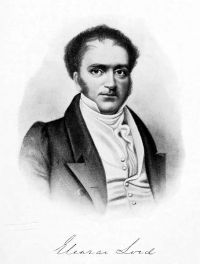 Eleazar Lord,
The Messiah in Moses and the Prophets
“ But where a reference is made to any thing in the economy of redemption, or any thing involving official acts or relations, official titles are introduced, or a phraseology is employed, by which the intended meaning is expressed. The Father, the Son, and the Holy Spirit are clearly distinguished, or their personality, relations and agency are indicated by the nature of the things recorded, or by the connections in which they occur. ”
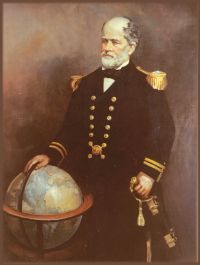 Matthew Fontaine Maury,
Address Before The Literary Societies of the University of Virginia
(1855)
“ They have reared the most glorious fabric that the wisdom of sages has ever conceived, and they have set it up here, a light to the whole world, and an asylum to the down-trodden and oppressed of every land. ”
 Harriet Beecher Stowe,
Flowers and fruit from the writings of Harriet Beecher Stowe
(1888)
“ Conversation of French circles seems to me like gambols of a thistledown, or the rainbow changes in soap-bubbles. One laughs with tears in one’s eyes. One moment confounded with the absolute childhood of the simplicity, in the next one is a little afraid of the keen edge of the shrewdness. ”
 H. G. Wells,
Boon, The Mind of the Race, The Wild Asses of the Devil…
“ All this much—and with a full awareness of just how much it is—I am going to claim as literature and our province. Religion, I hold, every religion so far as it establishes and carries ideas, is literature, philosophy is literature, science is literature ”
 Donald Grant Mitchell,
English Lands, Letters and Kings…
“ Withal there is such dash and spirit, such mastery of language, such marvellous descriptive power, such subtle pauses and breaks, carrying echoes beyond the letter—as laid hold on men and women—specially on women—in a way that was new and strange. ”
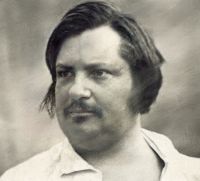 Honoré de Balzac,
The Illustrious Gaudissart
(1833)
“ Well, then, if the palingenistic aspects of the successive transformations of the spiritualized globe have struck, stirred, roused you, then, my dear sir, the 'Globe' newspaper,—noble name which proclaims its mission,—the 'Globe' is an organ, a guide, who will explain to you with the coming of each day the conditions under which this vast political and moral change will be effected. ”
John Harland, Lancashire Folk-lore
“ We read with a smile of amusement and pity, the account of some provincial conjuror, who follows, with slight changes, the trade of the Witch of Endor; and we then compose our features to a grave expression of interest—for so society requires—to listen to some enlightened person's description of the latest novelties in table-turning or spirit-rapping ”
 Oscar Wilde,
The Picture of Dorian Gray
(1890)
“ "I adore simple pleasures," said Lord Henry. "They are the last refuge of the complex. ”
 Dora Sigerson Shorter,
The Father Confessor, Stories of Death and Danger
(1900)
“ To the man and his wife it seemed the one link that bound them to civilization—which spoke to them of the great world that they might else well forget. Through the windows they got many a lightning glance of that society they had left. ”
Samuel Johnson — Appreciations and Testimonia
“ His phraseology rolls ever in solemn and majestic periods, in which every substantive marches ceremoniously accompanied by its epithet; grand pompous words peal like an organ; every proposition is set forth balanced by a proposition of equal length; thought is developed with the compressed regularity and official splendour of a procession. ”
 James Branch Cabell,
Jurgen: A Comedy of Justice
“ "Why, I travel with a staff, my dear, as you perceive: and it suffices me.""Certainly it is large enough, in all conscience. ”
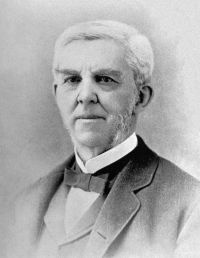 Oliver Wendell Holmes Sr.,
The Professor at the Breakfast-Table
(1860)
“ Language!—the blood of the soul, Sir! into which our thoughts run and out of which they grow! ”
Edwin Gordon Lawrence, How to Master the Spoken Word
“ Sir, he who sees these states now revolving in harmony around a common center, and expects to see them quit their places and fly off without convulsion, may look the next hour to see the heavenly bodies rush from their spheres, and jostle against each other in the realms of space, without causing the crush of the universe. ”
Countess of Marguerite Blessington, The Idler in France
“ Like summer lightning, French wit flashes frequently, brightly and innocuously, leaving nothing disagreeable to remind one of its having appeared. Conversation is, with the French, the aim and object of society. ”
Ralph Waldo Emerson,
Prudence
(1841)
“ Poets should be lawgivers; that is, the boldest lyric inspiration should not chide and insult, but should announce and lead, the civil code, and the day's work. ”
 William Blake,
Jerusalem. The Emanation of the Giant Albion
“ For Los said: When the Individual appropriates Universality He divides into Male & Female: & when the Male & Female, Appropriate Individuality, they become an Eternal Death. 55 Hermaphroditic worshippers of a God of cruelty & law! Your Slaves & Captives; you compell to worship a God of Mercy. These are the Demonstrations of Los, & the blows of my mighty Hammer So Los spoke. ”
 Rudyard Kipling,
The Five Nations
(1903)
“ A Nation spoke to a Nation, A Queen sent word to a Throne: "Daughter am I in my mother's house, But mistress in my own. The gates are mine to open, As the gates are mine to close, And I set my house in order," Said our Lady of the Snows. ”
Charlotte Biggs, A Residence in France During the Years 1792…
“ Every one who understands the language, and has mixed much in society, must have made the same observations.—See two Frenchmen at a distance, and the vehemence of their action, and the expression of their features, shall make you conclude they are discussing some subject, which not only interests, but delights them. ”
 John Cowper Powys,
Suspended Judgments: Essays on Books and Sensations
“ All the refinements of the most consummate civilisation in the world, all its airy cynicism, all its laughing urbanity, all its whimsical friendliness, seem to concentrate themselves and reach their climax on every page of his books.A delicate odour of incense and mockery, an odour of consecrated wine and a savour of heathen wit, rise up together from every sentence and disarm us with the insidiousness of their pleasant contrast. ”
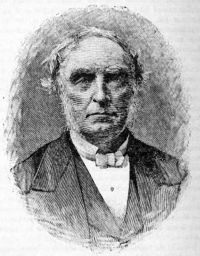 James Legge,
Sacred Books of the East
(1882)
“ We go on to the third Appendix in two sections, being the fifth and sixth 'wings,' and forming what is called 'The Great Treatise.' It will appear singular to the reader, as it has always done to myself, that neither in the Text, nor in the first two Appendixes, does the character called Yî, which gives its name to the classic, once appear. ”
Edmund William Gosse, 1911 Encyclopædia Britannica, Volume 27… (1911)
“ If in England the expression vers de société carries with it more literary dignity, this is mainly due to the genius of one man. Prior’s Poems on Several Occasions, collected in 1709, presents us with some of the earliest entirely characteristic specimens of vers de société, arid with some of the best. ”
 Emily Dickinson,
The Heart is the Capital of the Mind…
“ The Heart is the Capital of the Mind — The Mind is a single State — The Heart and the Mind together make A single Continent — One — is the Population — Numerous enough — This ecstatic Nation Seek — it is Yourself. ”
 Henry David Thoreau,
Autumn
(1892)
“ In the last stage of civilization, poetry, religion, and philosophy will be one, and there are glimpses of this truth in the first. ”
Ralph Waldo Emerson,
Miscellanies
(1855)
“ The orators, the poets, the commanders encroach on us only as fair women do, by our allowance and homage. Slight them by preoccupation of mind, slight them, as you can well afford to do, by high and universal aims, and they instantly feel that you have right, and that it is in lower places that they must shine. They also feel your right; for they with you are open to the influx of the all-knowing Spirit, which annihilates before its broad noon the little shades and gradations of intelligence in the compositions we call wiser and wisest. ”
Ralph Waldo Emerson,
Essays — Second Series
“ For all symbols are fluxional; all language is vehicular and transitive, and is good, as ferries and horses are, for conveyance, not as farms and houses are, for homestead. ”
 William Wordsworth,
Poems in Two Volumes, Volume 2
“ Thou unassuming Common-place Of Nature, with that homely face, And yet with something of a grace, Which Love makes for thee! ”
Garcilaso de la Vega, The Works of Garcilasso de la Vega…
“ The lessons given by the first philosophers to men, the first laws, the most ancient systems, all were written in verse; whilst the fancy of the poets, the flattering pictures and pomp of rites, which they invented, interrupted, with a pleasing and necessary relaxation, the fatigue of rural labours. ”
 Agnes Repplier,
Varia
(1898)
“ If we read even a few pages of "La Cité des Dames,"—and how delightfully modern is the very title!—we recognize the same familiar sentiments, albeit disguised in archaic language and with many old-time conceits, that we are accustomed to hearing every day. ”
 C.-F. Volney,
The Ruins; Or, Meditation on the Revolutions of Empires and the Law of Nature
“ Of what import to thy immensity, their distinctions of parties and sects? And of what concern the subtleties with which their folly torments itself? And you, credulous men, show me the effect of your practices! In so many centuries, during which you have been following or altering them, what changes have your prescriptions wrought in the laws of nature? Is the sun brighter? Is the course of the seasons varied? Is the earth more fruitful, or its inhabitants more happy? If God be good, can your penances please him? If infinite, can your homage add to his glory? ”
Thomas Carlyle, Sartor Resartus, and On Heroes… (1901)
“ Great Men are the inspired (speaking and acting) Texts of that divine Book of Revelations, whereof a Chapter is completed from epoch to epoch, and by some named History; ”
Frank Frost Abbott, The Common People of Ancient Rome
“ There is much that is trivial, commonplace, and prosaic in these productions of the common people, but now and then one comes upon a phrase, a verse, or a whole poem which shows strength or grace or pathos. ”
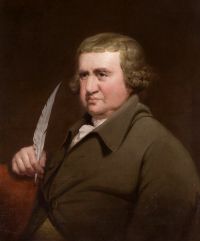 Erasmus Darwin,
Zoonomia, or, the Laws of Organic Life…
(1796)
“ But when any class of complex objects becomes the subject of conversation, of which I have seen many individuals, as a castle or an army, some property or circumstance belonging to it is peculiarly alluded to ”
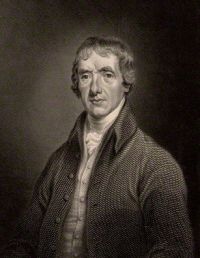 John Aikin,
Miscellaneous Pieces, in Prose
“ In like manner, that sect, one of whose most striking characteristics is a beautiful simplicity of dialect, served to check that strain of servile flattery and Gothic compliment so prevalent in the same period, and to keep up some idea of that manly plainness with which one human being ought to address another. ”
 Thomas Hobbes,
Leviathan
(1651)
“ The first branch, of which Rule, containeth the first, and Fundamentall Law of Nature; which is, "To seek Peace, and follow it." ”
Joe Miller's Jests, with Copious Additions
“ Lord C—by, coming out of the House of Lords one day, called out, Where’s my fellow? Not in England, said a gentleman who stood by.46. A beggar asking alms under the name of a poor scholar, a gentleman to whom he applied himself asked him a question in Latin; the fellow, shaking his head, said, he did not understand him. Why, said the gentleman, did you not say you were a poor scholar? Yes, replied the other, a poor one indeed, sir, for I do not understand one word of Latin. ”
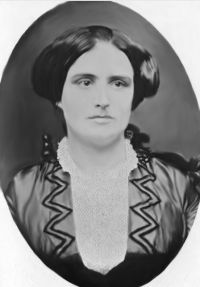 Harriet Jane Hanson Robinson,
Loom and spindle
(1898)
“ The contributions to The Offering were on a great variety of subjects. There were allegories, poems, conversations on physiology, astronomy, and other scientific subjects, dissertations on poetry, and on the beauties of nature, didactic [115] pieces on highly moral and religious subjects, translations from French and Latin, stories of factory and other life, sketches of local New England history, and sometimes the chapters of a novel. ”
 William Shakespeare,
Hamlet
(1623)
“ Speak the speech, I pray you, as I pronounced it to you, trippingly on the tongue. But if you mouth it, as many of your players do, I had as lief the town-crier spoke my lines. Nor do not saw the air too much with your hand, thus, but use all gently; for in the very torrent, tempest, and, as I may say, whirlwind of passion, you must acquire and beget a temperance that may give it smoothness. ”
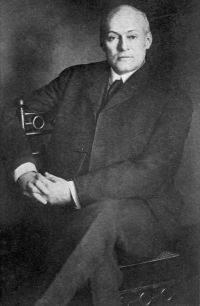 Arthur E. Bostwick,
Library Essays; Papers Related to the Work of Public Libraries
“ Objects and acts of the highest sanctity in one country may be regarded as low and vulgar in another—the standard varies from class to class, from one occupation to another; almost from family to family. ”
Robert Caldwell, Lectures on the Tinnevelly Missions… (1857)
“ When I divide the dis course into heads, or mention any particulars which I wish to impress upon the attention, or endeavour to clear up a difficulty, or enforce a truth by some familiar local illustration, I ascertain for myself, by questioning each class of people in succession, whether they understand, and are likely to carry home, the lessons they have been taught. ”
Henry Churchill King, Theology and the Social Consciousness
“ Travels, history, biography, autobiographical fragments, anthropology, sociology, psychology, and—to no small degree—fiction, with its stories of out-of-the-way places and out-of-the-way peoples and of unfamiliar classes,—all have been thoroughfares for the social consciousness here. ”

