“ The great bulk of his fraternity went through their studious, conscientious, hard-working, and not infrequently heroic lives under the contented conviction of having to deal with two principal facts—disease and medicine—both accessible through study. To them the imponderable factor of the patient represented such or such an aggregation of material—muscle, nerve, blood, brawn, bone, and tissue—which might be counted upon to respond to such and such a treatment in such and such a manner, with very slight variation. The Doctor envied them their simplicity of faith. ”
Quotes about “MD”
 Jacob Merlo Horstius,
The paradise of the Christian soul
(1877)
Jacob Merlo Horstius,
The paradise of the Christian soul
(1877)
“ O Physician! who, when thou knowest it to be for the sours benefit, curest with a word all diseases no less of the body than of the soul; heal me, O Lord, and I shall be healed in my soul: save me, and I shall be saved also in my body. In thee do I trust, not in physicians, nor in any remedies of theirs. ”
 Philip Schaff,
Nicene and Post-Nicene Fathers…
(1885)
Philip Schaff,
Nicene and Post-Nicene Fathers…
(1885)
“ A physician, by ever so great attention, could not so speedily rid a man of the fever, as a patient man would cool, by the breath of his own words, a person who was passionate and burning with wrath. And why do I speak of a physician? ”
 Plato,
The Dialogues of Plato
(1892)
Plato,
The Dialogues of Plato
(1892)
“ And this is what the physician has to do, and in this the art of medicine consists : for medicine may be regarded generally as the knowledge of the loves and desires of the body, and how to satisfy them or not ; and the best physician is he who is able to separate fair love from foul, or to convert one into the other ; and he who knows how to eradicate and how to implant love, whichever is required, and can reconcile the most hostile elements in the constitution and make them loving friends, is a skilful practitioner. ”
Albert H. Buck, The growth of medicine from the earliest times to about 1800 (1917)
“ He who doth, with the greatest exactness imaginable, weigh every individual thing that shall happen or hath happened [442] to his patient and may be known from the observations of his own or of others, and who afterward compareth all these with one another, and puts them in an opposite view to such things as happen in an healthy state; and lastly, from all this, with the nicest and severest bridle upon his reasoning faculty, riseth to the knowledge of the very first cause of the disease, and of the remedies fit to remove them; he, and only he, deserveth the name of a true physician. ”
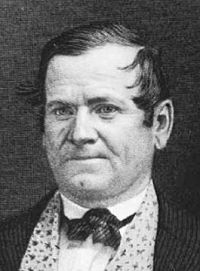 Orson Hyde,
Journal of Discourses — Volume 6…
Orson Hyde,
Journal of Discourses — Volume 6…
“ The patient does not prescribe nor tell the doctor what he wants of him,—that is, supposing the doctor to be what he ought to be. He examines the patient, knows the nature of the disease, and prescribes accordingly. The patient takes the medicine, and asks no questions for conscience sake. ”
John Brown, Health: Five Lay Sermons to Working-People
“ Her whole soul goes out to him in unspeakable gratitude when he brings back to her from the power of the grave her husband or darling child. The Doctor knows many of our secrets, of our sorrows, which no one else knows,—some of our sins, perhaps, which the great God alone else knows; how many cares and secrets, how many lives, he carries in his heart and in his hands! So you see he is a very important person the Doctor, and we should do our best to make the most of him, and to do our duty to him and to ourselves. ”
Theophilus of Antioch, Ante-Nicene Christian Library/Volume III (1867)
“ Entrust yourself to the Physician, and He will couch the eyes of your soul and of your heart. Who is the Physician? God, who heals and makes alive through His word and wisdom. God by His own word and wisdom made all things ”
Henry William Fuller, Advice to medical students (1857)
“ How can you be physicians if you do not examine the functions of the living body, and note how they are affected by emotions of the mind, and by other moral and physical influences; if you do not learn to mark the early inroads of disease, and watch its onward progress; to ascertain the effects of different remedies under varying conditions of human suffering, and to estimate correctly, by personal observation, the extent of the power which the body possesses of repairing functional or structural lesions? ”
Senator Cassiodorus, The Letters of Cassiodorus
“ Do you rather incline the patient to ask you about his own malady, showing him that you know more about it than he does. The patient's pulse, the patient's water, tell to a skilled physician the whole story of his disease. ”
| override_editor, Bench and bar of Colorado (1917)
“ The physician, whether as a specialist or a general practitioner, by years of study, experience and ability, becomes an authority, and the record of his experience and his dissertations fill the pages of the medical journals, and his name and fame exist in records more enduring than brass. ”
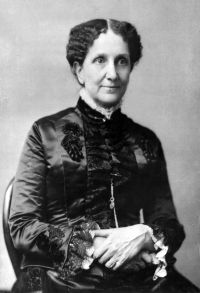 Mary Baker G. Eddy,
Science and Health with Key to the Scriptures
(1898)
Mary Baker G. Eddy,
Science and Health with Key to the Scriptures
(1898)
“ Once let the mental physician believe in the reality of matter, and he must admit also the reality of all its discordant conditions, which prevents his destroying them. Then he is even less fitted for the treatment of disease than the ordinary medical practitioner. ”
Phineas Parkhurst Quimby, The Quimby Manuscripts (1921)
“ If I see a man, I know it, and if I feel the cold I know it. But to see a person going towards the water is no sign that I know what he is going to do. He may be going to bathe, or may be going to drown himself. Now here is the difference between the physician and myself, and this may give you some idea of how I define disease. The regular [physician] and I sit down by a patient. He takes her by the hand, and so do I. He feels the pulse to ascertain the peculiar vibration and number of beats in a given time. This to him is knowledge. To me it is all quackery or ignorance. ”
Homer Gage, Popular Science Monthly (1909)
“ We see at once the necessity of getting back to the old idea of the physician, as the friend, adviser and guide of his patients; to a closer personal relation between physician and patient, and where, as in a large hospital clinic, this is impossible, an organization which, under his direction, shall follow his patients to their homes, see what is possible to be done in the way of carrying out his instructions, how it may be best accomplished, and see that it is accomplished. ”
Robert Montgomery Bird, Sheppard Lee, Written by Himself…
“ What can be more wonderful than the faculty recently developed by the advocates and practitioners of a new system of medicine, who, by shaking a bottle in a peculiar way, give to its contents a medical virtue which did not exist before, and which another man,—the patient, for example,—might shake till doomsday without imparting?*The Natural Bonesetter is one instance of the possession of a faculty both rare and astonishing, and so is any old woman who can pow-wow the fire out of a burn. ”
Herodotus, The History of Herodotus — Book II: Called Euterpe (1890)
“ The art of medicine among them is distributed thus:--each physician is a physician of one disease and of no more; and the whole country is full of physicians, for some profess themselves to be physicians of the eyes, others of the head, others of the teeth, others of the affections of the stomach, and others of the more obscure ailments. ”
Samuel Finley Breese Morse, Samuel F. B. Morse, His Letters and Journals
“ But He who knows the heart knows its disease, and, as the Good Physician, if we give ourselves unreservedly into his hands to be cured, He will give that medicine which his perfect knowledge of our case prescribes. ”
 ʻAbdu'l-Bahá,
Selections from the writings of ‘Abdu'l-Bahá
ʻAbdu'l-Bahá,
Selections from the writings of ‘Abdu'l-Bahá
“ O thou seeker after the Kingdom! Every divine Manifestation is the very life of the world, and the skilled physician of each ailing soul. The world of man is sick, and that competent Physician knoweth the cure, arising as He doth with teachings, counsels and admonishments that are the remedy for every pain, the healing balm to every wound. ”
W.H.R.Rivers, Instinct and the Unconscious (1920)
“ It is hardly surprising that the process of rationalisation should often centre round the relation of the patient to medicine, the social institution which has to do with disease. In searching for something by means of which to explain his troubles, the patient is apt to fix upon the advice and measures given or recommended by his physician or physicians. ”
“ A certain physician was so fond of administering medicine, that, seeing all the phials and pill-boxes of his patient completely emptied, and ranged in order on the table, he said, "Ah, sir, it gives me pleasure to attend you,—you deserve to be ill." ”
 James Lane Allen,
The Doctor's Christmas Eve
James Lane Allen,
The Doctor's Christmas Eve
“ Many a time long after midnight he would read to a finish some such triumphant story; and with a murmur of "Well done!" he would close the book, turn out his lamp, and go to sleep in his chair with his clothes on—with that scene of victory emptying its echoes into his ear and his dreams.Here, then, was some discrete knowledge of the [pg 96] doctor as a doctor and as a man. But there was one thing in his library that blended these two separate aspects, showing how the man felt as a physician and how the physician felt as a man. ”
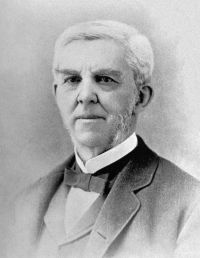 Oliver Wendell Holmes Sr.,
Elsie Venner — Chapter XXVII
(1891)
Oliver Wendell Holmes Sr.,
Elsie Venner — Chapter XXVII
(1891)
“ The Doctor saw into his soul through those awful spectacles of his,--into it and beyond it, as one sees through a thin fog. But it was with a real human kindness, after all. He felt like a child before a strong man; but the strong man looked on him with a father's indulgence. ”
 Sigmund Freud,
A General Introduction to Psychoanalysis
Sigmund Freud,
A General Introduction to Psychoanalysis
“ Let us hope that the physician is modest enough to ascribe the patient's estimation of his personality to the encouragement that has been offered him and to the widening of his intellectual horizon through the astounding and liberating revelations which the cure entails. ”
Frederick William Peabody, The Religio-Medical Masquerade…
“ We have all observed the truth of this inspired utterance in the fact that the physicians, as a body, are almost constantly in bed of one disease or another. The wonder is that any of them ever survive the courses of preparatory study. ”
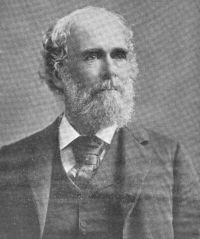 M. L. Holbrook,
Homo-Culture; Or, The Improvement of Offspring Through Wiser Generation
M. L. Holbrook,
Homo-Culture; Or, The Improvement of Offspring Through Wiser Generation
“ In case of disease, even serious disease, when a physician is necessary, suggestion may be used by the nurse or parents, or the physician, if he has learned the art, to advantage; but if the parents are anxious or weary, they had better leave it for those who are not weary or anxious ”
J. Dodd Jackson, The Message and the Man
“ The physician who most commands our confidence and, as a consequence, does us most good is he whose description of our symptoms most nearly corresponds with our own experience, who, we reason, obviously "knows our case." ”
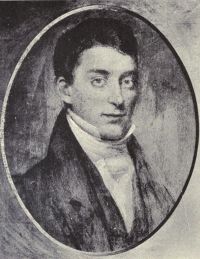 Sheldon Dibble,
Thoughts on Missions
Sheldon Dibble,
Thoughts on Missions
“ The child that is now sitting by your side in perfect health, is suddenly taken sick. Its blooming cheeks turn pale, and it lifts its languid and imploring eyes for help. You call a physician, the most skillful one you can obtain. ”
Sabin Hough, The Judgment Day (1849)
“ When the physician discovers certain signs or symptoms which constitute the diagnosis of any disease, he regards those signs as the effects of a disease already in existence, and treats the patient accordingly. ”
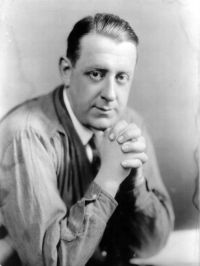 Hendrik Willem Van Loon,
The Story of Mankind
Hendrik Willem Van Loon,
The Story of Mankind
“ When we visit a doctor, we find out before hand whether he is a surgeon or a diagnostician or a homeopath or a faith healer, for we want to know from what angle he will look at our complaint. We ought to be as careful in the choice of our historians as we are in the selection of our physicians. ”
w:Sushruta, Sushruta Samhita, Volume 1 (1907)
“ Therefore a physician should study as many allied branches of (science or philosophy) as possible. The physician who studies the Science of Medicine from the lips of his preceptor, and practises medicine after having acquired experience in his art by constant practice, is the true physician, while any other map dabbling in the art, should be looked upon as an impostor. ”
J. T. Arlidge, On the State of Lunacy and the Legal Provision for the Insane
“ The principal physician is the responsible manager of every case, and should therefore be personally acquainted with the character and condition of his patients, the peculiarities of the diseased mind, as manifested in each one, and the sources of trouble and depression, or exaltation and perversity. ”
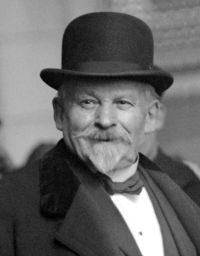 Emile Coué,
Self Mastery Through Conscious Autosuggestion
Emile Coué,
Self Mastery Through Conscious Autosuggestion
“ Before sending away your patient, you must tell him that he carries within him the instrument by which he can cure himself, and that you are, as it were, only a professor teaching him to use this instrument, and that he must help you in your task. ”
Oliver Wendell Holmes, Pages from an Old Volume of Life…
“ It is a very thoughtless thing to say that the physician stands to the divine in the same light as the divine stands to the physician, so far as each may attempt to handle subjects belonging especially to the other's profession. ”
 Orison Swett Marden,
The Victorious Attitude
Orison Swett Marden,
The Victorious Attitude
“ A great many regular physicians now, and all soon will, show patients how they can make use of the great healing, medicinal power of thought, the miracle of right thinking, which unites them with the Force back of the flesh. They will show each patient what attitudes of mind, what affirmations and what auto-suggestions will tend to keep him in harmony; they will teach him the healing use of suggestion. The physician of the future will use largely for his remedies, ideas, mental attitudes, and suggestions. ”
“ It is possible always to do this. Even in certain of the acute diseases favorable suggestion has its place, and for all chronic cases this form of therapeutics is extremely important. The very presence of the physician, especially if he is thoroughly in control of himself, placid, imperturbed, evidently ready to use all his powers without any excitement, is of itself the strongest kind of favorable suggestion. From the very beginning of medical history the presence of the physician has in most cases meant even more than his medicines. ”
Joseph R. Gay, Progress and Achievements of the Colored People
“ The learning required to master either of these professions can be acquired only after the most painstaking and arduous study. To learn the essence of things, the meaning of life and death, the movements that produce life and death, and the symptoms that proclaim disease, come within the purview of the doctor. How can he tell what will be the effect of his medicine unless he knows what the disease is and what effect upon the human body will be his medicines? He must know intimately the thousand and one essential parts of the human body, how they operate and their effects. ”
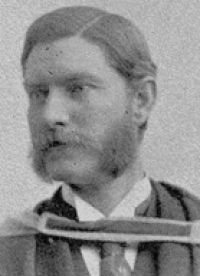 Wesley Mills,
Voice production in singing and speaking…
Wesley Mills,
Voice production in singing and speaking…
“ Often a patient is sent a long distance to consult a medical man, and to return to his own physician for treatment based on the diagnosis made. In these instances the doctor consulted is expected to write his views privately to the patient's doctor, and to recommend treatment. ”
Frederic Henry Balfour, Leaves from my Chinese Scrapbook (1887)
“ It is the doctor who, by feeling the patient's pulse, is expected to detail the various ailments of his patron, which can be correctly diagnosed by a clever practitioner from the slow or hurried beats. ”
Sylvester Maxwell Lambert, A Yankee Doctor in Paradise
“ The general practitioner, who attends one patient at a time, must know something of the sick man’s habits, environment and psychic condition. The health physician in primitive countries has these problems multiplied by thousands. ”
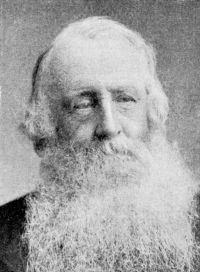 Edward A. Freeman,
The Reign of William Rufus and the Accession of Henry the First…
(1882)
Edward A. Freeman,
The Reign of William Rufus and the Accession of Henry the First…
(1882)
“ There is something striking in the kind of professional air with which the duty is undertaken. The spiritual physician, called in from a distance, approves the treatment of the local practitioners, just as a physician of the body might do. ”
“ To some physicians a patient will present only conventional symptoms, while a follow practitioner will discover the elements of an interesting case. Above all, the painstaking physician, interested in psychology, will find mental and other personal manifestations in his patient that distinctly modify the course of the disease. We must know all that is possible about the patient's attitude of mind toward his malady, and all the ideas that he has acquired with regard to it, either from previous relations with physicians or from what he may have read or heard from others. ”
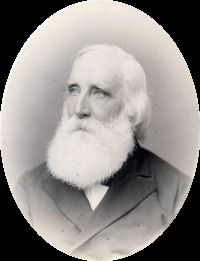 Alfred Stillé,
The Essentials of the Art of Medicine
(1897)
Alfred Stillé,
The Essentials of the Art of Medicine
(1897)
“ In medicine they dispense physicians from that laborious research without which no substantial and lasting results can be reached. And when they are set forth with the fascinating art of speculative genius they draw around them a crowd of disciples who shrink from the slow and toilsome pursuit of the highest truth. ”
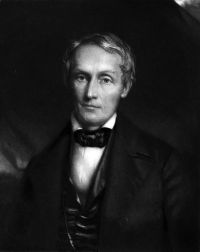 Samuel George Morton,
Biographical Notice of the Late George McClellan…
(1849)
Samuel George Morton,
Biographical Notice of the Late George McClellan…
(1849)
“ To the eye of the casual observer, the path of the physician presents, from day to day and from month to month, the same unvaried uniformity,—a perpetual recurrence of similar scenes and circumstances, of which the busy world feels nothing and knows nothing. ”
