Oriental languages

Definition and stakes

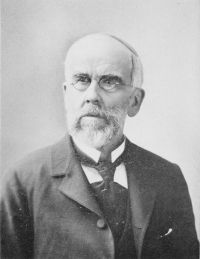
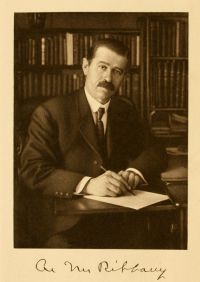
Portrait of Sidney Lewis Gulick Sidney Lewis Gulick Evolution Of The Japanese, Social And Psychic

The "old resident" in the East becomes increasingly convinced with every added year that an Oriental is a different kind of human being from a Westerner. As he becomes accustomed to the externals of the Oriental civilization, he forgets its comical aspects, he even comes to appreciate many of its conveniences. But in proportion as he becomes familiar with its languages, its modes of thought and feeling, its business methods, its politics, its literature, its amusements, does he increasingly realize the gulf set between an Oriental and an Occidental.
Source: Gutenberg

Alfred C. B. Fletcher From Job to Job around the World

We would enter a shop and select an article, and I would then inquire the price of it in Japanese and Richardson would interpret the shop-keeper's reply. By this team work we were able to navigate in a language which takes years to master.
A characteristic impracticability of most Oriental languages, and as much so of the Japanese as any, is the large number of words and phrases necessary to make a brief statement or convey a simple idea. There is a great deal of formality, set phrases and polite sayings, which must be complied with, before the speaker gets down to the point.
Source: Gutenberg

Charles William Russell The life of Cardinal Mezzofanti (1858)

In the East indeed, the faculty of language appears, for the most part, in a form quite different from what we shall find among the scholars of the West. The Eastern linguists, with a few exceptions, have been eminent as mere speakers of languages, rather than scholars even in the loosest sense of the word.
[19]
As it is in the East that the office of Dragoman or “interpreter” first rose to the dignity of a profession, so all the most notable Oriental linguists have belonged to that profession.
Source: Gutenberg

Get perspective with Kwize: daily news enlightened by great literature