Plague of Athens

Definition and stakes

Charles Morris,  Historic Tales: The Romance of Reality…

“ The seeds of death found there fertile soil. Families were crowded together in close cabins and temporary shelters, to which they had been driven in multitudes from their ravaged fields. The plague first appeared in mid-April in the Piræus,—brought, perhaps, by merchant-ships,—but soon spread to Athens, and as the heat of summer came on the inhabitants of that thronged city fell victims to it in appalling multitudes. ”
Source: Gutenberg

C. MacLaurin,  Mere mortals (1925)

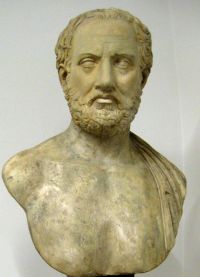
“ The first epidemic of which we have detailed knowledge is the great plague of Athens in the Peloponnesian War about which there can be very little doubt, for it was described by one of the greatest literary artists of Greece, who saw it all with his own eyes, and suffered from it. Thucydides was not a doctor, but like Cervantes he had the eye and mind of a doctor; and he could describe a disease so plainly that many other ancient and even mediæval historians have taken their descriptions of their own epidemics straight from his with never an acknowledgment. ”
Source: Gutenberg

| editor,  The Great Events by Famous Historians… (1905)

“ Out of twelve hundred horsemen, all among the rich men of the state, three hundred died of the epidemic; besides forty-four hundred hoplites out of the roll formally kept, and a number of the poorer population so great as to defy computation. No efforts of the Peloponnesians could have done so much to ruin Athens, or to bring the war to a termination such as they desired: and the distemper told the more in their favor, as it never spread at all into Peloponnesus, though it passed from Athens to some of the more populous islands. ”
Source: Wikisource

Get perspective with Kwize: daily news enlightened by great literature