“ The paper came out every Monday, always truculent and always propagandizing one point of view in politics. The political issue was the only raison d’être of publication. Everything else—foreign news, essays, verses, squibs, advertisements—was filler.Here was something original for this side of the ocean, an experiment in journalism as critical as ever was attempted by any members of our fourth estate; and successful, for the Journal lived and throve and became the ancestor of the great American political organs of modern times. ”
The Journal
Definition and stakes
The theme of “The Journal” has been addressed by authors such as Edward Salisbury Dana, Agnes E. Ryan, Benjamin Eli Smith, Various and Jane Austen. It is often associated with terms like newspaper, journalism, magazine, periodical and literature.
Quotes about “The Journal”
Various, Popular Science Monthly (1887)
“ But not only is journalism as a whole thus specialized; the process is going on within each newspaper-office. The work is more and more divided, as the journal grows in circulation, size, and variety of contents. ”
Samuel R. Wells, How to Behave: A Pocket Manual of Republican Etiquette…
“ Parents and teachers should read the Journal, that they may better know how to govern and train their children. Young people should read the Journal, that they may make the most of themselves. It has long met with the hearty approval of the press and the people. ”
 Jerome K. Jerome,
Tommy and Co
“ Out of the shadows crept to Peter Hope an old forgotten dream—the dream of a wonderful new Journal, price one penny weekly, of which the Editor should come to be one Thomas Hope, son of Peter Hope, its honoured Founder and Originator: a powerful Journal that should supply a long-felt want, popular, but at the same time elevating—a pleasure to the public, a profit to its owners. ”
“ Not keep a journal! How are your absent cousins to understand the tenor of your life in Bath without one? How are the civilities and compliments of every day to be related as they ought to be, unless noted down every evening in a journal? How are your various dresses to be remembered, and the particular state of your complexion, and curl of your hair to be described in all their diversities, without having constant recourse to a journal? ”
 Agnes E. Ryan,
The torch bearer
“ Doing it is bound to mean more education and more organization. For the Journal fills its readers with zeal for the cause; it makes them want to work for it; and it makes them well informed, efficient workers. ”
James P. Boyd, Triumphs and Wonders of the 19th Century…
“ The journalism of the century can boast no more indefatigable and brilliant pen than his, nor did any journal of his day occupy a more commanding place amid the discussions incident to the Civil War and subsequent periods of reconstruction. ”
Benjamin Eli Smith, The New International Encyclopædia (1905)
“ The periodical, as thus defined, originated in France in the seventeenth century, and in the form of the critical literary journal. The first example of it is also one of the most famous and the longest lived, for its publication has continued, though with many interruptions, until the present day—namely the Journal des Savants. The idea which it embodied was conceived about 1663 by the historian Mézeray, who proposed to establish a weekly journal in which should be “made known what was happening in the republic of letters.” His project came to nothing ”
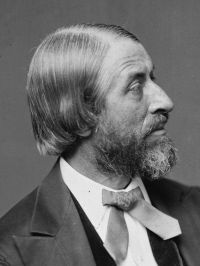 Ainsworth Rand Spofford,
A Book for All Readers
“ It is amazing that a person with any pretensions to discernment should denounce newspapers as unfitted to form a part of a public library. The best newspapers of the time are sometimes the best books of the time. A first-class daily journal is an epitome of the world, recording the life and the deeds of men, their laws and their literature, their politics and religion, their social and criminal statistics, the progress of invention and of art, the revolutions of empires, and the latest results of science. ”
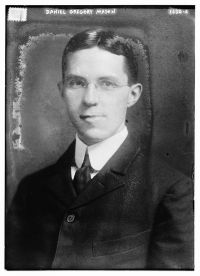 Daniel Gregory Mason,
The Romantic Composers
“ One of the most touching features of the New Journal, to a reader of to-day, is the almost too generous kindliness of its judgments, the eager enthusiasm with which it proclaims the advent of geniuses who have already fallen into oblivion. ”
James Melvin Lee, History of American Journalism (1917)
“ Taking as her motto a Scriptural phrase about lifting up a standard which should be a light unto the people, she resolved that her newspaper, instead of being a mirror for reflecting destructive agencies, should be a journal to record achievements in every useful field of human endeavor. ”
 Clement King Shorter,
Victorian Literature: Sixty Years of Books and Bookmen
“ The journalism of the reign has been so intimately associated with literature that were my space more ample I should have chosen to devote a chapter to that subject alone. Many of the men I have mentioned, perhaps most of them, have at one time or another contributed to the journals or magazines of the day. ”
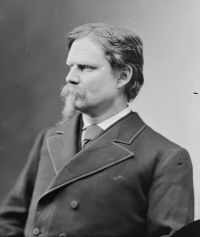 Henry Watterson,
Marse Henry: An Autobiography, Complete
“ More and more must these requirements be fulfilled by the aspiring journalist. As the world passes from the Rule of Force—force of prowess, force of habit, force of convention—to the Rule of Numbers, the daily journal is destined, if it survives as a power, to become the teacher—the very Bible—of the people. The people are already beginning to distinguish between the wholesome and the meretricious in their newspapers. Newspaper owners, likewise, are beginning to realize the value of character. ”
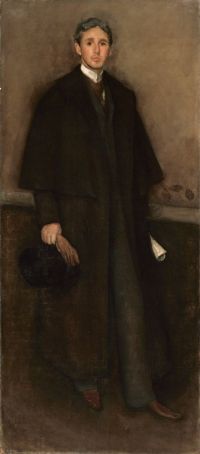 Arthur Jerome Eddy,
Cubists and Post-Impressionism
“ The much-despised “yellow journal” of America has taught a valuable lesson in the art of emphasis, and its effect is seen not only in the make-up of newspapers but of periodicals, and will be felt in the make-up of books. ”
Robert Butler, Narrative of the Life and Travels of Serjeant B—…
“ Many passages of the Journal excited a very pleasing and deep interest in those to whom they were communicated, and the desire of perusing it gradually extended itself to persons in a higher condition of life. ”
Ainsworth Rand Spofford,
A Book for All Readers
“ Not less important than the preservation of newspapers is that of reviews and magazines. In fact, the latter are almost universally recognized as far more important than the more fugitive literature of the daily and weekly press. Though inferior to the journals as historical and statistical materials, reviews and magazines supply the largest fund of discussion concerning such topics of scientific, social, literary, and religious interest as occupy the public mind during the time in which they appear. ”
 J. Comyns Carr,
Some eminent Victorians: Personal recollections in the world of art and letters
(1908)
“ A young man who has gained an entry into the journalistic world can sometimes get through a prodigious amount of work, and at the time I am speaking of it often happened that within the week, besides my morning duties upon the Globe, I would furnish one, and sometimes two, articles to the Saturday Review, an article to the Examiner, another to the World, and, in addition, three or four columns of art criticism to the Pall Mall Gazette, apart from regular work in the same department for the Manchester Guardian, and occasional articles in other daily or weekly journals. ”
 Bert Leston Taylor,
Under Three Flags: A Story of Mystery
“ Our journal, like every other decent paper, prints the news. If it were to investigate every dispatch that comes to it day by day there would be precious little information for the reader who turns to it each morning. ”
Thomas Thalric Harman, Showell's Dictionary of Birmingham… (1885)
“ Journal.—A paper with this name was published in 1733, but there are no files extant to show how long it catered for tlie public. A copy of its 18th number, Monday, May 21, 1733, a small 4to of 4 pages, with the 1⁄2d. red stamp, is in the possession of the proprietors of the Daily Post, The Journal of later days first appeared June 4 1825, and continued to be published as a Saturday weekly until 1873, when it was incorporated with the Daily Post. ”
Various, The International Monthly Magazine - Volume V - No II
“ If we advert to the instructive fact, of the enormous circulation of many of the journals of New-York, as the Herald, the Sun, the Tribune, the Times, the Express, the Mirror, and others issued daily; if we calculate the copies of the Observer, the Home Journal, the Christian Advocate, and others [pg 265] of the weekly press; the circulation of the monthly and other periodicals ”
Various, The Germ: Thoughts towards Nature in Poetry…
“ It had at first been proposed to print upon the prospectus and wrappers of the magazine the words “Conducted by Artists,” and also (just about this time) to entitle it “The P.R.B. Journal.” I called attention to the first of these points as running counter to my assuming the editorship, and to the second as in itself inappropriate: both had in fact been already set aside. ”
 John Drinkwater,
Victorian Poetry
(1924)
“ Journalism, decently practised, can be as honourable and useful a profession as any other, and one to show [65] natural gifts of taste and presentation to great advantage. But journalism is not literature, nor are its aims or methods those of literature. That literature often appears in the journals is beside the point. ”
 Benjamin Blake Minor,
The Southern Literary Messenger…
(1905)
“ Dear Sir—In a late paragraph respecting the Southern Literary Messenger, you did injustice to that Magazine, and perhaps your words, if unanswered, may do it an injury. As any such wrong is far from your thoughts you will, of course, allow the editor of the Messenger the privilege of reply. The reputation of a young Journal, occupying a conspicuous post in the eye of the public, should be watched by those who preside over its interests, with a jealous attention, and those interests defended when necessary and when possible. But it is not often possible. ”
 Hilaire Belloc,
The Aftermath; Or, Gleanings from a Busy Life
(1903)
“ I deal here first with editing, by which I do not mean the management of a whole newspaper—for this has no connection whatever with the art of letters—but the selection, arrangement, and annotating of work produced by another hand, and entrusted to the journalist for publication in his columns. The work is far easier than might appear at first sight. ”
 Wilkie Collins,
My Miscellanies, Vol. 1 (of 2)
“ And now, just as impartially, I dip into one journal after another, on the Correspondents' page, exactly as the five happen to lie on my desk. The result is, that I have the pleasure of presenting to those ladies and gentlemen who may honour me with their attention, the following members of the Unknown Public, who are in a condition to speak quite unreservedly for themselves:—A reader of a penny-novel-journal who wants a receipt for gingerbread. A reader who complains of fulness in his throat. ”
 Arnold Bennett,
Journalism for Women: A Practical Guide
“ Perhaps of all the different kinds of papers, that most useful to the beginner is the "popular weekly" class, chiefly represented by Tit-Bits, Answers, Pearson's Weekly, Cassell's Saturday Journal, and Success. These papers pay liberally and promptly (one or two of them before publication) , and they do not exact from the contributor a high literary standard. Their matter falls into two main divisions: articles beginning with "How"--broadly, "How the other half lives;" and articles enumerating curious facts and incidents--for example, "Peers who have become Cabmen." ”
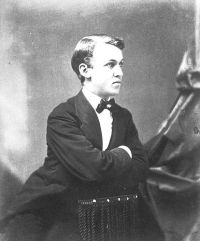 Edward Salisbury Dana,
A century of science in America
(1918)
“ That the period when satisfactory compensation can be made to all writers whose pieces are inserted, and to whom payment will be acceptable, is not distant, may perhaps be hoped, from the spontaneous expression of the following opinion, by the distinguished editor of one of our principal literary journals, whose letter is now before me. “The character of the American Journal is strictly national, and it is the only vehicle of communication in which an inquirer may be sure to find what is most interesting in the wide range of topics, which its design embraces. ”
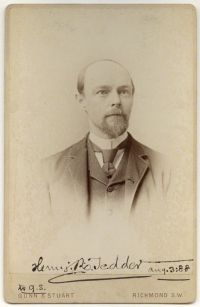 Henry Richard Tedder,
1911 Encyclopædia Britannica
(1911)
“ In modern times the weekly journal has become so much of the nature of a newspaper that it seldom can be called a periodical in this sense. The present article chiefly deals with publications devoted to general literature, literary and critical reviews and magazines for the supply of miscellaneous reading. In the article Societies (q.v.) an account is separately given of the transactions and proceedings of learned and scientific bodies, Year-books, almanacs, directories and other annuals belong to a distinct type of publication, and are not referred to here. ”
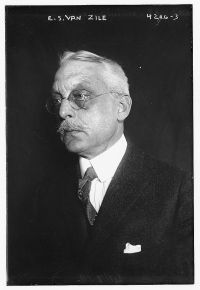 Edward S. Van Zile,
The Manhattaners: A Story of the Hour
“ How different is the working of the great brain-engine above stairs! Here man rubs against man, jealousy and discontent and favoritism do what they can to clog the machinery; and the more one knows about the inner197 life of a newspaper-office, the more the wonder grows that the newspaper of to-day approximates so closely to the highest journalistic ideal. You may find flaws, gentle reader, in what your favorite journal says, but its typographical make-up is always perfect. ”
Various, Punch, or the London Charivari…
“ When a journal makes a call upon a good author, and in the pages of which he can gain neither honour nor renown, from which, as a matter of taste, he would shrink, under ordinary circumstances, from contributing to, that journal ought to be subjected to careful scrutiny. ”
 Paul Bourget,
The Age for Love
“ Yes, I scribbled four pages which would have been no disgrace to the Journal des Goncourts, that exquisite manual of the perfect reporter. It was all there, my journey, my arrival at the chateau, a sketch of the quaint eighteenth century building, with its fringe of trees and its well-kept walks, the master's room, the master himself and his conversation; the tea at the end and the smile of the old novelist in the midst of a circle of admirers, old and young. It lacked only a few closing lines. "I will add these in the morning," ”
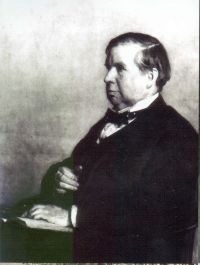 Charles Whibley,
American Sketches
“ The journals, too, which take their material where they find it, give to many specimens a life as long as their own. It is scarcely possible, for instance, to pick up an American newspaper that does not turn the word cinch to some strange purpose. The form and origin of the word are worthy a better fate. ”
New York evening journal, What's in the New York Evening Journal
“ Improvements have been constant. The aim has been to give the public a better and still better newspaper, to make the New York Evening Journal more attractive and interesting to every member of the family. ”
 Carl Schurz,
Speeches, correspondence and political papers of Carl Schurz
(1913)
“ I have a standing invitation from the Harpers to write for the Weekly on whatever political subject may seem important to me, my articles to appear at the head of the editorial page and thus to be laid before the quarter of a million readers of that journal. ”
“ The story is a good one if the reader will suspend his sense of realism sufficiently to enjoy it. But in its purport [Pg 148] to be a true account of an arrest and a trial of certain persons, it makes one doubt first the story, then the newspaper that printed it, and finally newspapers in general. And so develops one of the main causes of criticism of the modern newspaper. A reporter must resolve to tell the truth, the whole truth, and nothing but the truth. A journal loses its power the moment it is wrong. ”
Henri Frédéric Amiel, Amiel's Journal: The Journal Intime of Henri-Frédéric Amiel
“ March 1, 1881.—I have just been glancing over the affairs of the world in the newspaper. What a Babel it is! But it is very pleasant to be able to make the tour of the planet and review the human race in an hour. It gives one a sense of ubiquity. A newspaper in the twentieth century will be composed of eight or ten daily bulletins—political, religious, scientific, literary, artistic, commercial, meteorological, military, economical, social, legal, and financial ”
 Alexis de Tocqueville,
Democracy in America
(1835)
“ In the United States each separate journal exercises but little authority, but the power of the periodical press is only second to that of the people. ”
 Henry David Thoreau,
Winter: From the Journal of Henry D. Thoreau…
(1888)
“ A journal is a record of experiences and growth, not a preserve of things well done or said. ”
Alexis de Tocqueville,
Democracy in America
(1835)
“ The personal opinions of the editors have no kind of weight in the eyes of the public: the only use of a journal is, that it imparts the knowledge of certain facts, and it is only by altering or distorting those facts that a journalist can contribute to the support of his own views. ”
 Bram Stoker,
Dracula
(1897)
“ I don’t mean one of those two-pages-to-the-week-with-Sunday-squeezed-in-a-corner diaries, but a sort of journal which I can write in whenever I feel inclined. I do not suppose there will be much of interest to other people; ”
 Grant Allen,
The British Barbarians
“ it is almost impossible to get a novel printed in an English journal unless it is warranted to contain nothing at all to which anybody, however narrow, could possibly object, on any grounds whatever, religious, political, social, moral, or aesthetic. The romance that appeals to the average editor must say or hint at nothing at all that is not universally believed and received by everybody everywhere in this realm of Britain. ”
Related terms
Authors who wrote about “The Journal”
Edward Salisbury DanaAgnes E. RyanBenjamin Eli SmithVarious Jane AustenAlexis de TocquevilleSamuel R. WellsHenry WattersonJerome K. JeromeJames P. BoydC. E. PageAinsworth Rand SpoffordJames Melvin LeeArthur Jerome EddyDaniel Gregory MasonRobert ButlerBert Leston TaylorWilkie CollinsThomas Thalric HarmanBenjamin Blake Minor
