Thomas Horne

Definition and stakes

1911 Encyclopædia Britannica, Volume 13 (1911)

“ That poem, indeed, has much of the quality of fine poetry; it is earnest, vivid and alive with spirit. But Horne early drove his talent too hard, and continued to write when he had little left to say. In criticism he had insight and quickness. He was one of the first to appreciate Keats and Tennyson, and he gave valuable encouragement to Mrs Browning when she was still Miss Elizabeth Barrett. ”
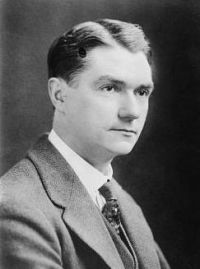
Source: Wikisource

Arthur Henry Bullen,  Dictionary of National Biography… (1891)

“ One of the poems was a long piece in blank verse, ‘Ancient Idols, or the Fall of the Gods,’ which he regarded as his most considerable work. He appointed as his literary executor Mr. H. Buxton Forman, who in 1872 had reprinted from ‘Household Words’ (14 June 1851) his striking poem, ‘The Great Peace-maker; a Submarine Dialogue,’ on the laying of the submarine cable between Dover and Calais.
Horne was a talented, energetic, and versatile writer. His epic and his early tragedies have much force and fire, but they are not born for immortality.
”
Source: Wikisource

Portrait of John Drinkwater John Drinkwater,  Victorian Poetry (1924)

“ Horne was a strange figure in Victorian poetry who gets an obscure corner in the anthologies, and is otherwise forgotten save as a friend of the Brownings. But he was a poet of great ambitions, and of a good deal more achievement than we remember. His epic poem Orion, which attained much fame in its time, and some permanent notoriety as the Farthing Epic, so called because Horne, angered by public neglect when it first appeared, contemptuously had it sold at a farthing, [144] is a very readable work for any one who cares to try it and is not afraid of poetry in long measure. ”
Source: Gutenberg

Get perspective with Kwize: daily news enlightened by great literature