Treaty of Tilsit

Definition and stakes

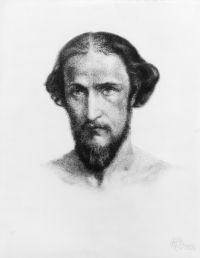
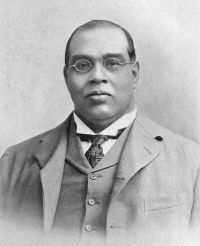
Portrait of Romesh Chunder Dutt Romesh Chunder Dutt Three Years in Europe, 1868 to 1871 (1896)

Up to the treaty of Tilsit, the wars of France were essentially defensive; for the bloody contest that wasted the continent so many years was not a struggle for pre-eminence between ambitious powers, nor a dispute for some accession of territory, nor for the political ascendancy of one or other nation, but a deadly conflict to determine whether aristocracy or democracy should predominate; whether equality or privilege should henceforth be the principle of European governments.
Source: Wikisource

Edward Farr The History of England in Three Volumes…

Although Russia promised to make peace with the Porte, a scheme was concocted for the future dismemberment of the empire, and for the distribution of its spoils to Russia, France, and Austria. Plots were also devised against Sweden and Spain, although the latter country had recently sacrificed its whole navy in Napoleon’s cause, and whose army was still engaged for him in the north. The treaty of Tilsit was, in fact, nothing less than a league, avowed or secret, to enchain the world; most of the European countries were already enslaved, and those that were not were threatened.
Source: Gutenberg

L. Oppenheim International Law. A Treatise. Volume 1…

Napoleon I. imposed by the Peace Treaty of Tilsit of 1807 upon Prussia the restriction not to keep more than 42,000 men under arms. Again, article 29 of the Treaty of Berlin of 1878 imposed upon Montenegro the restriction not to possess a navy. [205] There is hardly a State in existence which is not in one point or another restricted in its territorial supremacy by treaties with foreign Powers.
Source: Gutenberg

Get perspective with Kwize: daily news enlightened by great literature