Urdu

Definition and stakes

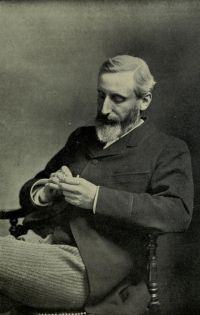
George Abraham Grierson,  1911 Encyclopædia Britannica (1911)

“ For this the indigenous dialects (usually Awadhi or Braj Bhasha) are nearly always employed by Hindus. Urdu, on the other hand, having had a natural growth, has a vigorous poetical literature. Modern Hindi prose is often disfigured by that too free borrowing of Sanskrit words instead of using home-born tadbhavas, which has been the ruin of Bengali, and it is rapidly becoming a Hindu counterpart of the Persianized Urdu, neither of which is intelligible except to persons of high education. ”
Source: Wikisource

Hindustani Lyrics

“ Of the many languages of India, Urdu (Hindustani) is the most widely known, especially in Upper India. Both as a written and a spoken language it has a reputation throughout Asia for elegance and expressiveness. Until the time of Muhammad Shah, Indian poetry was written in Persian. But that monarch, who mounted the throne of Delhi in 1719, greatly desired to make Urdu the vogue, and under his patronage and approval, Hatim, one of his ministers, and Wali of the Deccan, wrote Diwans in Urdu. ”
Source: Gutenberg

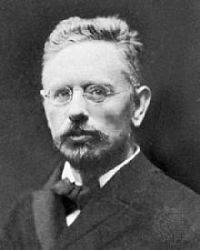
Bhupendranath Dutt,  The Calcutta Review, 3rd Series… (1925)

“ Attempt is being made on all parts of the country to make Urdu as the common language of these heterogeneous elements. The largest number of Mohammedans dwell in the Panjab and in Bengal. The Mohammedans of the Panjab speak Panjabi dialect at home, but the educated ones read and write Urdu. In the same way attempt is being made, though not yet in a decisive form, to universalize Urdu amongst the Mohammedans of Bengal, as also in the Western Presidency. ”
Source: Wikisource

Get perspective with Kwize: daily news enlightened by great literature