Absolute temperature

Definition and stakes

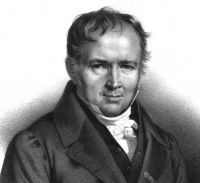
Portrait of John Ball John Ball,  Notes of a naturalist in South America

“ The primary source of temperature is solar radiation, and its effect at any given point on the earth’s surface depends on the absolute amount of heating power in the sun’s rays, irrespective of absorption, commonly designated the solar constant, and on the proportion of heat which is lost by absorption in passing through the atmosphere. The temperature of the air at any point will, in the first place, depend on the amount of solar radiation and of heat radiated from terrestrial objects directly absorbed, and next on the heating of the strata near the surface by convection. ”
Source: Gutenberg

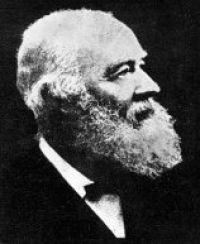
Calvin Cutter,  A Treatise on Anatomy, Physiology…

“ The temperature of man is about 98°, (Fahrenheit’s thermometer,) and that of some other animals is higher; the temperature of birds, for example, is about 110°. It is obvious, that in most parts of the globe, the heat of the atmosphere is, even in summer, less than that of the human body. In our latitude, the mercury rarely attains 98°, and sometimes it descends to several degrees below zero. ”
Source: Gutenberg

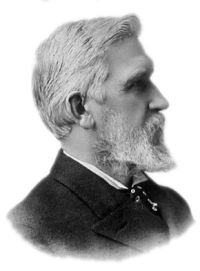
Various,  Graham's Magazine, Vol. XLI, No…

“ Heat rarefies and expands a volume of air in a ratio equivalent to an addition of about seventy feet to the ordinary height of the atmosphere for every degree of thermometrical measurement. As the sun is always vertical at some place within the tropics, the average temperature of the earth’s surface in that region, bounded by the parallels of 231⁄2° on each side of the equator, is much higher than in latitudes to the north and south ”
Source: Gutenberg

Get perspective with Kwize: daily news enlightened by great literature