Astronomical clock

Definition and stakes

Portrait of Denison Olmsted Denison Olmsted,  Letters on Astronomy

“ The astronomical clock is the constant companion of the transit instrument. This clock is so regulated as to keep exact pace with the stars, and of course with the revolution of the earth on its axis; that is, it is regulated to sidereal time. It measures the progress of a star, indicating an hour for every fifteen degrees, and twenty-four hours for the whole period of the revolution of the star. Sidereal time commences when the vernal equinox is on the meridian, just as solar time commences when the sun is on the meridian. ”

Source: Gutenberg

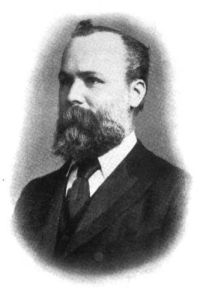
Portrait of Harold Jacoby Harold Jacoby,  Practical Talks by an Astronomer

“ To discover, therefore, whether our clock is right on any given night, it is merely necessary to watch a star with the telescope, and note the exact instant by the clock when it reaches the little cross in the field of view. Knowing from the astronomical tables the time when the star ought to have been on the meridian, and having observed the clock time when it is actually there, the difference is, of course, the error of the clock. ”
Source: Gutenberg

Arthur Hayden,  Chats on Old Clocks

“ We must commence with the known data that the earth revolves on its axis in twenty-four hours, or, to be more exact, in 23 hours 56 minutes 4 seconds. Astronomical clocks recording with scientific exactitude this phenomenon are on a plane apart, as are chronometers used by mariners. The astronomer uses a clock with numbers on its dial plate up to twenty-four; the common clock has only twelve hour numerals.
To come straight to modernity, it must be recognized that the measurement of time scientifically and the measurement of time according to civil law are two different things.
”
Source: Gutenberg

Get perspective with Kwize: daily news enlightened by great literature