“ The vibrations of the balance-wheel are the result of the action of two forces, one being the force of the mainspring acting through the “train” of wheels and the escapement, to turn the balance-wheel on its axle, and the other being the opposing force of a very small spring, known as the hair-spring, coiled loosely about the balance-wheel, and which thus tends to regulate the power of the mainspring. ”
Balance wheel
Definition and stakes
The balance wheel, a crucial component in mechanical timepieces, operates as a harmonic oscillator, controlling time through oscillations powered by a balance spring. Central to clocks and watches since the 14th century, its accuracy was transformed in 1657 with the introduction of the balance spring, achieving a level of precision previously unimaginable. Authors such as Ernst Mach described its mechanical interaction, while Orison Swett Marden emphasized its significance as a fundamental element in machinery.
Sabine Baring-Gould compared its dual-metal construction to a state of balance, and Edward Huntington Williams explained its method of temperature compensation. Despite the rise of quartz technology, the balance wheel continues to play a vital role in mechanical watches, its lasting importance stemming from its capacity to blend precision with practicality.
Quotes about “balance wheel”
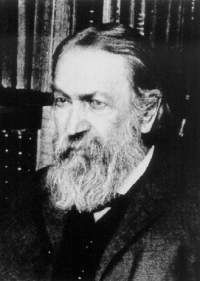 Ernst Mach,
Popular scientific lectures
Ernst Mach,
Popular scientific lectures
“ For example, turn an open watch which has run down freely backwards and forwards in your hand. The balance-wheel will not fully catch the rapid rotations, it does not even respond fully to the elastic force of the spring which proves too weak to carry the wheel entirely with it. ”
 Orison Swett Marden,
Ambition and Success
Orison Swett Marden,
Ambition and Success
“ It is the stored-up power, velocity, and momentum which enable it to accomplish this wonderful task. Take away the balance-wheel, and the machinery, which does its work as easily as a cook would make the holes in rolled-out pastry, falls all to pieces the moment the balance-wheel is removed. ”
 Melville Fuller,
American Road-Machine Company v…
Melville Fuller,
American Road-Machine Company v…
“ The rim of the wheel, acting by its momentum as a balance-wheel, also enables the operator by a quick movement to suddenly throw the blade completely up from the ground to avoid contact of large stones or other obstructions while the machine is in motion. ”
Anonymous, Watch and Clock Escapements
“ Subjected as it is to the influence of the slightest variation in the motive power and of the least jar or shaking, a balance wheel escapement improvided with a regulator containing within itself a regulating force, could not possibly give forth anything else than an unsteady movement. ”
Harry Chase Brearley, Time Telling through the Ages
“ Balance Spring Buckle or "Guard"—A small stud with a projecting tongue attached to the index arm and bridging the curb pins so as to prevent their engaging two of the balance spring coils. Used chiefly in Swiss watches.Balance Staff—The axis of the balance. The part of a watch most likely to be injured by a fall.Balance Wheel—A term often incorrectly applied to the balance itself, but properly it is the escape wheel of the verge escapement. ”
 Sabine Baring-Gould,
Arminell, a social romance
(1896)
Sabine Baring-Gould,
Arminell, a social romance
(1896)
“ There are plenty of hot-brained Phaethons who think themselves capable of driving the horses of the sun, and who have not yet learned to control themselves. To my mind, Lamerton, our class is the fly-wheel that saves the watch from running down at a gallop, and marking no progress at all. In the chronometer the balance-wheel is made up of two metals with different powers of contraction and expansion, one holds the other in check, and produces equilibrium. The wheel oscillates this way, that way, and acts as a controlling power on the mainspring and modifies the action of the wheels. ”
Melville Fuller,
American Road-Machine Company v…
“ The knowledge was common that when a continuous power is applied, but the resistance to be overcome is unequal, a fly or balance wheel will store some of the power expended during the operation, and not needed at one stage, and give it out at another. ”
Anonymous, The boy's book of trades and the tools used in them (1866)
“ In a balance wheel, the water strikes the wheel not at the top, but always more or less above its centre, or axle. This wheel differs in no respect from the overshot wheel in its construction. It is employed where there is not a sufficient fall for an overshot wheel, which requires less water in consequence of its commanding a much greater leverage. ”
Edward Huntington Williams, Every-day Science: Volume 7. The Conquest of Time and Space
“ Harrison early conceived the idea that it might be possible to apply the same principle to the balance-wheel of the watch. This problem presented very great practical difficulties, but by persistent effort these were finally overcome, and a balance-wheel produced, which, owing to the unequal expansion and contraction of its two component metals under changing temperature, altered its shape and so maintained its rate of oscillation almost—though never quite—regardless of changing conditions of temperature. ”
 Frances E. Willard,
A wheel within a wheel
Frances E. Willard,
A wheel within a wheel
“ You have to balance your system more carefully than you ever did your accounts; not the smallest fraction can be out of the way, or away you go, the treacherous steed forming one half of an equation and yourself with a bruised knee forming the other. You must add a stroke at just the right angle to mount, subtract one to descend, divide them equally to hold your seat, and multiply all these movements in definite ratio and true proportion by the swiftest of all roots, or you will become the most minus of quantities. ”
Anonymous, Watch and Clock Escapements
“ Having thoroughly sifted the many varieties at hand, it has been finally determined that the only means known to provide the most regular flow of power consists in intermittently interrupting the procession of the wheel-work, and thereby gaining a periodically uniform movement. Whatever may be the system or kind of escapement employed, the functioning of the mechanism is characterized by the suspension, at regular intervals, of the rotation of the last wheel of the train and in transmitting to a regulator, be it a balance or a pendulum, the power sent into that wheel. ”
Melville Fuller,
American Road-Machine Company v…
“ All revolving wheels possess momentum, but momentum wheels, so called, as balance or fly wheels, are wheels whose momentum is utilized in the operation of machinery by a sufficient accumulation of force, through the weight and velocity of the wheel combined, to overcome the effects of temporary loss of power. ”
1911 Encyclopædia Britannica (1911)
“ It is also the custom to balance a proportion of the reciprocating masses by balance weights placed between the spokes of the wheels, and the actual balance weight seen in a driving-wheel is the resultant of the separate weights required for the balancing of the revolving parts and the reciprocating parts. ”
Harry Chase Brearley, Time Telling through the Ages
“ You know how the power gets as far as the escape wheel from the mainspring, and how the motion of the balance lets the escape-wheel revolve a tooth at a time, but you have still to learn how the power which keeps the balance rotating reaches it from the escape-wheel through the lever. Here is the most interesting feature of a watch movement.After the balance has been started, its momentum at each turn starts the lever when the jewel-pin strikes it, but unless the balance was constantly supplied with new power it would soon stop, and the watch would not run. ”
Archibald Williams, The Romance of Modern Invention
“ A revolving body that is not exactly balanced runs unequally, and transmits a tremor to anything with which it may be in contact. Turn a cycle upside down and revolve the driving-wheel rapidly by means of the pedal. The whole machine soon begins to tremble violently, and dance up and down on the saddle springs, because one part of the wheel is heavier than the rest, the mere weight of the air-valve being sufficient to disturb the balance. Now consider what happens in the engine-room of high-powered vessels. ”
1911 Encyclopædia Britannica (1911)
“ The component of a balance weight which is necessary to balance the reciprocating masses introduces a vertical unbalanced force which appears as a variation of pressure between the wheel and the rail, technically called the hammer-blow, the magnitude of which increases as the square of the speed of the train. ”
bart. Sir Arthur Percival Heywood, Minimum Gauge Railways
“ A further arrangement of value is that in all my engines the cranks are counter-balanced. It is impossible to effect the counter-balancing on the wheels, nor, even if feasible, will the result p. 28be so good, as counter-balance weights on the wheel are not at the same distance from the axle centre as the disturbing weights, and therefore not equable in their effect at different speeds. ”
Leigh Richmond, Where I Wasn't Going
“ As a method of controlling and changing the rate of rotation of the wheel, the rivers of water had already proven themselves; and as a method of static balancing to compensate for off-center weights, masses of it could be stopped and held in counterbalance tanks around the rim, thus assuring that the observatory, in its stationary position on the hub, would not suddenly take up an oscillatory pattern of motion as the balance within the wheel was shifted either by moving equipment or personnel. ”
A. Russell Bond, Mechanics: The Science of Machinery
“ Such a tremendous [150] speed has its disadvantages. If a wheel is to run smoothly it must revolve on its center of gravity. A lopsided wheel, or one that is mounted a little off center, produces a pounding action which imposes a serious strain upon the bearings and the revolving parts. The wheel tries to turn on its own center of gravity and will do so if permitted to. It is impossible to balance a wheel so perfectly that the axis it turns on passes exactly through its center of gravity. ”
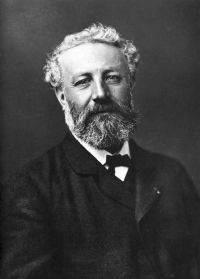 Jules Verne,
A Winter Amid the Ice, and Other Thrilling Stories
Jules Verne,
A Winter Amid the Ice, and Other Thrilling Stories
“ Thus the body regulates the soul, and, like the balance-wheel, it is submitted to regular oscillations. ”
Aram D'Abro, The evolution of scientific thought from Newton to Einstein (1927)
“ We may infer therefrom that if a couple is applied to the first wheel it will balance a ten times greater couple applied to the last one. This information is obtained without our having to consider the mechanism whereby this state of equilibrium is realised and without our having to know how the various forces will balance one another inside the machine. ”
Edward Huntington Williams, Every-day Science: Volume 6. The Conquest of Nature
“ A moment's reflection will make it clear that the wheel is a lever of the first class, of which the axle constitutes the fulcrum. The spokes of the wheel being of equal length, weights and forces applied to opposite ends of any diameter are, of course, in equilibrium. It follows that when a wheel is adjusted so that a rope may be run about it, constituting a simple pulley, a mechanism is developed which gives no gain in power, but only enables the operator to change the direction of application of power. ”
James White, A New Century of Inventions
“ For if the number of the teeth on these wheels (A and C) differ only by unity or one, then must the handle D revolve one turn about that common centre to occasion 1⁄100 part of a revolution of the wheel A, and of course 100 turns to move the axis B once round that centre. And if further the wheel A be three times the diameter of the axis B, the power gained there would be as 300 to 1, [75] that is a power of 1lb. at a distance from the centre, only equal to the radius of the wheel A, would countervail a weight of 300lb. suspended on the axis B: and supposing a man’s strength to be 100lb. ”
Robert P. Scott, Cycling art, energy, and locomotion
“ It is evident that all this theory applied to one obstruction is simply repeated in a number of them, and a number of them make up a rough road, bearing in mind that a rut is but one form of an obstacle.Some makers of late seem to realize the importance of springs which will allow of a horizontal as well as a vertical motion, and have in them not only provided against the loss of momentum in the man, but also in the entire machine exclusive of the front wheel. ”
Edward Huntington Williams, Every-day Science: Volume 6. The Conquest of Nature
“ The more one considers the mechanism, the more one must marvel at the ingenuity of the pre-historic man who invented the wheel and axle. Its utility is sufficiently obvious once the thing has been done. In point of fact, it so enormously reduces the friction that a man may convey ten times the burden with its aid that he can without it. But how was the primitive man, with his small knowledge of mechanics, to predict such a result? ”
 Richard Jefferies,
The Hills and the Vale
Richard Jefferies,
The Hills and the Vale
“ A workman sets a tool to plane its edge, which shaves off the steel as if it were wood, and reduces it to the prescribed scale. Then, when its centre has been bored to receive the axle, the genesis of the wheel is complete, and it enters upon its life of perpetual revolution. How little do the innumerable travellers who are carried to their destination upon it imagine the immense expenditure of care, skill, labour, and thought that has been expended before a perfect wheel was produced. ”
Robert P. Scott, Cycling art, energy, and locomotion
“ No one can readily believe how common such ideas as the above spring method are till they scour the patent-office records, or talk to the cycle hobbyist. Intelligent men often remark “how powerful” a certain machine must be “with that long lever,” when the lever is hung to be worked from the short end; and how often we have heard them condemn the thirty-inch safeties as being slow, on account of the small wheel. ”
 Niccolò Machiavelli,
The Art of War — Book 7
(1675)
Niccolò Machiavelli,
The Art of War — Book 7
(1675)
“ When it goes level, the wheels equally sustain the weight, which, being divided equally between them, does not burden them much; when it inclines, it comes to have all the weight of the load upon that wheel on which it inclines. ”
Robert P. Scott, Cycling art, energy, and locomotion
“ Such fundamental principles as that a short lever hung in the middle is just as powerful as a long one hung in the same way; that two turns of a small wheel rolls over as much ground as one turn of another twice the size; that there is no more power in a spring than you put into it, and many other like principles, all seem to be forgotten in the general rush to be the first to make a mile a minute on a dirt road.Truly we inhabit a wonderful sphere; only just make gravity pull sideways, and we would have no further use for locomotives. ”
Robert P. Scott, Cycling art, energy, and locomotion
“ We shall attack first the reduction of direct organic friction by discussing the manner of applying the energy of man to revolve the wheel; his position and economy of power; and secondly, the reduction of the indirect or inorganic friction in the machine by regulating the size of the wheels and weight thereof, the jolt or jar, the friction of the parts one upon another, loss of momentum, and such other problems as may present themselves in the course of our discussion. ”
Henry Kater, A Treatise on Mechanics
“ In these different positions the effect of the power transmitted to the working point is different; and cases even occur in which this effect is altogether annihilated, and the machine is brought into a predicament in which the power loses all influence over the weight. In such cases the aid of a fly-wheel is effectual and indispensable. ”
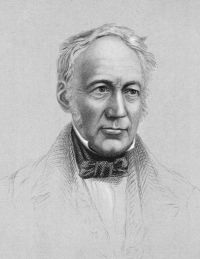 Andrew Ure,
A Dictionary of Arts, Manufactures and Mines
Andrew Ure,
A Dictionary of Arts, Manufactures and Mines
“ To discover whether two weights be equal, we must oppose them to each other in a machine where they act in a similar manner, and then see if they maintain an equilibrium; for example, we fulfil this condition if we suspend them at the two extremities of a lever, supported at its centre, and whose arms are equal. Such is the general idea of a balance. The beam of a good balance ought to be a bar of well-tempered steel, of such form as to secure perfect inflexibility under any load which may be fitly applied to its extremities. ”
Henry Kater, A Treatise on Mechanics
“ It is evident that as the power descends continually, and the rope is uncoiled from the wheel, the weight will be raised continually, the rope by which it is suspended being at the same time coiled upon the axle.When the machine is in equilibrium, the forces of both the weight and power are sustained by the axle, and distributed between its props, in the manner explained in (245.) When the machine is applied to raise a weight, the velocity with which the power moves is as many times greater than that with which the weight rises, as the weight itself is greater than the power. ”
Albert A. Hopkins, Magic, Stage Illusions and Scientific Diversions…
“ In fact, every screw, in making one revolution, causes the motion of one tooth of the wheel with which it gears; so that the screw carried by the face wheel, in revolving once, indicates eight revolutions of the wheel of the vehicle, while it moves only one tooth of the wheel upon which it acts. So, too, the said toothed wheel, in making one revolution, will cause the screw fixed to its plane to make one revolution, and a single one of the teeth of the succeeding wheel will be thrust forward. ”
F. Marion Crawford, Sant' Ilario
“ Throw two equal weights into the scales of a perfectly adjusted balance, the arm will swing and move erratically many times before it returns to its normal position, although there is a potential equilibrium in the machine which will shortly assert itself in absolute tranquillity. ”
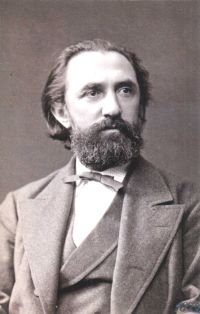 Franz Reuleaux,
The Kinematics of Machinery
(1876)
Franz Reuleaux,
The Kinematics of Machinery
(1876)
“ If any disturbing force act sideways upon the wheel, then (if we suppose the material of the wheel, shaft, and bearings to be completely rigid) no alteration of the circular motion occurs; and this is true equally whether be great or small, continuous or intermittent, constant or changing in direction. There is nevertheless continuous equilibrium here, but in another way than before. So soon as the force begins to act it calls forth in the interior of the wheel, the shaft and the supports, internal molecular forces, opposite in direction and exactly equal to it. ”
Related terms
Authors who wrote about “balance wheel”
Robert P. ScottHenry KaterJames W. BurgessMohandas Karamchand GandhiA. Russell BondHouse of Commons, Great Britain Joshua RoseFrances E. WillardHarry Chase BrearleyJames White
 Henry DircksWalter J. KleinleinWilliam J. M. Rankine & William E. Dalby
 John PhinAlbert A. HopkinsAndrew Urebart. Sir Arthur Percival HeywoodVariousAnonymousArchibald Williams
Joshua RoseFrances E. WillardHarry Chase BrearleyJames WhiteHenry DircksWalter J. KleinleinWilliam J. M. Rankine & William E. DalbyJohn PhinAlbert A. HopkinsAndrew Urebart. Sir Arthur Percival HeywoodVariousAnonymousArchibald Williams