Beta ray

Definition and stakes

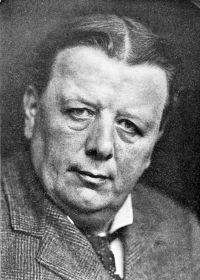
Portrait of Sir E. Ray Lankester Sir E. Ray Lankester,  The Kingdom of Man

“ The beta rays are streams of corpuscles similar to those given off by the cathode in a vacuum tube. They are charged with negative electricity and travel at the velocity of 100,000 miles a second. They are far more minute than the alpha particles. Their mass is equal to the one-thousandth of a hydrogen atom. They produce the major part of the photographic and phosphorescent effects of the radium rays. ”

Source: Gutenberg

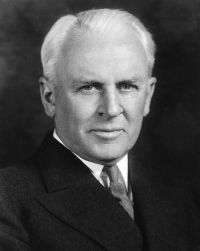
Portrait of Ray Cummings Ray Cummings,  Beyond the stars (1963)

“ Yet, after such a trip, they were days of almost normality.
Our vehicle beneath that microscope had grown rapidly in size. And with our expanding visual viewpoint, and the nearness of solid, motionless objects, its velocity seemed infinitely small. It barely floated past the microscope, settling to the floor of that huge room; and with a normal proportionate size, the Beta ray shut off, it came to rest.
They crowded around us—old men, loosely robed, and with flowing white hair, seamed, sooth, hairless faces, stern, but kindly, and eyes very bright and intelligent.
”
Source: Gutenberg

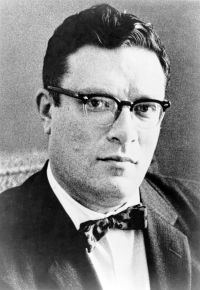
Portrait of Albert L. Latter Albert L. Latter,  Our Nuclear Future: Facts, Dangers and Opportunities

“ Charged particles of one type stand pretty much by themselves. These are the mesons found in cosmic rays. These particles move as fast as energetic beta rays and, like the beta rays, carry unit charge. Their biological effects are therefore 74 the same as the biological effects of beta radiation, with one important difference. The cosmic ray mesons carry much more energy and therefore have a much greater range. Whereas the beta rays are stopped in the skin, the mesons can cause damage throughout the entire body. ”
Source: Gutenberg

Get perspective with Kwize: daily news enlightened by great literature