Binomial theorem

Definition and stakes

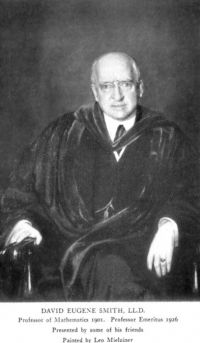
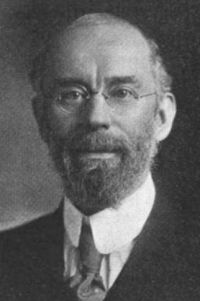
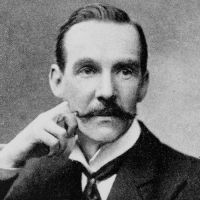
Portrait of Florian Cajori Florian Cajori,  William Oughtred: A Great Seventeenth-Century Teacher of Mathematics

“ To one who does not specialize in the history of mathematics such expansions may create surprise, for did not Newton invent the binomial theorem after the death of Oughtred? As a matter of fact, the expansions of positive integral powers of a binomial were known long before Newton, not only to seventeenth-century but even to eleventh-century mathematicians. Oughtred’s Clavis of 1631 gave the binomial coefficients for all powers up to and including the tenth. ”
Source: Gutenberg

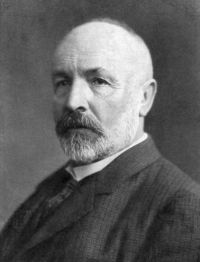
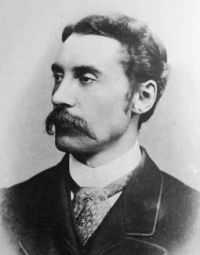
Portrait of Josiah Royce Josiah Royce,  The World and the Individual, First Series (1899)

“ It is hopeless, then, to persist in the hypothesis that the object of an idea is as such the cause of the idea. Were one to persist in such a view, what would he say about all the mathematical objects? Does the binomial theorem act as a seal, or any other sort of cause, impressing its image on the wax of a mathematician's mind? Do the properties of equations do anything to the mathematician when he thinks of them? ”
Source: Wikisource

1911 Encyclopædia Britannica (1910)

“ The binomial theorem is a celebrated theorem, originally due to Sir Isaac Newton, by which any power of a binomial can be expressed as a series. In its modern form the theorem, which is true for all values of n, is written as
The reader is referred to the article Algebra for the proof and applications of this theorem
”
Source: Wikisource

Get perspective with Kwize: daily news enlightened by great literature