Biological hierarchy

Definition and stakes

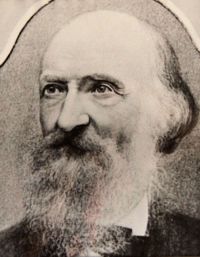
Portrait of Julian Huxley Julian Huxley,  Essays of a Biologist

“ On the other hand, the absence of barriers does not imply the absence of any relation of subordination or dominance of one part to another. One of the most important biological generalizations is that progressive evolution is accompanied by the rise of one part to dominance and, whenever there are many parts to be considered, by the arrangement of the rest in some form of hierarchy, each part being subordinate to one above, dominant to one below. It is such a hierarchy which we must try to construct in our mental organization. ”
Source: Gutenberg

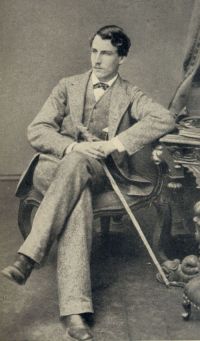
Portrait of Thomas Hunt Morgan Thomas Hunt Morgan,  A Critique of the Theory of Evolution

“ The older mystical statement of the individual as a unit in heredity has no longer any interest in the light of these discoveries, except as a past phase of biological history. We see, too, more clearly that the sorting out of factors in the germ plasm is a very different process from the influence of these factors on the development of the organism. ”
Source: Gutenberg

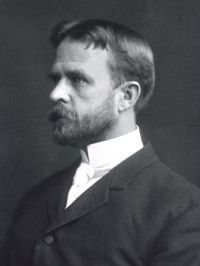
Portrait of Frank Rattray Lillie Frank Rattray Lillie,  Popular Science Monthly (1909)

“ The problems of heredity and variation are included in a true physiological conception of the individual development; but some biological conceptions that have more or less status and reputation are inconsistent with it. Such are the inheritance of acquired characters, atavism, and the theory of unit characters. The first is a familiar problem that I shall not argue anew; the second logically implies the presence of ancestral representative particles in the germ, which is inconsistent with a physiological theory of development. ”
Source: Wikisource

Get perspective with Kwize: daily news enlightened by great literature