“ In cases of fainting at once lay the patient flat, with the head brought to the same level as the body, to enable the blood more easily to circulate through the brain, for it is want of power in the heart to propel the blood to the brain that has caused the insensibility. If bleeding is going on, it must at once be arrested. As stimulants, eau de Cologne, sal volatile, ammonia, &c., may be used, but the important thing to remember is the position of head and body. Stimulation is apt to start afresh the bleeding arrested by fainting. ”
Bloodstain
Definition and stakes
The theme of “bloodstain” has been addressed by authors such as . It is often associated with terms like blood, bloodletting, hemorrhage, wound and disease.
Quotes about “bloodstain”
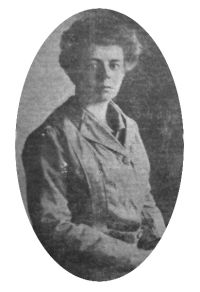 Natalie Sumner Lincoln,
The Meredith Mystery
Natalie Sumner Lincoln,
The Meredith Mystery
“ Dressed in her white pegnoir and the unnatural pallor of her cheeks enhanced by the deep shadows under her eyes, she appeared, in the uncompromising glare of the early morning sunlight, like a wraith, and the men halted involuntarily. Before any one could stop her, Anne stepped to the side of the stretcher and drew back the sheet. A shudder shook her at sight of the bloodstains. With a self-control little short of marvelous in one so young she mastered her emotion and laid her hand, with caressing tenderness, against the cold cheek. ”
N. D. Falck, The Seaman's Medical Instructor
“ The notion of drawing off the bad blood by bleeding, is very erroneous and absurd; the whole is too intimately mixed, and will ever generate the same again till the disease is removed. Bleeding is requisite 1st. When a strong robust person, of a full and sanguine complexion, by accident receives a heavy contusion; a broken limb; or wound, whereby the parts become inflamed; a fever like to ensue; and that the pulse becomes hard and full, the veins distended, &c. ”
Various, The Strand Magazine (1891)
“ The little discomfort which the flowing of blood causes me, compared with the other pain, is like a fresh breeze after a blast from the infernal regions. It does me a real good to see my blood pouring forth: let it flow, it does me extreme good." The stranger watched with an expression of delight the blood pouring from the wound, and the doctor was obliged to insist on binding up the hand. ”
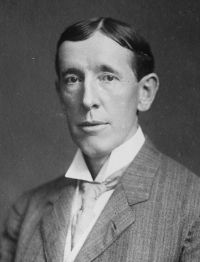 Woods Hutchinson,
A Handbook of Health
Woods Hutchinson,
A Handbook of Health
“ When they have worked their way through the skin, they bore on into a blood vessel, are carried to the heart, pumped by the heart into the lungs, and there again work their way out of the blood vessels into the bronchial, or air tubes, crawl up these through the windpipe and voice organ into the throat, are swallowed into the stomach, and from there pass on into the upper intestine to attach themselves for their blood-sucking life. If they are sufficiently numerous, their victim becomes thin, weak, and bloodless, with pale, puffy skin, and shortness of breath ”
Sir Robert Christison, Treatise on Poisons
“ The symptoms that ensued were characteristic of its double action. In an hour they all had burning in the throat, gullet, and stomach, followed by nausea, dysuria, and vomiting; weakness and stiffness of the limbs; giddiness, blindness, and dilated pupil; great faintness, convulsive breathing, and small pulse. One of them, an elderly woman, who took the largest share, had an imperceptible pulse, stertorous breathing, and total insensibility even to ammonia held under the nose. Next day she continued lethargic, complained of headache, and had an eruption like flea-bites. ”
Alexander Wynter Blyth, Poisons, Their Effects and Detection
“ However, when we come to the blood of persons suffering from disease, there are changes in the diameter and even the form of the corpuscles which much complicate the matter; while, in blood-stains of any age, the blood-corpuscles, even with the most artfully-contrived solvent, are so distorted in shape that he would be a bold man who should venture on any definite conclusion as to whether the blood was certainly human, more especially if he had to give evidence in a criminal case. ”
 Benjamin Rush,
Medical Inquiries and Observations…
Benjamin Rush,
Medical Inquiries and Observations…
“ The loss of a sufficient quantity of blood is often prevented by patients being apparently worse, after the first or second bleeding. This change for the worse, shows itself in some one or more of the following symptoms, viz. increase of heat, chills, delirium, hæmorrhages, convulsions, nausea, vomiting, faintness, coma, great weakness, pain, a tense, after a soft pulse, and a reduction of it in force and frequency. ”
S. A. D. Tissot, Advice to the people in general…
“ Great Wounds are generally attended with a considerable Loss of Blood, which has already exhausted the wounded Person; and the Fever is often a Consequence of this copious Loss of Blood. Now if under such a Circumstance, Bleeding should be ordered and performed, the Patient's Strength is totally sunk; the Humours stagnate and corrupt; a Gangrene supervenes, and he dies miserably, at the End of two or three Days, of a Series of repeated Bleedings, but not of the Wound. ”
Various, The Girl's Own Paper, Vol. XX, No…
“ It occurs commonly in nearly all acute diseases of the lungs, especially in bronchitis and inflammation of the voice-box. These are the common causes. In all the amount of blood spat up is very small—usually merely streaks. In consumption and some forms of heart disease blood-spitting is common and is often very profuse. Other causes of profuse bleeding are the rupture of an aneurism and some diseases of the vessels of the lungs. Or the blood may come from the stomach. This is a formidable list, but we have no doubt whatever which of these caused your blood-spitting. ”
J. F. C. Hecker, The Black Death, and The Dancing Mania
“ The former takes notice only of fatal coughing of blood; the latter, besides this, notices epistaxis, hematuria, and fluxes of blood from the bowels, as symptoms of such decided and speedy mortality, that those patients in whom they were observed usually died on the same or the following day.That a vomiting of blood may not, here and there, have taken place, perhaps have been even prevalent in many places, is, from a consideration of the nature of the disease, by no means to be denied; for every putrid decomposition of the fluids begets a tendency to hemorrhages of all kinds. ”
R. J. M. Buchanan, Text-book of forensic medicine and toxicology
“ Blood-stains on the cuts in the clothing may be erratic in distribution, some being on the inner layer only, some on the outer, and rarely soaking through all, pointing to the probability of its having been artificially applied. ”
 Joel Shew,
Midwifery and the diseases of women
(1852)
Joel Shew,
Midwifery and the diseases of women
(1852)
“ If the woman faints from loss of blood—and she may also faint from mere debility—you should not be alarmed at the circumstance. People generally make a great deal too much ado when a patient faints. It should be remembered that the object nature has in causing a person to faint from loss of blood, is to arrest the heart’s action, for the most part, so that the blood may, as it were, cease its movement in the uterus, and a coagulum or plug be formed in the orifice of the bleeding vessel or vessels. This is nature’s method of arresting an hemorrhage. ”
Benjamin Rush,
Medical Inquiries and Observations…
“ There are cases in which sizy blood should not warrant a repetition of blood-letting. Mr. White informs us, in the History of the Bilious Fever which has lately prevailed at Bath, that bleeding, in many cases in which this appearance of the blood took place, was useless or hurtful. In some of the fevers of our own country, we sometimes see sizy blood followed by symptoms which forbid the repeated use of the lancet, but which yield to other depleting remedies, or to such as are of a cordial [348] nature. ”
Gustave Lemattre, Popular Science Monthly (1873)
“ The constituent elements of the organs soon cease to act, and they die as they do after arterial hæmorrhage. For some hours, immediately after the poisoning, the blood-globules only are concerned, the other tissues remaining untouched; it will be enough, then, to restore a healthy state, to empty the vascular system, and replace the poisoned blood by new blood, and life will revive. Thus the history of transfusion once more proves that triumphs in the healing art may find their starting-point in the physiologist's table, as advances in industrial art often originate in the chemist's alembic. ”
R. J. M. Buchanan, Text-book of forensic medicine and toxicology
“ Occult blood may be present in the fæces. Collapse now sets in; the pulse becomes feeble and scarcely perceptible, the skin cold and clammy, showing the action of the poison on the heart probably through the central nervous, as well as through the intra-cardiac ganglia. Should the treatment adopted prove successful, and life be prolonged, the patient complains of tenderness of the mouth, soreness of the throat, and painful deglutition. Pressure over the abdomen causes pain. Vomiting and purging are also frequently present; and if recovery takes place, convalescence is generally very gradual. ”
Gustave Lemattre, Popular Science Monthly (1873)
“ And clinical triumphs have confirmed scientific views, which find their reasonable explanation partly in our knowledge of the normal life of the elements, partly in the morbid changes they are subject to. Transfusion of blood has sometimes served as an heroic remedy for arterial hæmorrhages, and losses of blood occurring after confinement. In these situations there is no injury to the elements of the nervous tissues, the glands and muscles; thus the supply of new blood restores life to them ”
 F. Scott Fitzgerald,
Flappers and Philosophers
(1921)
F. Scott Fitzgerald,
Flappers and Philosophers
(1921)
“ Blood-poisoning! her mind cried in terror. The bandage had come off the cut and she'd gotten something in it. She'd cut it at three o'clock—it was now nearly eleven. Eight hours. Blood-poisoning couldn't possibly develop so soon. ”
Thomas Jefferson Ritter, Mother's Remedies
“ The immediate effect of the bleeding is to alarm the patient and family, no matter how slight it may be, inducing heart palpitation and other nervous symptoms. A small bleeding is not attended with any bad result, but large ones give rise to the symptoms of shock (sometimes immediate death) combined with anemia following the loss of blood. When the bleeding is large, blood by the mouthful may be ejected with each cough, and in these instances of such profuse bleeding is shown by dizziness, faintness, cold extremities, excessive pallor, sweating and rapid, small feeble pulse. ”
Aegineta Paulus, The seven books of Paulus Ægineta… (1844)
“ We may just mention that as a general rule he approves of bleeding after any accident. He disapproves of bleeding both at the onset and the crisis of a disease. In constitutions requiring bloodletting he holds that spring is the best season for it. Even in cases in which there is a deficiency of blood, but there is congestion in some particular part, he permits blood to be abstracted, in order to produce revulsion, the patient’s strength being recruited afterwards by a nourishing diet. ”
Ambrose Blacklock, A Treatise on Sheep
“ Little impression can be made on an acute disease by the slow removal of even a large quantity of blood, as the organs have time to accommodate themselves to the loss, which might, for any good it will do, as well be dispensed with. Either bleed rapidly or not at all. The nearer the commencement of an ailment, in which you employ bleeding, the operation is resorted to, the greater the chance of its doing good; no time ought, therefore, to be lost in using the lancet, when once it is known to be required. ”
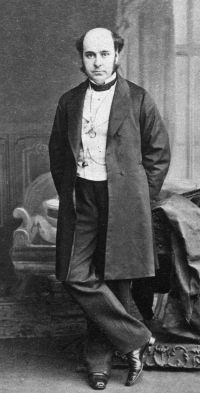 Thomas Hawkes Tanner,
Memoranda on Poisons
Thomas Hawkes Tanner,
Memoranda on Poisons
“ There is frequently blood or froth about the mouth, and the eyes are sometimes described as prominent and glistening. There is often an odor of prussic acid about the body, which is more perceptible on opening the stomach. The venous system is usually gorged with blood; and the brain, lungs, heart, liver, spleen, and kidneys have been found congested with dark-colored fluid blood.Treatment.—There is no chemical antidote to this poison which can be relied upon. Chlorine and the mixed oxides of iron have been recommended ”
“ In any case of bleeding the patient may become weak or may faint, but unless the blood is flowing actively, this is not necessarily a serious sign, and the quiet condition of the circulation during the faint often assists nature in staying the bleeding, by allowing the blood to clot, and so block up any wound in a blood-vessel. ”
Frank Overton, Applied Physiology, Including the Effects of Alcohol and Narcotics
“ Do not be afraid of the blood when you see any one bleeding, but hold the sides of the cut tightly with both of your hands. This will stop any bleeding until help comes. You may keep a person from bleeding to death by doing this when other persons are afraid of the blood. ”
W. G. Aitchison Robertson, Aids to Forensic Medicine and Toxicology
“ Suffocation during an epileptic fit; vomited matter or other material drawn into the trachea or air-passages; croup. Arterio-sclerosis may lead to thrombosis, embolism, or aneurism. Poisoning, as by hydrocyanic acid, cyanide of potassium, inhalation of carbonic acid or coal gas, œdema of glottis following inhalation of ammonia. Rapid onset of some acute specific disease, such as pneumonia or diphtheria; collapse from cholera. Heat-stroke, lightning, shocks of electricity of high tension. Mental or physical shock. Exertion while the stomach is overloaded. Diabetic coma ”
Thomas Hawkes Tanner,
Memoranda on Poisons
“ These symptoms sometimes abate, and everything seems going on well, when suddenly a new train of symptoms, still more [Pg 65] serious, develop themselves. These are such as would occur in the worst forms of blood poisoning: harsh, dry, yellow skin, with discharges of blood from the various passages, and the formation of extravasations below the skin. The urine is ordinarily retained or suppressed, what little there is being albuminous or bile-stained. Finally, acute delirium with convulsions sets in; the patient dies comatose a few hours after taking the poison, or it may be as many months. ”
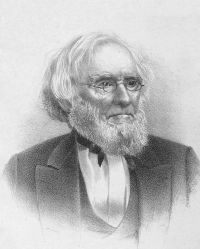 Edward Delafield,
An inaugural dissertation on pulmonary consumption
(1816)
Edward Delafield,
An inaugural dissertation on pulmonary consumption
(1816)
“ Blood-letting in large quantities, and repeated in proportion to the strength and habit of the patient and violence of the symptoms, is then absolutely necessary. Unless the plethora, which is oppressing the system, and exciting the hæmorrhage from the lungs, be relieved by general blood-letting, blood will not cease to pour out from that viscus. At the same time the free exhibition of saline cathartics, a blister to the chest, a rigidly abstemious diet and a strict adherence to the antiphlogistic regimen must accompany this treatment. ”
Henry E. Handerson, Gilbertus Anglicus: Medicine of the Thirteenth Century
“ The quantity of blood withdrawn should be in accordance with the strength of the patient, the character of the swelling, the pulsation, distention, heat and redness of the affected part. But it should be repeated frequently, and this bloodletting then frequently suffices, in itself, to cure the disease.Gilbert continues: "I will tell you also what I myself saw in a woman suffering and screaming with pain in her right wrist (assuere?) , which was greatly swollen, hot, red and much distended. She was fat, full-blooded, and before the attack had lived freely on milk and flesh. ”
 Julian of Norwich,
Revelations of Divine Love
(1907)
Julian of Norwich,
Revelations of Divine Love
(1907)
“ AND after this I saw, beholding, the body plenteously bleeding in seeming of [1] the Scourging, as thus:—The fair skin was broken full deep into the tender flesh with sharp smiting all about the sweet body. So plenteously the hot blood ran out that there was neither seen skin nor wound, but as it were all blood. And when it came where it should have fallen down, then it vanished. Notwithstanding, the bleeding continued awhile: till it might be seen and considered. ”
Toby A. Appel, Bloodletting Instruments in the National Museum of History and Technology
“ In this period it was considered an art to hold the lancet properly and to support the arm of the patient with delicacy and grace. [57] Many patients had by [Pg 12] repeated bloodlettings become inured to its potential danger and unpleasantness. In the mid-eighteenth century one British physician declared: “People are so familiarized to bleeding that they cannot easily conceive any hurt or danger to ensue, and therefore readily submit, when constitutional fear is out of the question, to the opening of a vein, however unskillfully advised.” ”
1911 Encyclopædia Britannica, Volume 12… (1911)
“ When this bleeding is spontaneous it comes from the mucous membranes, especially from the nose, but also from the mouth, bowel and bronchial tubes. Slight bruises are apt to be followed by extravasations of blood into the tissues; the swollen joints (knee especially) of a bleeder are probably due, in the first instance, to the escape of blood into the joint cavity or synovial membrane. It is always from the smallest vessels that the blood escapes, and may do so in such quantities as to cause death in a few hours. ”
