Canon (music)

Definition and stakes

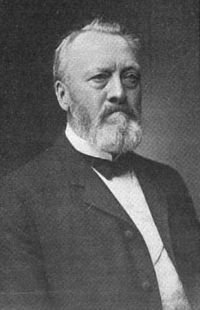
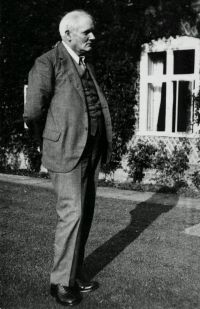
Portrait of Donald Francis Tovey Donald Francis Tovey,  1911 Encyclopædia Britannica, Volume 7… (1911)

“ In the canonic forms, the earliest known in music as an independent art, the laws of texture also determine the shape of the whole, so that it is impossible, except in the light of historical knowledge, to say which is prior to the other. The principle of canon being that one voice shall reproduce the material of another note for note, it follows that in a composition where all parts are canonic and where the material of the leading part consists of a pre-determined melody, such as a Gregorian chant or a popular song there remains no room for further consideration of the shape of the work. ”
Source: Wikisource

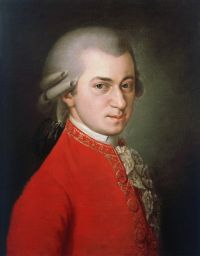
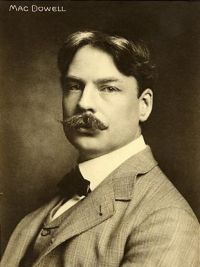
Otto Jahn,  Life of Mozart, Vol. 2 (of 3)

“ The canon, therefore, is the epigrammatic form of music, the most suitable vehicle for a moral sentence or a witty phrase, and it is capable of expressing alike the most serious and the most comic ideas. It requires, indeed, the firm hand of a master so to triumph over the difficulties of the form as to produce not only a masterpiece of counterpoint for the satisfaction of the learned, but also a melodious self-sufficing vocal piece, whose most studied difficulties shall leave the impression of lucky accidents. ”
Source: Gutenberg

Karl Wilson Gehrkens,  Music Notation and Terminology

“ It is because of this non-flexibility that the canon is so little used as a form at the present time: the modern composer demands a plan of writing that is capable of being varied to such an extent as to give him room for the exercise of his own particular individuality of conception, and this the canon does not do. ”
Source: Gutenberg

Get perspective with Kwize: daily news enlightened by great literature