Castor oil

Definition and stakes

P. L. Simmonds,  The Commercial Products of the Vegetable Kingdom

“ American castor oil is imported for the most part from New York and New Orleans, but some comes from our own possessions in North America. In the United States, according to the "American Dispensatory," the cleansed seeds are gently heated in a shallow iron reservoir, to render the oil liquid for easy expression, and then compressed in a powerful screw press, by which a whitish oily liquid is obtained, which is boiled with water in clean iron boilers, and the impurities skimmed off as they rise to the surface. ”
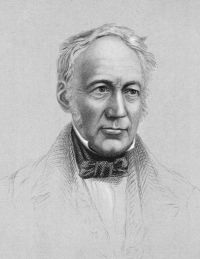
Source: Gutenberg

Friedrich A. Flückiger,  Pharmacographia (1879)

“ Hence the seeds themselves, or an emulsion prepared with [Pg 570] them, act much more strongly than a corresponding quantity of oil. Castor oil, extracted by absolute alcohol or by bisulphide of carbon, likewise purges much more vehemently than the pressed oil.
The castor oil of commerce has a sp. gr. of about 0·96, usually a pale yellow tint, a viscid consistence, and a very slight yet rather mawkish odour and taste. Exposed to cold, it does not in general entirely solidify until the temperature reaches -18° C. In thin layers it dries up to varnish-like film.
”
Source: Gutenberg

Friedrich A. Flückiger,  Pharmacographia (1879)

“ The peeled seeds yield about 40 per cent. of oil. [2123]
All the castor oil pressed in Italy is not pressed from Italian seed. By an official return [2124] it appears that in the year 1872-73 there were exported from Bombay to Genoa 1350 cwt. of castor oil seeds, besides 2452 gallons of castor oil. There are no data to show what was exported from the other presidencies of India in that year.
Uses—Castor oil is much valued as a mild and safe purgative; while the commoner qualities are used in soap-making, and in India for burning in lamps. The seeds are not now administered.
”
Source: Gutenberg

Get perspective with Kwize: daily news enlightened by great literature