Coil (electronics)

Definition and stakes

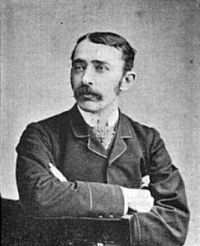
William Garnett,  Heroes of Science: Physicists

“ But another and an earlier application of Faraday's discoveries is found in the induction coil. A short length of thick wire and a very great length of thin wire are wound upon an iron bar. The ends of the long thin wire, or secondary coil, form the terminals of the machine; the short thick wire, or primary coil, is connected with a battery, but in the circuit is placed an "interrupter." ”
Source: Gutenberg

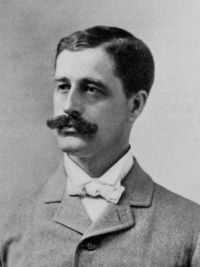
Portrait of James Clerk Maxwell James Clerk Maxwell,  A Treatise on Electricity and Magnetism (1873)

“ A Resistance Coil is a conductor capable of being easily placed in the voltaic circuit, so as to introduce into the circuit a known resistance.
The electrodes or ends of the coil must be such that no appreciable error may arise from the mode of making the connexions. For resistances of considerable magnitude it is sufficient that the electrodes should be made of stout copper wire or rod well amalgamated with mercury at the ends, and that the ends should be made to press on flat amalgamated copper surfaces placed in mercury cups.
”
Source: Wikisource

N. Hawkins,  Hawkins Electrical Guide v. 01…

“ The induction coil has always been a popular piece of apparatus with those interested in electrical science; the experiments which can be performed with its aid are very numerous. It is of considerable importance, especially in its application to such useful purposes as X ray work, wireless telegraphy and ignition for gas engines. The latter has caused manufacturers to give much attention to the development of the induction coil, resulting in many refinements of design and construction. ”
Source: Gutenberg

Get perspective with Kwize: daily news enlightened by great literature