“ I have spoken of, with the unwritten laws {34} and customs which are kept more or less in the dark, are in conflict with the better and infinitely more important rights of the people generally—of the whole nation. ”
Conflict of laws
Definition and stakes
The conflict of laws emerges when different legal systems from separate jurisdictions offer contrasting solutions to the same legal issue, leading to tensions in application and interpretation. This topic has been examined from various perspectives: W.H. Hudson focused on the tensions between informal customs and communal rights, while Samuel Nelson underscored the judicial difficulty of harmonizing state laws with federal power.
Leo Tolstoy criticized laws as tools of authority, and Daniel Webster cautioned against weakening constitutional structures. These viewpoints highlight the conflict of laws as a focal point of legal complexity, mirroring wider disputes over jurisdiction, sovereignty, and the quest for fair governance.
Quotes about “conflict of laws”
Samuel Nelson, Ford v. Douglas — Opinion of the Court
“ The jurisdiction in controversies between citizens of different States, and in questions of conflict of State laws with the constitution and laws of the United States, forms an important provision for establishing justice and preserving domestic tranquility. ”
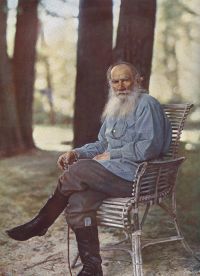 Leo Tolstoy,
The Slavery of Our Times
Leo Tolstoy,
The Slavery of Our Times
“ So that the exact and irrefutable definition of legislation, intelligible to all, is that: Laws are rules made by people who govern by means of organized violence, for compliance with which the non-complier is subjected to blows, to loss of liberty, or even to being murdered. ”
“ If no decision can be reached, the accused is acquitted for the time, or, in a civil dispute, a compromise is imposed. The rulers cannot, without incurring such general anger as would be fatal to their power, disregard our fundamental laws. ”
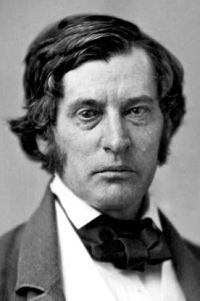 Charles Sumner,
The Barbarism of Slavery
(1863)
Charles Sumner,
The Barbarism of Slavery
(1863)
“ Where rights are infringed, where fundamental principles are overthrown, where the general system of the laws is departed from, the legislative intention must be pressed with irresistible clearness, to induce a court of justice to suppose a design to effect such object. ”
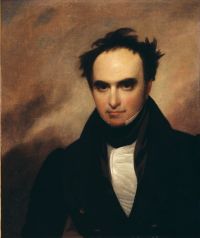 Daniel Webster,
The Works of Daniel Webster, Volume 1
Daniel Webster,
The Works of Daniel Webster, Volume 1
“ The assumption by any member of the Union of the right to question and resist, or annul, as its own judgment should dictate, either the laws of Congress, or the treaties, or the decisions of the federal courts, or the mandates of the executive power, duly made and promulgated as the Constitution prescribes, was a most dangerous assumption of power, leading to collision and the destruction of the system. ”
Jonathan Elliot, Debates in the Several State Conventions on the Adoption of the Federal Constitution (1907)
“ Sir, if the power of regulating the militia, of raising money, of making and executing all the civil and criminal laws,—laws which affect the life, liberty, and property of individuals,—can insure or deserve the confidence and respect of the people, I think the gentleman's argument falls to the ground. ”
William O. Blake, The History of Slavery and the Slave Trade (1861)
“ A community in which no crime had been committed by any of its members, against none of whom had a warrant been issued or a complaint made, who had resisted no process in the hands of a real or pretended officer, was threatened with destruction in the name of "law and order," and that, too, by men who marched from a neighboring state with arms obtained by force, and who, in every stage of their progress, violated many laws, and among others the constitution of the United States. ”
Alexander Hamilton, The Federalist Papers
“ Government implies the power of making laws. It is essential to the idea of a law, that it be attended with a sanction; or, in other words, a penalty or punishment for disobedience. ”
John Stuart Mill; His Life and Works
“ Political power, then, I take to be a right of making laws with penalties of death, and consequently all less penalties, for the regulating and preserving of property, and of employing the force of the community in the execution of such laws, and in the defence of the commonwealth from foreign injury, and all this only for the public good. ”
Josef Fessler, The Syllabus for the People (1875)
“ When so imposed they are called laws; and hence every perfect society must have legislative power. But the same causes will perforce bring about disputes as to the way in which the means have to be applied; to decide such disputes every perfect society must have judicial power. ”
 Arthur Cheney Train,
The Man Who Rocked the Earth
Arthur Cheney Train,
The Man Who Rocked the Earth
“ Each state enforced local laws, but all were obedient to the higher law—the Law of Humanity—which was uniform through the earth. If an individual offended against the law of one nation, he was held to have offended against all, and was dealt with as such. ”
 Samuel Johnson,
The Works of Samuel Johnson, LL.D. in Eleven Volumes…
Samuel Johnson,
The Works of Samuel Johnson, LL.D. in Eleven Volumes…
“ There must, in every society, be some power or other, from which there is no appeal, which admits no restrictions, which pervades the whole mass of the community, regulates and adjusts all subordination, enacts laws or repeals them, erects or annuls judicatures, extends or contracts privileges, exempt itself from question or control, and bounded only by physical necessity. ”
 John Taylor of Caroline,
An Inquiry into the Principles and Policy of the Government of the United States
(1814)
John Taylor of Caroline,
An Inquiry into the Principles and Policy of the Government of the United States
(1814)
“ Freedom of speech or its suppression, responsibility or exemption from control, division of power or its accumulation, defence by a militia or by a standing army, division of property by individual exertions or by fraudulent laws, are instances of the facility with which an arrangement might be made, exhibiting distinct classes of moral principles, capable of receiving a name, or of being used to chasten governments or legislation, without being comprised by any epithetical definition. ”
 Thomas Jefferson,
The Writings of Thomas Jefferson…
Thomas Jefferson,
The Writings of Thomas Jefferson…
“ In proceeding to the establishment of laws, you wish to adopt them from ours, and such only for the present as suit your present condition; chiefly, indeed, those for the punishment of crimes, and the protection of property. But who is to determine which of our laws suit your condition, and shall be in force with you? All of you being equally free, no one has a right to say what shall be law for the others. ”
Samuel Johnson,
The Works of Samuel Johnson, LL.D. Volume 10
“ In the same manner, sir, if the legislative powers shall, in making laws, discover that they regard any motives before the advantage of their country, or that they pursue the publick good by measures inadequate and ill-concerted, what can be expected from the people, but that they should set up their own judgment in opposition to that of their governours, make themselves the arbiters in all doubtful questions, and obey or disregard the laws at discretion? ”
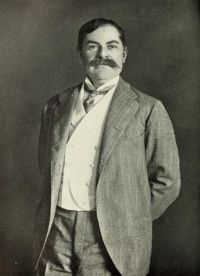 Thomas Nelson Page,
The negro: the southerner's problem
(1904)
Thomas Nelson Page,
The negro: the southerner's problem
(1904)
“ If it be admitted that this is true, is it nothing to us that a condition exists which necessitates the subversion of any law? Is it not an injury to our people that the occasion exists which places them in conflict with the law, and compels them to assert the existence of a higher duty? ”
Leigh v. Green — Opinion of the Court
“ If it be such an exercise of power 'as the settled maxims of law permit and sanction, and under such safeguards for the protection of individual rights as those maxims prescribe for the classes to which the one in question belongs,' it is due process of law. ”
Lev Nikolayevich Tolstoy, Superstition of the State
“ The state produces as many laws as there are relationships between people, which must be determined. As the number of these relations are endless, legislation must operate incessantly. Laws, decrees, edicts, decrees, regulations must pour in hail upon the unfortunate people. ”
Intercollegiate Peace Association, Prize Orations of the Intercollegiate Peace Association
“ And so courts of law and equity arose, based on the need of humanity; laws were passed defining rights and limiting aggression; and when one man wronged another, that wrong was settled in court by the power of the whole people and not in personal combat with the bludgeon or the knife. ”
United States. Congress, Abridgment of the Debates of Congress…
“ Let those clothed with the laws become the violators of them, let the judges of the United States issue fulminations against the measures of individual States, and the judges of the different States retaliate, by declaiming against the acts of the General Government, and the consequences are easily foreseen. ”
 Herbert Spencer,
Essays on Education and Kindred Subjects
Herbert Spencer,
Essays on Education and Kindred Subjects
“ The existence of such a nation not only presupposes laws, and some administration of justice, which we know existed, but it presupposes successful laws—laws conforming in some degree to the conditions of social stability—laws enacted because it was seen that the actions forbidden by them were dangerous to the State. ”
J. N. Larned, History for ready reference, Volume 4… (1895)
“ Like as many Acts of Parliament not only in general do abrogate, annul, and rescind all laws, statutes, acts, constitutions, canons civil or municipal, with all other ordinances and practick penalties whatsoever, made in prejudice of the true religion, and professors thereof, or of the true Kirk discipline, jurisdiction, and freedom thereof ”
 Daniel Defoe,
The Consolidator; or, Memoirs of Sundry Transactions from the World in the Moon
Daniel Defoe,
The Consolidator; or, Memoirs of Sundry Transactions from the World in the Moon
“ That every Freeman of the Moon had a Right to repel Injury with Law.3. That Imprisoning the 5 Countrymen by the Feathers, was assuming a new Priviledge they had no Right to, and a subjecting the Subjects Right to their Arbitrary Votes.4. That a Writ of Deliverance, or removing the Body, is the legal Right of every Subject in the Moon, in order to his Liberty, in case of Imprisonment.5. That to punish any Person for assisting the Subjects, in procuring or prosecuting the said Writ of Deliverance, is a breach of the Laws, and a thing of dangerous Consequence. ”
 Hippolyte Taine,
The French Revolution - Volume 3
Hippolyte Taine,
The French Revolution - Volume 3
“ They have violated our constitution by usurping legislative powers through acts which prescribe that a certain law shall be executed, in all that is not modified to the present act, and by passing acts which modify or render the present laws illusory. ”
United States ex rel. Turner v…
“ In popular use, one who seeks to overturn by violence all constituted forms and institutions of society and government, all law and order, and all rights of property, with no purpose of establishing any other system of order in the place of that destroyed ”
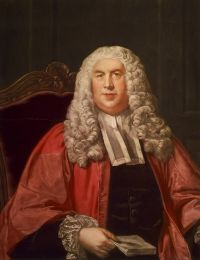 William Blackstone,
Commentaries on the Laws of England
(1768)
William Blackstone,
Commentaries on the Laws of England
(1768)
“ Of all the parts of a law the most effectual is the vindicatory. For it is but lost labour to say, “do this, or avoid that,” unless we also declare, “this shall be the consequence of your non-compliance.” We must therefore observe, that the main strength and force of a law consists in the penalty annexed to it. Herein is to be found the principal obligation of human laws. Legislators and their laws are said to compel and oblige; ”
Horace Gray, Hilton v. Guyot — Opinion of the Court
“ These laws and regulations may be unjust, partial to citizens, and against foreigners. They may operate injustice to our citizens, whom we are bound to protect. They may be, and the decisions of courts founded on them, just cause of complaint against the supreme power of the state where rendered. ”
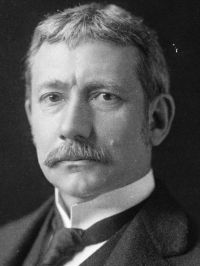 Elihu Root,
Experiments in Government and the Essentials of the Constitution
Elihu Root,
Experiments in Government and the Essentials of the Constitution
“ The result of adding a new law to this existing body of laws is that we get, not the simple consequence which the words, taken by themselves, would seem to require, but a resultant of forces from the new law taken in connection with all existing laws. A very large part of the litigation, injustice, dissatisfaction, and contempt for law which we deplore, results from ignorant and inconsiderate legislation with perfectly good intentions. ”
 Benson John Lossing,
Washington and the American Republic…
Benson John Lossing,
Washington and the American Republic…
“ All obstructions to the execution of the Laws, all combinations and associations, under whatever plausible character, with the real design to direct, control, counteract, or awe the regular deliberation and action of the constituted authorities, are destructive of this fundamental principle, and of fatal tendency. ”
 Jean-Jacques Rousseau,
The Social Contract
(1762)
Jean-Jacques Rousseau,
The Social Contract
(1762)
“ If the Sovereign desires to govern, or the magistrate to give laws, or if the subjects refuse to obey, disorder takes the place of regularity, force and will no longer act together, and the State is dissolved and falls into despotism or anarchy. ”
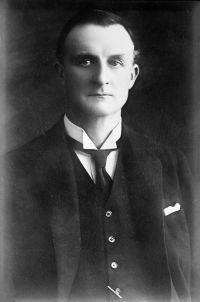 Edward Grey,
The League of Nations
(1918)
Edward Grey,
The League of Nations
(1918)
“ Individuals in civilized States have long ago accepted an analogous limitation and obligation as regards disputes between individuals; these are settled by law r, and any individual who, instead of. appealing to law, resorts to force to give effect to what he considers his rights, finds himself at once opposed and restrained by the force of the State—that is, in democratic countries, by the combined force of the other individuals. ”
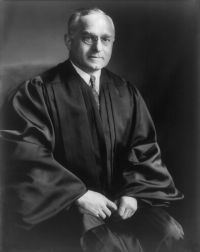 Felix Frankfurter,
Monroe v. Pape — Dissent
Felix Frankfurter,
Monroe v. Pape — Dissent
“ It would be a narrow conception of jurisprudence to confine the notion of 'laws' to what is found written on the statute books, and to disregard the gloss which life has written upon it. ”
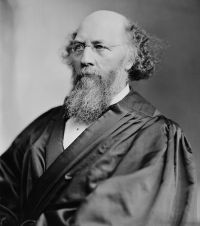 Stephen Johnson Field,
Dent v. West Virginia — Opinion of the Court
Stephen Johnson Field,
Dent v. West Virginia — Opinion of the Court
“ As we have said on more than one occasion, it may be difficult, if not impossible, to give to the terms 'due process of law' a definition which will embrace every permissible exertion of power affecting private rights, and exclude such as are forbidden. ”
 Hugo Black,
Green v. United States (356 U.S. 165…
Hugo Black,
Green v. United States (356 U.S. 165…
“ Above all that generation deeply feared and bitterly abhorred the existence of arbitrary, unchecked power in the hands of any government official, particularly when it came to punishing alleged offenses against the state. ”
 Lysander Spooner,
An Essay on the Trial By Jury
Lysander Spooner,
An Essay on the Trial By Jury
“ The legal effect of these constitutional recognitions of the right of individuals to defend their property, liberties, and lives, ' against the government, is to legalize resistance to all injustice and oppression, of every name and nature whatsoever, on the part of the government. ”
 Ulysses S. Grant,
Ulysses Grant's First Inaugural Address
(1869)
Ulysses S. Grant,
Ulysses Grant's First Inaugural Address
(1869)
“ Laws are to govern all alike—those opposed as well as those who favor them. I know no method to secure the repeal of bad or obnoxious laws so effective as their stringent execution. ”
 Edmund Burke,
The Works of the Right Honourable Edmund Burke…
Edmund Burke,
The Works of the Right Honourable Edmund Burke…
“ because laws, like houses, lean on one another, and the operation is delicate, and should be necessary: the objection, in such a case, ought not to arise from the natural infirmity of human institutions, but from substantial faults which contradict the nature and end of law itself,—faults not arising from the imperfection, but from the misapplication and abuse of our reason. ”
Andrew Johnson, Fourth State of the Union Address (1868)
“ Our own history, although embracing a period less than a century, affords abundant proof that most, if not all, of our domestic troubles are directly traceable to violations of the organic law and excessive legislation. ”
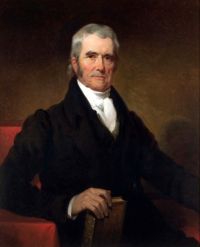 John Marshall,
Johnson v. M'Intosh — Opinion of the Court
John Marshall,
Johnson v. M'Intosh — Opinion of the Court
“ That law which regulates, and ought to regulate in general, the relations between the conqueror and conquered, was incapable of application to a people under such circumstances. The resort to some new and different rule, better adapted to the actual state of things, was unavoidable. Every rule which can be suggested will be found to be attended with great difficulty. ”
 Elizabeth Cady Stanton,
History of Woman Suffrage/Volume 1
(1887)
Elizabeth Cady Stanton,
History of Woman Suffrage/Volume 1
(1887)
“ To make laws that man can not and will not obey, serves to bring all law into contempt. ”
 H. G. Wells,
The Works of H. G. Wells
(1924)
H. G. Wells,
The Works of H. G. Wells
(1924)
“ The legal mind insists upon treaties, constitutions, legitimacies, and charters; the legislative incessantly assails these. Whenever some period of stress sets in, some great conflict between institutions and the forces in things, there comes a sorting out of these two types of mind. ”
 Bertha von Suttner,
Memoirs of Bertha von Suttner: The Records of an Eventful Life…
Bertha von Suttner,
Memoirs of Bertha von Suttner: The Records of an Eventful Life…
“ The solution must be, “We do not say where the right lies in the pending conflicts; we only desire that a system of law and a tribunal should be created in which those who are competent and in authority (as we are not) should settle the conflicts without violence.” ”
Rudolf von Jhering, The Struggle for Law — Chapter III (1872)
“ The degree of energy with which the feeling of legal right reacts against an infringement of legal right is, in my eyes, a sure measure of the importance which individuals, a class or people, really attach, both to the law in general and to a special branch of it, for themselves and their special aim in life. ”
 Cesare Beccaria,
An Essay on Crimes and Punishments…
(1764)
Cesare Beccaria,
An Essay on Crimes and Punishments…
(1764)
“ The laws receive their force and authority from an oath of fidelity, either tacit or expressed, which living subjects have sworn to their sovereign, in order to restrain the intestine fermentation of the private interests of individuals. ”
Samuel Johnson,
The Works of Samuel Johnson, LL.D. in Eleven Volumes…
“ To embarrass justice by multiplicity of laws, or to hazard it by confidence in judges, seem to be the opposite rocks on which all civil institutions have been wrecked, and between which legislative wisdom has never yet found an open passage. ”
Related terms
Authors who wrote about “conflict of laws”
H. G. WellsAlexander HamiltonSamuel JohnsonJean-Jacques RousseauCesare BeccariaWilliam BlackstoneEdmund BurkePercy GregLeo TolstoyDaniel WebsterCharles SumnerSamuel NelsonWilliam O. Blake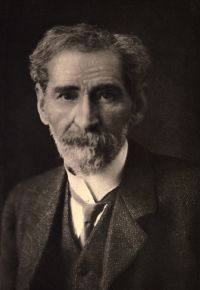 W. H. HudsonJohn Taylor of CarolineJosef FesslerArthur Cheney TrainUnited States. CongressHerbert SpencerThomas Jefferson