Conidium

Definition and stakes

M. C. Cooke,  Fungi: Their Nature and Uses

“ The same development of the zoospores in P. infestans is favoured by the exclusion of the light. Placed in a position moderately lighted or protected by a blackened bell, the conidia very readily produced zoospores.
A second form of germination of the conidia in P. infestans, when sown upon a humid body or on the surface of a drop of water, consists in the conidium emitting from its summit a simple tube, the extremity of which swells itself into the form of an oval vesicle, drawing to itself, little by little, all the protoplasm contained in the conidium.
”
Source: Gutenberg

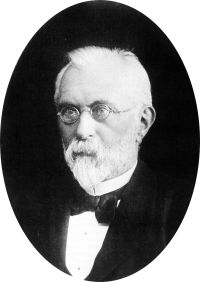
Portrait of Eugenius Warming Eugenius Warming,  A handbook of systematic botany (1895)

“ Each club-shaped hypha which projects from the body of the fly, bears a conidium at its apex; a vacuole, which grows gradually larger, is formed in the slimy contents of the hypha, and the pressure thereby eventually becomes so great that the hypha bursts at its apex, and the conidium is shot into the air. ”
Source: Gutenberg

1911 Encyclopædia Britannica, Volume 6… (1911)

“ CONINE, or Coniine (α-propyl piperidine) , C8H17N, an alkaloid occurring, associated with γ-coniceine, conhydrine, pseudoconhydrine and methyl conine, in hemlock (Conium maculatum) . It is a colourless oily liquid of specific gravity 0.845 (20° C.) , boiling at 166° C., almost insoluble in water, soluble in ether and in alcohol. It has a sharp burning taste and a penetrating smell, and acts as a violent poison. It is dextro-rotatory. The alkaloid is a strong base and is very readily oxidized ”
Source: Wikisource

Get perspective with Kwize: daily news enlightened by great literature