Copperplate engraving

Definition and stakes

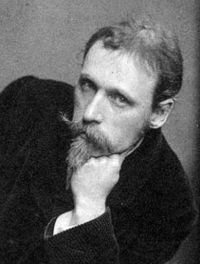
Portrait of George Edward Woodberry George Edward Woodberry,  A History of Wood-Engraving

“ It is impossible to turn from this wide survey without a recognition of the large share which wood-engraving, as the suggester and servant of printing, had in the progress made toward civilization in the North during that century. Woltmann does not over-state the fact when he says: “Wood-engraving and copperplate-engraving were not alone of use in the advance of art; they form an epoch in the entire life of mind and culture. The idea embodied and multiplied in pictures became, like that embodied in the printed word, the herald of every intellectual movement.” ”
Source: Gutenberg

Ernest Knaufft,  Drawing for Printers

“ Copperplate engraving is most difficult to master and should not be attempted by anyone who cannot Portrait of Félicien Rops, the etcher, by P. Matlay. Half-tone from a half-tone. Showing copperplate press. draw a sure line. A designer with a sure hand might attempt a simple book-plate. Anyone who can use the burin on wood can use it on copper, though in the latter case the pressure from the palm of the hand, which the beginner in wood engraving should avoid, {238} is used because the resistance of copper is much greater than that of wood. ”
Source: Gutenberg

Joseph Cundall,  A Brief History of Wood-engraving… (1895)

“ The list commences with a Louvain engraver, who worked for Veldener in 1475, and about the same time for John and Conrad de Westphalia.
Most of the greater Dutch towns had wood-engravers, and the work of these artists appears in many of the books printed in the Low Countries. As in France, many of the printers' marks are very good.
It was in this century that publishers began to illustrate their books with copperplate engravings, which soon came into general use, and these plates for many years, to a very great extent, superseded engraving on wood.
”
Source: Wikisource

Get perspective with Kwize: daily news enlightened by great literature