Paul Cameron Brown, Mascara-Viscera
“ Death lifts them in one heave of the casket. More illuminating are the mourners. Dashing thru the sleet in brief poignancy; shrill, old voices that knew the deceased reciting what can only be the obvious. ”
Paul Cameron Brown, Mascara-Viscera
“ Death lifts them in one heave of the casket. More illuminating are the mourners. Dashing thru the sleet in brief poignancy; shrill, old voices that knew the deceased reciting what can only be the obvious. ”
 Washington Irving,
The Sketch-Book of Geoffrey Crayon
Washington Irving,
The Sketch-Book of Geoffrey Crayon
“ Every one knows the soul-subduing pathos of the funeral service, for who is so fortunate as never to have followed some one he has loved to the tomb? But when performed over the remains of innocence and beauty, thus laid low in the bloom of existence, what can be more affecting? At that simple but most solemn consignment of the body to the grave-“Earth to earth, ashes to ashes, dust to dust!”—the tears of the youthful companions of the deceased flowed unrestrained. ”
Washington Irving,
The Sketchbook of Geoffrey Crayon…
(1819)
“ Beloved till life can charm no more, And mourn'd till pity's self be dead. Another cause that perpetuates the memory of the deceased in the country is that the grave is more immediately in sight of the survivors. ”
 Edward Dowden,
A History of French Literature
Edward Dowden,
A History of French Literature
“ His Oraisons Funèbres preach, for the uses of the living, the doctrine of death. Nowhere else does he so fill the mind with a sense of the greatness and the glory of life as when he stands beside the bier and reviews the achievements or presents the characters of the illustrious deceased. Observing as he did all the decorum of the occasion, his discourses do not degenerate into mere adulation; some are historic surveys, magnificent in their breadth of view and mastery of events. ”
Robert Cortes Holliday, Walking-Stick Papers
“ He is not buried, though he rests in the warm clasp of the caressing earth. Buried has an inhuman sound, as though a man were a bone. The deceased is always "interred," or he may be "laid to rest," or his "interment takes place." ”
 Lydia Maria Child,
Isaac T. Hopper: A True Life
Lydia Maria Child,
Isaac T. Hopper: A True Life
“ That we tender to the family and friends of the deceased our sincere condolence and sympathy in their sore bereavement, but whilst sensible that words, however truly uttered, cannot compensate for the loss of such a husband, father, and guide, we do find both for ourselves and for them, consolation in the belief that his peaceful end was but the prelude to the bliss of Heaven. ”
Cyrus Thomas, Burial Mounds of the Northern Sections of the United States
“ Frequently some one of more importance will begin to speak and will console the mother and the children, now extolling the deceased, praising his patience, his kindness, his liberality, his magnificence, and, if he was a warrior, his great courage; now saying, "What do you wish? there is no longer any remedy; it was necessary for him to die; we are all subject to death;" ”
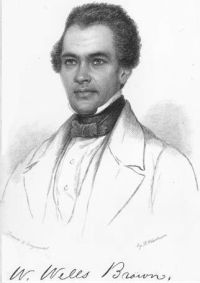 William Wells Brown,
The Rising Son; or, the Antecedents and Advancement of the Colored Race
William Wells Brown,
The Rising Son; or, the Antecedents and Advancement of the Colored Race
“ The funeral services of the same people are not less interesting. At the death of one of their number, the body is stripped, laid out upon the ground, and the friends of the deceased assemble, forming a circle around it, and commence howling like so many demons. ”
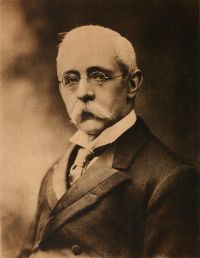 Herbert Allen Giles,
A History of Chinese Literature
Herbert Allen Giles,
A History of Chinese Literature
“ We must ask you to go down with his body into the grave.’ ‘Burial of the living with the dead,’ replied Tzŭ-hêng, ‘is not in accordance with established rites. Still, as you say some one is wanted to attend upon the deceased, who better fitted than his wife and secretary? ”
 James George Frazer,
The Golden Bough: A Study in Magic and Religion…
James George Frazer,
The Golden Bough: A Study in Magic and Religion…
“ Wishing, then, to proceed to the resurrection they all stand up, except him who is to be resuscitated, to whom they give the name of the deceased, and all letting their hands down very low they pretend to lift him up from the earth, intending by that to signify that they draw the great personage deceased from the grave and restore him to life in the person of this other, who stands up and, after great acclamations of the people, receives the presents which the bystanders offer him. ”
Henry Thompson, Popular Science Monthly (1874)
“ Perhaps no great change can be expected at present in the public opinions current, or rather in the conventional views which obtain, on the subject of burial, so ancient is the practice, and so closely associated is it with sentiments of affection and reverence for the deceased. ”
Robert Cortes Holliday, Walking-Stick Papers
“ And the provincial writer of obituaries follows a high authority, another rustic poet, deathless and known throughout the world, who sang of his Hoosier friend "he is not dead but just away."When one enters upon his last role in this world, which all fill in their turn, he becomes in rural journals that personage known throughout the countryside as "the deceased." It might be argued that, alas! the only thing you can do with one deceased is to bury him. It might be held that you cannot educate him. That he, the deceased, cannot enter upon the first steps of his career as a bookkeeper. ”
The Philippine Islands, 1493-1898…
“ When the deceased reaches the summit of the same he gets into heaven by jumping up, reaching a higher or lesser point according to the probity of his life, and there he will remain forever. All the relatives of the deceased, both men and women, make great demonstrations of grief when death occurs. ”
W. H. Davenport Adams, Curiosities of Superstition, and Sketches of Some Unrevealed Religions
“ At death, the body of the deceased is wrapped in his rags and tatters, and with, perhaps, a few tears from the attendant women, [Pg 153] committed to the earth. They have none of that exquisite enjoyment of life which is felt by a cultured race ”
Elias Johnson, Legends, Traditions, and Laws of the Iroquois…
“ As it causes the death of many children, it must be abandoned. Ten days mourn for the dead, and not longer. When one dies, it is right and proper to make an address over the body, telling how much you loved the deceased. ”
Henry Thompson, Popular Science Monthly (1874)
“ But, being deceased, I take it we can have no wishes or feelings touching this subject. What is best to be done with the dead is then mainly a question for the living, and to them it is one of extreme importance. ”
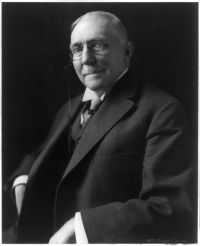 James Whitcomb Riley,
The Old Soldier's Story: Poems and Prose Sketches
James Whitcomb Riley,
The Old Soldier's Story: Poems and Prose Sketches
“ A thing 'at's 'bout as tryin' as a healthy man kin meet Is some poor feller's funeral a-joggin' 'long the street: The slow hearse and the hosses—slow enough, to say the least, Fer to even tax the patience of the gentleman deceased! ”
 George Augustus Sala,
The Strange Adventures of Captain Dangerous…
George Augustus Sala,
The Strange Adventures of Captain Dangerous…
“ They bury their Dead within the Four-and-Twenty Hours, and sometimes sooner. The Funerals of Persons of Quality are performed with great Pomp and Solemnity; and the deceased are carried to the Place of Interment with their Faces bare. ”
Lillie May Palik, The Schuyler Sun (1931)
“ A. Folta. The large attendance at the funeral rites was evidence of the high esteem in which the deceased was held. In their hour of sorrow the mourning family has the condolence of their many friends. ”
Pierre Esprit Radisson, Voyages of Peter Esprit Radisson
“ Before I goe further I have a mind to let you know the fabulous beleafe of those poore People, that you may see their ignorance concerning the soul's immortality, being separated from the body. The kindred and the friends of the deceased give notice to the others, who gather together and cry for the dead, which gives warning to the young men to take the armes to give some assistance and consolation to the deceased. ”
 Israel Zangwill,
Italian Fantasies
Israel Zangwill,
Italian Fantasies
“ How trivial the thought that sees death but in the cemetery! ’Tis not only the grave that parts us from our comrades and lovers; we lose them on the way. Lose them not only by quarrel and estrangement, but by evolution and retrogression. They broaden or narrow away from us, and we from them; they are changed, other, transformed, dead and risen again. Woe for the orphans of living parents, the widowers of undeceased wives! Our early Ego dies by inches, till, like the perpetually darned sock, it retains nothing but the original mould and shaping. ”
1911 Encyclopædia Britannica, Volume 10… (1911)
“ The representative must pay the debts of the deceased according to their priority. Next to the legitimate funeral expenses come the costs of proving and administering the estate; in the event, however, of the funeral and testamentary expenses being charged by the will upon any particular fund, they will be primarily payable out of that fund. The representative must be careful to pay the debts according to the rules of priority, otherwise he will become personally liable to the creditors of one degree if he has exhausted the estate in paying creditors of a lesser degree. ”
Richard Baxter, A Call to the Unconverted to Turn and Live… (1657)
“ At your death-bed how boldly might we comfort and encourage your departing souls! And at your burial, how comfortably might we leave you in the grave, in expectation to meet your souls in heaven, and to see your bodies raised to that glory! ”
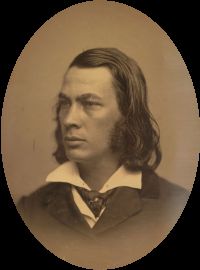 George Lippard,
New York: Its Upper Ten and Lower Million
George Lippard,
New York: Its Upper Ten and Lower Million
“ Do the dead return? Are the dead indeed dead? You have nailed down the coffin-lid; you have seen the coffin as it sunk into the grave; you have heard the rattling of the clod,—but is that all? Is the beloved one whom you have given to the grave, indeed dead, or only more truly living in a new body, formed of refined matter, invisible to our gross organs? Is that which we call soul, only the result of a particular organization of gross matter, or is it the real, eternal substance of which all other matter is but the servant and the expression? Do the dead return? ”
 Thomas Hughes,
Tom Brown's School Days
Thomas Hughes,
Tom Brown's School Days
“ Whenever it came, a heavy, numbing throb seemed to take hold of my heart, and say, 'Dead-dead-dead.' And I cried out, 'The living, the living shall praise Thee, O God; the dead cannot praise thee. There is no work in the grave; in the night no man can work. ”
 Maurice Maeterlinck,
Gleanings from Maeterlinck
(1913)
Maurice Maeterlinck,
Gleanings from Maeterlinck
(1913)
“ What happens in our graves poisons our thoughts together with our bodies. The figure of death, in the imagination of men, depends before all upon the form of burial; and the funeral rites govern not only the fate of those who depart but also the happiness of those who stay, for they raise in the ultimate background of life the great image upon which men’s eyes linger in consolation or despair. ”
Mary Roberts, Ruins and Old Trees, Associated with Memorable Events in English History
“ The day of death is light, in comparison of its bitterness, with that of the interment. In the former case, the spirit indeed has passed away, yet the form remains. The wife, or child, or parent can sit beside the couch, and gaze on the still unchanged features. But when the grave has once closed upon the loved one, what words can tell the utter desolation that presses on the heart! ”
 James Freeman Clarke,
Orthodoxy: Its Truths And Errors
James Freeman Clarke,
Orthodoxy: Its Truths And Errors
“ The gloom of death has been heightened by artificial means. Mourning dresses, solemn faces, funeral addresses, the grave,—all have had an unnatural depth of awe added to the natural sense of bereavement. ”
Louis Spohr, Louis Spohr's Autobiography
“ The pious tones which once with a holy inspiration had gushed from the pure fount of his soul—tones to which he had himself listened in silent devotion but a few weeks before,—resounded now in mourning over his grave; and sad and sorrowful, though at the same time sweetly consolatory, still echo far and wide to the hearts of all:“Blessed are the dead, who die in the Lord, now and for ever. ”
I. E. M., Confessions of an Etonian
“ It is singular that a funeral consequent on an unusual death should be attended by greater numbers than an ordinary one. On this occasion, I may safely say, that my little retired burial-ground, and its immediate vicinity, were occupied by thousands. ”
 Roden Noel,
Livingstone in Africa
(1874)
Roden Noel,
Livingstone in Africa
(1874)
“ In life, in death, She claims to hold his heart! . . . Hath he not died in her own awful arms? His sons and daughters in deep sable robed Bear large white wreaths of blossom for his grave: Yea, dark Death lies all buried and conceal'd Under sweet emblems of immortal life! ”
by the General Grand Chapter, Ritual of the Order of the Eastern Star… (1919 | portal)
“ Our Father who art in Heaven, in whom we live and in whom are all the issues of life and death; we come to Thee, in this hour of sorrow and ask that we may so learn the lessons of this hour, that when it shall be our turn to lay aside our mortality, that we may do it with trustful faith in Thee and hope of a glorious immortality. We pray Thee to look with tender compassion upon these Thy children, whose household has been broken by this providence. May they lie passive in the arms of Thy chastening love and realize that there is wisdom and goodness in all Thy appointments. ”
Matthew Henry, An Exposition of the Old and New Testament (1828)
“ There went abundance of chariots and horsemen, not only to attend them a little way, but to go through with them. Note, The decent solemnities of funerals, according to a man's situation, are very commendable; and we must not say of them, To what purpose is this waste? See Acts 8. 2. Luke 7. 12. 2. It was a sorrowful funeral; (v. 10, 11.) standers-by took notice of it as a grievous mourning. Note, The death of good men is a great loss to any place, and ought to be greatly lamented. ”
 Agnes Repplier,
A happy half-century and other essays
(1908)
Agnes Repplier,
A happy half-century and other essays
(1908)
“ Death, we may remark, was always a prominent feature of annuals. Their artists and poets vied with one another in the selection of mortuary subjects. Charles Lamb was first “hooked into the ‘Gem’” with some lines on the editor’s dead infant. From a partial list, extending over a dozen years, I cull this funeral wreath:— The Dying Child. ”
 Raden Adjeng Kartini,
Letters of a Javanese princess…
(1921)
Raden Adjeng Kartini,
Letters of a Javanese princess…
(1921)
“ And of the touching piety of the living toward the dead? There is no joyful occasion where the dead are not called to our remembrance, and their blessing and the blessing of heaven invoked. In joy and in sorrow, we think of our dead always. ”
 Charles Dickens,
Bleak House — Chapter XLVII: Jo's Will
(1852)
Charles Dickens,
Bleak House — Chapter XLVII: Jo's Will
(1852)
“ Dead, your Majesty. Dead, my lords and gentlemen. Dead, right reverends and wrong reverends of every order. Dead, men and women, born with heavenly compassion in your hearts. And dying thus around us every day. ”
John Ellingwood Donnell Trask, Charles Grafly, Sculptor: An Appreciative Note (1910)
“ Our burial places abound in mortuary horrors which, with clumsy fingers, point in the assumed direction of immortality, inspiring hope in a future life by the thought that it, at worst, cannot contain ugliness to equal their own. ”
Charles Dickens,
The Old Curiosity Shop — Chapter 17
(1841)
“ And now that five-and-fifty years were gone, she spoke of the dead man as if he had been her son or grandson, with a kind of pity for his youth, growing out of her own old age, and an exalting of his strength and manly beauty as compared with her own weakness and decay ”
Various, Tom Watson's Magazine, Vol. I, No… (1905)
“ The funeral was so economical and so private that neither the tongue of repute, identifying the grave from generation to generation, nor the more unerring evidence of shaft or vault guides the footsteps of those who come so late, so late! ”
 Rupert Brooke,
1914 & other poems
(1915)
Rupert Brooke,
1914 & other poems
(1915)
“ Some pause in their grave wandering comradeless, And turn with profound gesture vague and slow, As who would pray good for the world, but know Their benediction empty as they bless. They say that the Dead die not, but remain Near to the rich heirs of their grief and mirth. ”
Oliver Wendell Holmes, Over the Teacups
“ I feel as if I ought to follow these two personages of my sermonizing story until they come together or separate, to fade, to wither,—perhaps to die, at last, of something like what the doctors call heart-failure, but which might more truly be called heart-starvation. When I say die, I do not mean necessarily the death that goes into the obituary column. ”
Various, The Irish Penny Journal, Vol. 1 No…
“ Since the period of which I now write, I have often witnessed the closing scene of mortality, and various are the opinions I have heard, as to which point of time, between the moment of death and the first appearance abroad of the survivors in their mourning apparel, is the saddest, the most afflicting, or the most trying—whether the moment of dissolution, the first appearance of the undertaker, the laying out in the apparel of death, the bringing of the coffin, the last frantic kiss and look, the screwing down, the carrying out, the dull thud of the clay upon the coffin lid. ”
Bishop of Hippo Saint Augustine, The City of God, Volume I
“ For how can they be after death if they be in death, especially when we do not even call them dying, as we call those in sleep, sleeping; and those in languor, languishing; and those in grief, grieving; and those in life, living? And yet the dead, until they rise again, are said to be in death, but cannot be called dying. ”
George Daniel, Merrie England in the Olden Time…
“ What a poor figure would this simple record of good works, lively faith, and filial piety make in a modern obituary, where incoherent ravings are eagerly noted down by officious death-bed gossipers, and wrought into a romance, always egotistical, and too often profane! ”
 Virginia Woolf,
Jacob's Room
(1922)
Virginia Woolf,
Jacob's Room
(1922)
“ When the body escaped mutilation, seldom did the heart go to the grave unscarred. ”
Washington IrvingRobert Cortes HollidayJames Whitcomb RileyHenry ThompsonPaul Cameron BrownCyrus ThomasEdward DowdenLydia Maria Child Frederick DouglassJames George FrazerHerbert Allen GilesWilliam Wells BrownW. H. Davenport AdamsElias JohnsonGeorge Augustus SalaLillie May PalikPierre Esprit Radisson