Decimal fraction

Definition and stakes

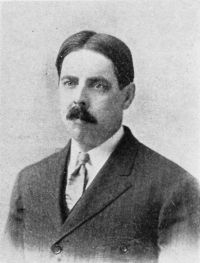
Portrait of Florian Cajori Florian Cajori,  A History of Mathematics (1893)

“ To Simon Stevin of Bruges in Belgium (1548–1620) , a man who did a great deal of work in most diverse fields of science, we owe the first systematic treatment of decimal fractions. In his La Disme (1585) he describes in very express terms the advantages, not only of decimal fractions, but also of the decimal division in systems of weights and measures. Stevin applied the new fractions "to all the operations of ordinary arithmetic." [25] What he lacked was a suitable notation. In place of our decimal point, he used a cipher; to each place in the fraction was attached the corresponding index. ”
Source: Wikisource

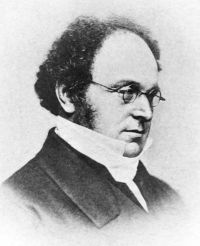
Portrait of Augustus De Morgan Augustus De Morgan,  Elements of arithmetic (1858)

“ Then, if there be any figures before the point, they make the whole number which the fraction contains. The first figure after the point with the denominator 10, the second with the denominator 100, and so on, are the fractions of which the first fraction is composed.
135. Decimal fractions are not usually written at full length. It is more convenient to write the numerator only, and to cut off from the numerator as many figures as there are ciphers in the denominator, when that is possible, by a point.
”
Source: Gutenberg

The Circle of Knowledge: A Classified…

“ The word decimal is derived from the Latin word decem, which signifies ten. The denominator of a decimal is always 10, or some power of 10, as 100, 1000, etc.
A Complex Decimal is a decimal with a common fraction at the right, as, .121⁄2.
A Mixed Decimal is a whole number with a decimal fraction to its right, as, 34.5.
The denominations of United States money are based on the decimal system—the dollar occupying the unit’s place, the dime the tenth’s place, the cent the hundredth’s place, and the mill the thousandth’s place.
”
Source: Gutenberg

Get perspective with Kwize: daily news enlightened by great literature