Dextrose

Definition and stakes

1911 Encyclopædia Britannica, Volume 8… (1911)

“ It dissolves in water and dilute alcohol; by strong alcohol it is precipitated from its solutions as the hydrated compound, C6H10O5⋅H2O. Diastase converts it eventually into maltose, C12H22O11; and by boiling with dilute acids (sulphuric, hydrochloric, acetic) it is transformed into dextrose, or ordinary glucose, C6H12O6. It does not ferment in contact with yeast, and does not reduce Fehling's solution. If heated with strong nitric acid it gives oxalic, and not mucic acid. ”
Source: Wikisource

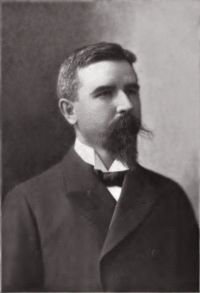
Portrait of R. H. Chittenden R. H. Chittenden,  On Digestive Proteolysis

“ This action is presumably due to a ferment, which, according to Tebb, is widely distributed throughout the body, being present not only in the intestine, but also in the liver, kidney, spleen, striated muscle-tissue, and, indeed, in the blood-serum; so that it would appear that nearly all the tissues of the body are endowed with the power of transforming maltose into dextrose. ”
Source: Gutenberg

Portrait of R. H. Chittenden R. H. Chittenden,  The nutrition of man

“ There is no apparent reason why maltose should not be absorbed and assimilated as readily as dextrose, but so urgent is the necessity for this conversion into dextrose that in the blood itself there is present maltase, to effect the transformation of any maltose that may gain entrance there. We are here face to face with a simple fact in nutrition. The body cannot utilize disaccharides directly. Why it is so we cannot say, but the fact is a good illustration of the principle that nothing can be taken for granted in our study of nutrition. ”
Source: Gutenberg

Get perspective with Kwize: daily news enlightened by great literature