“ A gentleman is always supposed to change his clothes for dinner, whether he is going out or dining at home alone or with his family, and for this latter occasion some inspired person evolved the house, or lounge, suit, which is simply a dinner coat and trousers cut somewhat looser than ordinary evening ones, made of an all-silk or silk and wool fabric in some dark color, and lined with either satin or silk. Nothing more comfortable—or luxurious—could be devised for sitting in a deep easy-chair after dinner, in a reclining position that is ruinous to best evening clothes. ”
Dinner coat
Definition and stakes
The theme of “dinner coat” has been addressed by authors such as Emily Post, Günther F. Hertzer, Lillian Eichler Watson, Lieut.-Col. Newnham-Davis and Lillian Eichler. It is often associated with terms like dress, waistcoat, clothing, evening and frock.
Quotes about “dinner coat”
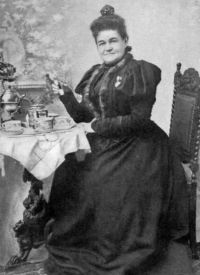 Marion Harland,
Marion Harland's Complete Etiquette
“ The theory is that it should never be worn where there are ladies, but the modern practise has broken the theory down so that at small dinners, the theater, club affairs, etc., the dinner coat is worn by men who give the subject of dress intelligent consideration. ”
“ The Tuxedo, which is the essential evening dress of a gentleman, is simply the English dinner coat. It was first introduced in this country at the Tuxedo Club to provide something less formal than the swallow-tail, and the name has clung ever since. To a man who can not afford to get two suits of evening clothes, the Tuxedo is of greater importance. It is worn every evening and nearly everywhere, whereas the tail coat is necessary only at balls, formal dinners, and in a box at the opera. ”
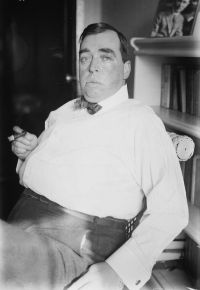 Irvin S. Cobb,
'Oh, Well, You Know How Women Are…
“ It requires great will-power on the part of the owner and constant watchfulness as well to keep a fat man’s dress waistcoat from behaving like a railroad folder. His dinner coat or his tail coat, if he wears a tail coat, is invariably too tight in the sleeves ”
“ At dinner the red coats of the officers make brilliant spots of color among all the black of the other men, and at first sight it does seem too odd to see evening dress consist of black trousers and a bright-red coat which stops off short at the waist. ”
“ At a formal dinner-party the evening suit is imperative, with dress-coat, white or black waistcoat, black trousers, and white tie. When dining with friends with whom one is on terms of familiarity, the dinner-jacket may be substituted for the coat. Black ties often take the place of white. Patent-leather shoes or boots must be worn. It would be unpardonable to appear in thick walking-boots or shoes; and the necessity for immaculately polished footgear has cost the young man of the present day many a cab. ”
 Florence Howe Hall,
Good Form for All Occasions
“ A dinner engagement must never be broken except in case of sickness or death. Should one fall ill or be obliged for any imperative reason to withdraw the acceptance of the invitation, the hostess should be notified at once in order that she may if possible fill the place left vacant. For men the proper costume for late dinner (at six o’clock or after) is regulation evening dress—i.e., black swallow-tail coat, with trousers to match, low-cut white waistcoat, white dress-shirt, white lawn tie, pumps or patent-leather shoes, and black socks. ”
George Routledge, Routledge's Manual of Etiquette
“ For evening parties, dinner parties, and balls, wear a black dress coat, black trousers, black silk or cloth waistcoat, white cravat, white or grey kid gloves, and thin patent leather boots. A black cravat may be worn in full dress, but is not so elegant as a white one. A black velvet waistcoat should only be worn at a dinner party.Let your jewellery be of the best, but the least gaudy description, and wear it very sparingly. A set of good studs, a gold watch and guard, and one handsome ring, are as many ornaments as a gentleman can wear with propriety. ”
Vanness Copeland, The Copeland Method
“ A gentleman for an evening visit, should always be in evening dress. Dress coat, vest and trousers, white linen and white cravat (a black cravat is permissible, but not in full dress.) For a dinner party, ball or opera, a man must wear a white cravat. Watch fob is very fashionable.On Sunday afternoons and evening at home, gentlemen are permitted to wear frock coats, and to regard the day as an "off" one, unless invited to a grand dinner, then you must wear the dress suit.Men are always ungloved, except when riding or driving. ”
Various, The Scrap Book, Volume 1, No. 1
“ For Men.—When with ladies, or in a box at the theater, opera, or concert, full dress should be worn. White gloves are often worn, but are not obligatory. A short dinner-jacket is permissible when the wearer is with a man friend, but never when he is one of a party, or is with a lady not nearly related to him. With the dinner-jacket a black silk or satin bow tie, and a waistcoat matching the coat, are worn. With a long-tailed evening coat, a stiff silk-top hat, or a crush opera-hat, is proper. ”
Joseph Triemens, The Handy Cyclopedia of Things Worth Knowing
“ The informal evening suit includes the shorter dinner jacket or Tuxedo, as it was formerly called, and, strictly speaking, this is only considered proper for the club or for parties where ladies are not expected to be present. However, men who commonly dress for dinner in the home circle generally prefer the dinner jacket to the long coat, and well-dressed men are often seen wearing it at small dinner parties, at the theater or at any informal evening event. ”
Various, Punch, or the London Charivari…
“ The eighteen-shilling chintz great-coats, so ostentatiously put forward by nefarious tradesmen as dressing-gowns, and which resemble pattern-cards of the vegetable kingdom, are unworthy the notice of all gentlemen—of course excepting those who are so by act of Parliament. Although it is generally imagined that the coat is the principal article of dress, we attach far greater importance to the trousers, the cut of which should, in the first place, be regulated by nature’s cut of the leg. ”
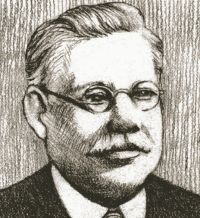 Charles Hose,
The Pagan Tribes of Borneo
“ When the woman is at work in the house or elsewhere, she tucks up the apron by drawing the front flap backwards between her legs, and tucking it tightly into the band behind, thus reducing it to the proportions and appearance of a small pair of bathing-drawers. Each woman possesses also a long-sleeved, long-bodied jacket of white cotton similar to that worn by the men; this coat is generally worn by both sexes when working in the fields or travelling in boats, chiefly as a protection against the rays of the sun. The women wear also a large mushroom-shaped hat similar to that worn by the men. ”
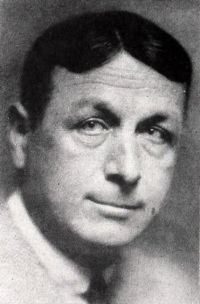 Arthur Cheney Train,
The "Goldfish"
“ The hat, the boots, the waistcoat are far less ephemeral than the body they protect, and indicate almost as much of the wearer's character as his hands and face. So I am not ashamed of my silk pajamas or of the geranium powder I throw in my bath. They are part of me.But is this "me" limited to my body and my clothes? I drink a cup of coffee or a cocktail: after they are consumed they are part of me; are they not part of me as I hold the cup or the glass in my hand? Is my coat more characteristic of me than my house—my sleeve-links than my wife or my collie dog? ”
Various, Blackwood's Edinburgh Magazine…
“ Away, then, with the petty vanity of a waistcoat; away with all false idea of its giving decoration to the ensemble of the toilet. We know of nothing in its favour except one single claim on the score of some small utility. To any one living in a variable climate it is of value, as enabling the wearer to modify the temperature of the body. Is the day unusually warm? he can throw open his coat, and preserve that prim neatness of appearance which is required in the present age, but is at variance with the display of fine linen of the Caroline epoch. ”
 Lillian Eichler Watson,
Book of Etiquette, Volume II
“ The business coat should be of cloth, never completely of fur unless one's position is high enough to warrant it—and even then it should be only of one fur, instead of a combination of two or three, and made with a regard for simplicity and inconspicuousness. However, the most appropriate business coat is made of a heavy cloth, plain or fur-trimmed for winter, and light-weight, dark-colored material for the warmer days. The hat, of course, follows the general note of simplicity and is usually small and dark. ”
Dion Clayton Calthrop, English Costume
“ No doubt Madame Fashion saw to it that the changes were rung sufficiently to make hay while the sun shone on extravagant tastes. The coat was held at the waist with a sash of silk tied in a bow with short ends. Towards the end of the reign, foreshadowing the Elizabethan jerkin or jacket, the custom grew more universal of the coat with sleeves and the high neck, the bases were cut shorter to show the full trunks, and the waistcoat was almost entirely done away with, the collar grew in proportion, and spread, like the tail of an angry turkey, in ruffle and folded pleat round the man’s neck. ”
Lillian Eichler Watson,
Book of Etiquette, Volume II
“ In the morning when he goes out to business a man should wear a plain serviceable suit of the prevailing cut. If he is invited to an elaborate morning entertainment he may wear the regular cutaway coat and the usual accessories that go along with it. It is always best to follow the local customs with regard to dress and it is absurd for one man to appear at a formal morning affair in the cutaway coat when he knows that all of the other gentlemen present will be in their simple business suits. ”
Dion Clayton Calthrop, English Costume
“ A pouch or wallet depended from the belt, and a sheath containing two daggers, an anelace, and a misericorde. The pouch was a very rich affair, often of stamped gilded leather or sewn velvet—ornamented, in fact, according to the purse of the wearer. In winter such a man as he of the cotehardie would wear an overcoat with an attached hood. This coat was made in various forms: one form with wide sleeves the same width all the way down, under which were slits in the coat to enable the wearer to place his hands inside, as in the modern Raglan [Pg 125] coat-pocket. ”
Maud C. Cooke, Twentieth Century Culture and Deportment
“ The evening dress for gentlemen varies very little from year to year, and the time of wearing it varies not at all. From “dusk to dawn,” in other words, a gentleman wears a dress suit during the same hours that a lady wears an evening dress.Gentlemen’s evening dress consists of black trousers, a low-cut black or white vest, dress or “swallow-tail” coat, and white necktie. The linen must be immaculate. A young man wears a standing collar; an elderly man, if he choose, may wear his favorite style, with due deference to the reigning style. ”
Renée Gaudin de Villaine Maud, One Year at the Russian Court: 1904-1905
“ Your winter coat must necessarily be very warm, lined with fur and very thick, with a very high fur collar, which when raised—and it must always be raised—must entirely cover the ears; a fur toque is the most practical head-dress, with one’s hair done low on the forehead, as the cold is so intense that it seems to wish to penetrate like a chisel just where the nose begins, between the eyes. ”
 Jennette Lee,
The Chinese Coat
“ She only gave him a sidelong glance and hurried on. “It may not be the one!” she murmured as they entered the store. “Then we’ll hunt till we find one like it!” he replied valiantly. Through the elevator grills she recognized the woman who had waited on her before, and she went swiftly toward her. “We have come to see the coat,” she said simply. ”
Florence Howe Hall,
Good Form for All Occasions
“ We do not pretend to understand why, but it is one of the unalterable laws of masculine etiquette. A white waistcoat is never worn with a dinner-jacket. For a formal dinner the proper costume for women is a low-necked evening gown, with sleeves either very short or of the length required by the fashion prevailing at the moment. It is by no means necessary that the bodice should be extremely décolleté. Long gloves, white or delicately tinted, dress-slippers, and silk stockings complete the costume. The foot-gear may match the dress or it may be white or black. ”
Lieut.-Col. Newnham-Davis, The Gourmet's Guide to London
“ One of the merriest dinners probably ever given in those upper rooms was the one at the time of the late Victorian revival of road coaching, at which most of the guests were well-known whips. Every man at this dinner was presented with a pink waistcoat, and as after dinner most of the men went on either to music halls or theatres, the appearance in the boxes of the young bloods wearing pink waistcoats astonished the audiences, who thought that a new fashion was being set. ”
Marion Harland,
Marion Harland's Complete Etiquette
“ Extremes of styles should be avoided, and many men of conservative tastes still wear the stiff plain linen or piqué bosoms. A black waistcoat of the same material as the coat is preferable to the fancier forms. ”
A. G. Gardiner, Pebbles on the shore [by] Alpha of the plough
“ I would set up such a universal hunger for fur coats that the tradesmen in Oxford Street and Regent Street would come and offer me a guinea a word to write advertisements for them.And yet I shall not buy a fur-lined coat, and I will tell you why. A fur coat is not an article of clothing: it is a new way of life. ”
Wilfred Mark Webb, The Heritage of Dress: Being Notes on the History and Evolution of Clothes
“ To return to Eton again, we might mention one or two fashions in the ordinary dress which are curious. It is ordained that the lowest button of the waistcoat should be left unbuttoned and the bottom of the trousers should be turned up, while it is part of the performance to thrust the hands deeply into the trouser pockets. If a boy elects to wear an overcoat, and he does not occupy a certain definite position or status in the school, public opinion forces him to keep [171] the collar of his top coat turned up. ”
“ Very conspicuous clothes are chosen either by the new rich, to assure themselves of their own elegance—which is utterly lacking—or by the muttons dressed lamb-fashion, to assure themselves of their own youth—which alas, is gone!Gentlemen at luncheon in town on a Sunday wear cutaway coats; in other words, what they wear to church. On a Saturday, they wear their business suits, sack coat with either stiff or pleated-bosom shirts, and a starched collar. ”
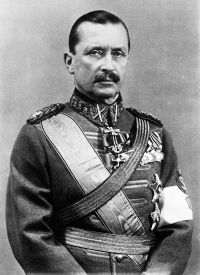 Carl Gustaf Emil Mannerheim,
A Visit to the Sarö and Shera Yögurs
“ Wealthier men cover the whole coat with blue cloth. To the home-woven scarf, which is wound two or three times round the waist, with its ends tucked in so that they hang down the back, is fastened, by a copper clasp, a metal case with a knife, chop-sticks, often a tinderbox and some other small articles. No shirt is worn but sometimes a summer costume, of which the collar, cut and decorated in the same way as the coat, shows through the open fur-collar. ”
Vanness Copeland, The Copeland Method
“ Brush thoroughly, and if necessary whip with cane, being careful not to break the buttons on the garment. Turn all pockets inside out, and have flaps on the outside. Remove all spots; special care must be taken to remove grease and dirt from the collar, also the fronts, with the cleaning fluid. Place on coat hangers and when dry, proceed to press as follows:Have coat lying on the table or tailor's bench to the right, draw the right cuff over the small end of the press-jack which should be pointing to the right. ”
Wilfred Mark Webb, The Heritage of Dress: Being Notes on the History and Evolution of Clothes
“ He says that it is always put on over all the others. In the case of the ordinary civilian we have the waistcoat, which was originally an outer garment. Then comes the frock-coat or surtout, which at the beginning of the nineteenth century was [149] an overcoat, and over this again in cold weather the modern ulster or top-coat is put.No consideration of servants’ dress would be complete without an allusion to the cap and apron of the house- or parlour-maid. To begin with, we see in these a survival of the special dresses which were once adopted by particular trades. ”
 Mrs. George de Horne Vaizey,
Flaming June
“ From one of the number out came a long driving coat, snowy white, light of texture, an ideal garment for a warm yet dusty summer’s day, which being fastened down the side by huge pearl buttons, displayed a degree of smartness nothing short of uncanny in an untrimmed garment. ”
Anonymous, Beadle's Dime Book of Practical Etiquette for Ladies and Gentlemen
“ A frock-coat would not be tolerated a moment in any fashionable society in Europe. Whether it be esteemed a prejudice or otherwise, we are free to confess that, in our own opinion, the frock-coat is a violation of good taste, as unsuited either to a ball-room or private assembly. The ordinary dress-coat, which is in no respect in the way, and which leaves the limbs perfectly free to move gracefully, is the only proper coat for the party and dance.When a lady has accepted refreshment, her attending gentleman should hasten to relieve her of her glass or plate ”
Related terms
Authors who wrote about “dinner coat”
 Emily PostGünther F. HertzerLillian Eichler WatsonLieut.-Col. Newnham-Davis
 Lillian EichlerFlorence Howe HallVanness CopelandAgnes H. MortonWilfred Mark WebbMaud C. Cooke
 Dion WilliamsReginald Harvey ArnoldWalter GermainGeorge RoutledgeMrs. HumphryDion Clayton Calthrop
 Anthony Trollope
 Lilian BellVarious
 Charles Dickens
