“ If the art of the drama, as a great French master of it has said, is above all the art of preparations, that is true only to a less extent of the art of the novel, and true exactly in the degree in which the art of the particular novel comes near that of the drama. The first half of a fiction insists ever on figuring to me as the stage or theatre for the second half, and I have in general given so much space to making the theatre propitious that my halves have too often proved strangely unequal. ”
Dramaturgy
Definition and stakes
The theme of “dramaturgy” has been addressed by authors such as . It is often associated with terms like drama, play, audience, theatre and playwright.
Quotes about “dramaturgy”
“ If I think of poetry, must I not remember how to the measure of its lofty music the theatre has in almost all ages set the grandest of dramatic conceptions? If I think of literature, must I not recall that of all the amusements by which men in various states of society have solaced their leisure and refreshed their energies, the acting of plays is the one that has never yet, even for a day, been divorced from literary taste and skill? ”
Clayton Meeker Hamilton, The Theory of the Theatre, and Other Principles of Dramatic Criticism
“ The mightiest masters of the drama—Sophocles, Shakespeare, and Molière—have recognised the popular character of its appeal and written frankly for the multitude. The crowd, therefore, has exercised a potent influence upon the dramatist in every era of the theatre. One person the lyric poet has to please,—himself; to a single person only, or an unlimited succession of single persons, does the novelist address himself, and he may choose the sort of person he will write for; but the dramatist must always please the many. ”
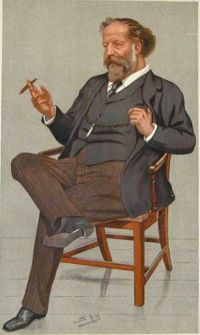 J. Comyns Carr,
Some eminent Victorians: Personal recollections in the world of art and letters
(1908)
J. Comyns Carr,
Some eminent Victorians: Personal recollections in the world of art and letters
(1908)
“ He had the sense of the theatre, a genuine instinct for those moments in the conflict of character to which the proper resources of the theatre can grant both added force and added refinement. It is not an uncommon assumption, especially among writers of fiction, that the drama by comparison is an art of coarse fibre, incapable, by reason of its limitations, of presenting the more intimate realities of character, or the more{214} delicate shades of feeling. The truth is that each art has its own force, its own refinement, and cannot borrow them of another. ”
 William Archer,
Play-Making: A Manual of Craftsmanship
William Archer,
Play-Making: A Manual of Craftsmanship
“ We have yet to realize that, in truly great drama, the foreknowledge possessed by the audience is not a disadvantage with certain incidental mitigations and compensations, but is the source of the highest pleasure which the theatre is capable of affording us. In order to illustrate my meaning, I propose to analyse a particular scene, not, certainly, among the loftiest in dramatic literature, but particularly suited to my purpose, inasmuch as it is familiar to every one, and at the same time full of the essential qualities of drama. ”
George Pierce Baker, Dramatic Technique
“ The fact that the drama had had for centuries in England and elsewhere a fecund history before the novel as a form took shape at all would intimate that the drama is a different and independent art from that of the novel or the short story. When novelists and would-be playwrights recognize that it is, has been, and ought to be an independent art, we shall be spared many bad plays.It is undeniable that the novelist and the dramatist start with common elements—the story, the characters, and the dialogue. ”
 William Poel,
Shakespeare in the Theatre
William Poel,
Shakespeare in the Theatre
“ So long as the dramatists were not hampered by demands from the audience to have its social, political, or æsthetic fancies humoured, and from the actor to have his egotism flattered, the drama flourished as an art as well as a business. ”
 Edmund Gosse,
Questions at Issue
Edmund Gosse,
Questions at Issue
“ The modern interest in the drama, and the ever-growing desire to see literature once more wedded to the stage, will, it can hardly be doubted, lead to a revival of dramatic poetry. This will not, of course, have any relation to the feeble lycean plays of the hour—spectacular romances enshrined in ambling blank verse—but will, in its form and substance alike, offer entertainment to other organs than the eye. ”
 Sarah Margaret Fuller,
Papers on Literature and Art
(1846)
Sarah Margaret Fuller,
Papers on Literature and Art
(1846)
“ For ourselves, we believe the day of the regular drama to be past; and, though we recognize the need of some kind of spectacle and dramatic representation to be absolutely coincident with an animated state of the public mind, we have thought that the opera, ballet, pantomime and briefer, more elastic forms, like the vaudeville of the French theatre, or the proverb of the social party, would take the place of elaborate tragedy and comedy. ”
George Pierce Baker, Dramatic Technique
“ Surely so great a difference will affect the technique of his art. The novel, then, may be, and often is, highly personal; the best drama is impersonal.The theatre in which the play is presented also produces differences between the practice of the dramatist and that of the novelist. No matter how small the theatre or its stage, it cannot permit the intimacy of relation which exists between reader and book. ”
Jr. Horatio Alger, Life of Edwin Forrest, the American Tragedian…
“ Any one who so analyzes the Dramatic Art as to see what its basis, contents, and uses are, will be astonished to find what a deep and wide feature it is in human nature, and how extensive and important a part it plays in human life. The study of the great spectacle of human existence as a whole, from the point of view of the Stage, in the light of dramatic usages and imagery, imparts to it a keener, more diversified, more comprehensive interest and instructiveness than it can receive in any other way. ”
Clayton Meeker Hamilton, The Theory of the Theatre, and Other Principles of Dramatic Criticism
“ Likewise, on a larger scale, the layman habitually fails to distinguish between a mere theatric entertainment and a genuine drama. A genuine drama always reveals through its imagined struggle of contesting wills some eternal truth of human life, and illuminates some real phases of human character. But a theatric entertainment may present merely a deftly fabricated struggle between puppets, wherein the art of the actor is given momentary exercise. ”
Clayton Meeker Hamilton, The Theory of the Theatre, and Other Principles of Dramatic Criticism
“ Whether or not a play is literature depends not upon the medium of utterance the characters may use, but on whether or not the play sets forth a truthful view of some momentous theme; and whether or not a play is drama depends not upon its trappings and its suits, but on whether or not it sets forth a tense and vital struggle between individual human wills. ”
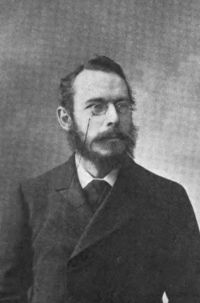 Brander Matthews,
A Book About the Theater
Brander Matthews,
A Book About the Theater
“ In fact, the more minutely the history of the stage is studied, the more clearly do we perceive that the beginnings of every form of the drama are strangely unpretentious, and that literary merit is attained only in the final stages of its development. Dramatic literature is but the ultimate evolution of that which in the beginning was only an insignificant and unimportant experiment in the show business; and it must always remain intimately related to the show business, even when it climbs to the lonely peaks of the poetic drama. ”
Clayton Meeker Hamilton, The Theory of the Theatre, and Other Principles of Dramatic Criticism
“ The primary purpose of a play is to give a gathered multitude a larger sense of life by evoking its emotions to a consciousness of terror and pity, laughter and love. Its purpose is not primarily to rouse the intellect to thought or call the will to action. In so far as the drama uplifts and edifies the audience, it does so, not by precept or by syllogism, but by emotional suggestion. ”
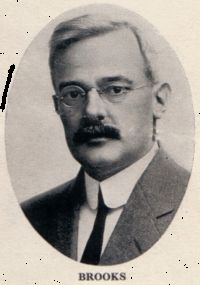 Stratton D. Brooks,
Composition-Rhetoric
Stratton D. Brooks,
Composition-Rhetoric
“ There is a form of sonnet called the Shakespearean which differs in its arrangement from the Italian sonnet.C. Dramatic poetry relates the occurrence of human events, and is designed to be spoken on the stage. If the drama has an unhappy ending, it is a tragedy. As is becoming in such a theme, the language is dignified and impressive, and the whole appeals to our deeper emotions. If the drama has a happy conclusion, it is a comedy. Here the movement is quicker, the language less dignified, and the effort is to make the whole light and amusing. ”
Various, Punch, or the London Charivari…
“ Then I re-read them, to judge of them not merely as dramas for the closet, but as dramas for the stage, written to be acted, not to be read; or, at all events, as far as the general public were concerned, to be acted first, and to be read afterwards. As acting dramas, it is difficult to conceive anything less practically dramatic. ”
Various, Blackwood's Edinburgh magazine…
“ I have said that many who, in a healthful condition of our stage, would be dramatists, become novelists. But there are some material distinctions between the dramatic art and the narrative—distinctions as great as those between the oratorical style and the literary. Theatrical effects displease in a novel. In a novel much more than in a drama must be explained and accounted for. ”
Giovanni Duprè, Thoughts on Art and Autobiographical Memoirs of Giovanni Duprè
“ If at the theatre you see a drama represented, and you feel impelled to judge within yourself whether this or that character is well played—whether the gestures, the expression of face, and the inflections of voice are such as properly belong to the character, and accord with the affections that move him, or the passions which agitate him—then hope. ”
 William Dean Howells,
A Psychological Counter-Current in Recent Fiction
William Dean Howells,
A Psychological Counter-Current in Recent Fiction
“ Too much of the drama in the book is theatre rather than drama, and yet the author's gift is essentially dramatic. He knows how to tell a story on his stage that holds you to the fall of the curtain, and makes you almost patient of the muted violins and the limelight of the closing scene. ”
Clayton Meeker Hamilton, The Theory of the Theatre, and Other Principles of Dramatic Criticism
“ In particular it must be noted that a play is not a story that is written to be read. By no means must the drama be considered primarily as a department of literature,—like the epic or the novel, for example. ”
George Pierce Baker, Dramatic Technique
“ From all this it follows that even material so emotional in its nature as to be genuinely dramatic may need careful reworking if it is to succeed as a play, that is, if it is to become properly theatric. Drama, then, is presentation 46 of an individual or group of individuals so as to move an audience to responsive emotion of the kind desired by the dramatist and to the amount required. This response must be gained under the conditions which a dramatist finds or develops in a theatre; that is, dramatic material must be made theatric in the right sense of the word before it can become drama. ”
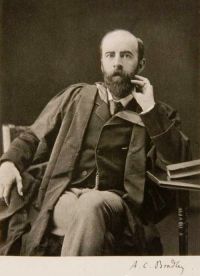 A. C. Bradley,
Oxford Lectures on Poetry
A. C. Bradley,
Oxford Lectures on Poetry
“ For a dramatist accordingly who is a dramatist and wishes to hold his audience by the play itself, it is an advantage to have as few scenes as may be. And so the absence of scenery in Shakespeare’s day, and its presence in ours, result in two totally different systems, not merely of theatrical effect, but of dramatic construction. ”
 William Congreve,
Incognita; Or, Love and Duty Reconcil'd
William Congreve,
Incognita; Or, Love and Duty Reconcil'd
“ Since all Traditions must indisputably give place to the Drama, and since there is no possibility of giving that life to the Writing or Repetition of a Story which it has in the Action, I resolved in another beauty to imitate Dramatick Writing, namely, in the Design, Contexture and Result of the Plot. ”
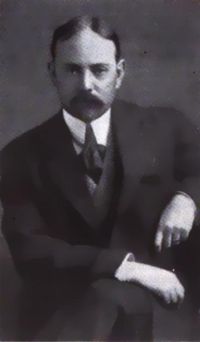 William Vaughn Moody,
The Faith Healer: A Play in Three Acts
William Vaughn Moody,
The Faith Healer: A Play in Three Acts
“ In the cold black and white of print and paper, without the accessories of the stage or the personality of actors to help illusion or enforce the story told, the real strength of the drama is most impressive. ”
Clayton Meeker Hamilton, The Theory of the Theatre, and Other Principles of Dramatic Criticism
“ Instead of working from the inside out, they work from the outside in. They gather up a haphazard handful of theatric situations and try to string them together into a story; they congregate an ill-assorted company of characters and try to achieve a play by letting them talk to each other. Many of our playwrights are endowed with a sense of situation; several of them have a gift for characterisation, or at least for caricature; and most of them can write easy and natural dialogue, especially in slang. ”
George Pierce Baker, Dramatic Technique
“ Except in our recent revival of Moralities for the delectation of moral Broadway, we are growing away dramatically from mere contrasting of types of character and from plays in which a serious and a comic plot are but loosely connected. Yet dramatists will always find contrast highly useful in emphasizing points of characterization and important values in the story. Moreover, any trained dramatist knows that when his audience has been somewhat exhausted by laughter 204 or tears, a scene of contrasting emotional value is of the highest importance. ”
 Bliss Perry,
A Study of Poetry
Bliss Perry,
A Study of Poetry
“ Here, in point of evolution, is the human basis of poetry, the foundation courses of the pyramid."2. Lyrical Element in DramaWe cannot here attempt to trace, even in outline, the course of this historic evolution of genres. But in contemporary types of both dramatic and narrative poetry, there may still be discovered the influence of lyric form and mood. We have already noted how the dramatist, for all of his supposed objectivity, cannot refrain from coloring certain persons and situations with the hues of his own fancy. ”
 David Hume,
An Enquiry Concerning the Principles of Morals
(1751)
David Hume,
An Enquiry Concerning the Principles of Morals
(1751)
“ Every Movement of the Theatre, by a skillful Poet, is communicated, as it were by Magic, to the Spectators, who weep, tremble, resent, rejoice, and are enflam'd with all the Variety of Passions, which actuate the several Personages of the Drama. ”
E. K. Chambers, The Mediaeval Stage, Volume 1… (1903)
“ But dialogue by itself is not drama. The notion of drama does not, perhaps, necessarily imply scenery on a regular stage, but it does imply impersonation and a distribution of rôles between at least two performers. ”
Richard Burton, How to See a Play
“ It is plain enough that under these conditions a performance of a play in the particulars of seeing and hearing must have been seriously limited in effect. To reach the audience must have meant an appeal that was broadly human, and essentially dramatic. Fine language was indispensable; and a language drama is exactly what the Elizabethan theater gives us. Compelling interest of story, skillful mouthing of splendid poetry, virile situations that contained the blood and thunder elements always dear to the heart of the groundlings, these the play of that period had to have to hold the audiences. ”
William Winter, Shadows of the Stage
“ For an audience able to look seriously at a serious subject, and not impatient of the foreground of gloom in which, necessarily, the story is enveloped at its beginning, this was a perfect work. The student of drama must go back many years to find a parallel to it, in interest of subject, in balance, in symmetry, and in sympathetic interpretation of character. ”
 August Wilhelm von Schlegel,
Lectures on Dramatic Art and Literature
August Wilhelm von Schlegel,
Lectures on Dramatic Art and Literature
“ A statistical writer of the theatre informs us, that for a number of years back the new productions in Tragedy and regular Comedy have been fewest, and that the melo-dramas have in number exceeded all the others put together. They do not mean by melo-drama, as we do, a drama in which the pauses are filled up by monologue with instrumental music, but where actions in any wise wonderful, adventurous, or even sensuous, are exhibited in emphatic prose with suitable decorations and dresses. ”
 Frank Hamilton Cushing,
Outlines of Zuñi Creation Myths
Frank Hamilton Cushing,
Outlines of Zuñi Creation Myths
“ And now I may add intelligibly that the drama of primitive man is performed in an equally dramaturgic spirit, whether seen, as in its merely culminating or final enactment, or unseen and often secret, as in its long-continued preparations. ”
 John Wilson Townsend,
Kentucky in American Letters, 1784-1912…
John Wilson Townsend,
Kentucky in American Letters, 1784-1912…
“ The dramas as a whole are audacious in plot and vigorous in characterization. In the handling of the blank verse, in the witty scenes of the sub-plots, in the splendor of the phrasing, in the strong undercurrent of reflection, and, above all, in their spiritual uplift and noble emotion, these dramas give evidence of a remarkably gifted playwright who not only possesses a deep feeling for art at its highest and best, but who also has command of all the varied resources of dramatic expression. ”
George Pierce Baker, Dramatic Technique
“ The Elizabethan drama put such a spell upon the imagination of English-speaking peoples that until recently the idea was accepted: “Five is dignity, with a trailing robe, whereas one, two, or three acts would be short skirts, and degrading.”1 Today a dramatist may plan for a play of three, four, or five acts, as seems to him best.Why, if no change of scene be required, is not a play of one long act desirable? At first sight, there would seem to be a gain in the unbroken movement. The power of sustained attention in audiences is, however, distinctly limited. ”
