“ Spending a few months at a day school, and a few more at a “floral drawing master,” then a few more at school at Margate, making drawings for sale, colouring prints, fruitlessly studying perspective, bandied about from school master to drawing master, and from drawing master to architect—such a life for a young mind from ten to fourteen years of age is enough to spoil the finest intellectual digestion. ”
Drawing master
Definition and stakes
The theme of “drawing master” has been addressed by authors such as Harold Speed, George Sheringham, John Rowland Fothergill and Joseph Gregory Horner, John Ruskin and Ernest Knaufft. It is often associated with terms like art, painting, artist, school and painter.
Quotes about “drawing master”
 William Blake,
Life of William Blake
(1880)
“ I defy any man to cut cleaner strokes than I do, or rougher, when I please; and assert, that he who thinks he can engrave or paint either, without being a master of drawing, is a fool. Painting is drawing on canvas, and engraving is drawing on copper, and nothing else. Drawing is execution and nothing else; and he who draws best must be the best artist. ”
Edward Armitage, Lectures on Painting, Delivered to the Students of the Royal Acadamy
“ Bad proportions and gross errors in drawing are nothing to him provided he gets a smooth, uniform surface. Like the old-fashioned provincial drawing-master, who taught oils, water-colors, and Poonah painting, smoothness and finish are with him synonymous terms. ”
 John Ruskin,
Arrows of the Chace, vol. 1/2
“ His art, kept thus to practical service, will always be right as far as it goes; there will be no affectation or shallowness in it. The work of the drawing-master would be at first little more than the exhibition of the best means and enforcement of the most perfect results in the collateral studies of form. ”
 Ralph Waldo Emerson,
Essays: First Series — Intellect
(1841)
“ It is a conversion of all nature into the rhetoric of thought, under the eye of judgment, with a strenuous exercise of choice. And yet the imaginative vocabulary seems to be spontaneous also. It does not flow from experience only or mainly, but from a richer source. Not by any conscious imitation of particular forms are the grand strokes of the painter executed, but by repairing to the fountain-head of all forms in his mind. Who is the first drawing-master? Without instruction we know very well the ideal of the human form. ”
Clara Erskine Clement Waters, Women in the Fine Arts — Women in the Fine Arts
“ As the Master and Student became more and more acquainted, and the great artist found in the student those kindred qualities which subsequently made her work so refined and beautiful,... he took the utmost care in developing her drawing—the fidelity of line and of expression, and the ever-pervading purity in her work. The sympathy with all good was reflected in the student, as it was ever present with the master, and only those who are acquainted with M. Merson can appreciate how fortunate it was for Art that the young artist was under a master of his character and temperament. ”
John Ruskin,
The Elements of Drawing, in Three Letters to Beginners
“ Now, I believe that (irrespective of differences in individual temper and character) the excellence of an artist, as such, depends wholly on refinement of perception, and that it is this, mainly, which a master or a school can teach; so that while powers of invention distinguish man from man, powers of perception distinguish school from school. All great schools enforce delicacy of drawing and subtlety of sight: and the only rule which I have, as yet, found to be without exception respecting art, is that all great art is delicate. ”
Harold Speed, The Practice and Science of Drawing
“ The qualities that give vitality and distinction to drawing must be appreciated by the student himself, and may often assert themselves in his drawing without his being aware that he is doing aught but honestly copying. And if he has trained himself thoroughly he will not find much difficulty when he is moved to vital expression. All the master can do is to stand by and encourage whenever he sees evidence of the real thing. ”
 Woodrow Wilson,
Princeton in the Nation's Service
(1896)
“ The child's crude drawing shares the primitive youth of the first hieroglyphics; but a little reading, a few lessons from some modern master, a little time in the old world's galleries set the lad forward a thousand years and more, make his drawing as old as art itself. ”
John Rowland Fothergill and Joseph Gregory Horner, 1911 Encyclopædia Britannica, Volume 8… (1911)
“ A beautiful drawing, however slight, is but the precipitate of the whole in the artist’s mind. And a highly finished drawing by a master does not show even any apparent selection or elimination. The adoption of the principle of selection to differentiate art from mechanical reproduction is fundamentally vicious, and could be shown to be wholly inapplicable to the so-called formative arts. ”
 Maria Edgeworth,
Practical Education, Volume II
“ We do not here speak of those few individuals who really excel in drawing, who have learnt something more than the common routine which is usually learnt from a drawing master, who have acquired an agreeable, talent, not for the mere purpose of [Pg 114] exhibiting themselves, but for the sake of the occupation it affords, and the pleasure it may give to their friends. We have the pleasure of knowing some who exactly answer to this description, and who must feel themselves distinct and honourable exceptions to these general observations. ”
Andrew Wynter, Once a Week (1860)
“ The reason why they have not hitherto challenged the men in the field of art is plain enough. They have never been trained. The young girls of the upper ten thousand are indeed taught drawing at finishing schools by some wretched drawing-master ”
 Elizabeth Robins Pennell,
The Life of James McNeill Whistler
“ At length, when the pupil has learned enough drawing to avoid the mistakes of the beginner, and to make it difficult for the master to detect his faults, he is put at painting, and the problem becomes twice as difficult for the student. ”
John Ruskin,
Arrows of the Chace, vol. 1/2
“ The power of drawing from a given form accurately would not be enough to prove this: the additional power of design, with that of eye for color, which could be tested in the class concerned with manufacture, would justify the master in advising and encouraging the youth to undertake special pursuit of art as an object of life. ”
Viscountess Marianne Margaret Compton Cust Alford, Needlework As Art
“ Even such facilities as are afforded by the acquirement of freehand drawing, as taught in our schools of art, are not to be despised. The workman should thoroughly master his tools, or they will hamper him. The first step towards design is that you should learn to draw. After this, appreciation and observation are necessary, and due balance in outline and colour should be studied; and all this is as much needed in [Pg 81] drawing a pattern as in composing a picture. The difference lies in our art being only decorative, wherein beauty and fitness are to be remembered, and nothing else ”
 Philip Gilbert Hamerton,
The Intellectual Life
“ Or in the pursuit of fine art, an amateur discouraged by the glaring unsoundness of the kind of art taught by ordinary drawing-masters, would find the basis of a more substantial superstructure on a narrower but firmer ground. Suppose that instead of the usual messes of bad color and bad form, the student produced work having some definite and not unattainable purpose, would there not be, here also, an assured economy of time? Accurate drawing is the basis of soundness in the fine arts, and an amateur, by perseverance, may reach accuracy in drawing ”
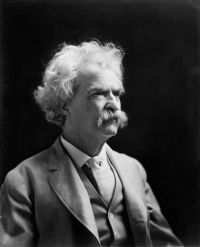 Mark Twain,
Moments with Mark Twain
“ Thus: bad drawing, bad proportions, bad perspective, indifference to truthful detail, color which gets its merit from time, and not from the artist—these things constitute the Old Master; conclusion, the Old Master was a bad painter, the Old Master was not an Old Master at all, but an Old Apprentice. ”
Arthur Thomas Malkin, The Gallery of Portraits: with Memoirs…
“ The excellency of this master consists in the correctness of his drawing, the character of his heads, and the pure idea his works convey of the simplicity and elegance of the originals they are taken from: and they may be considered as admirable drawings, not highly finished indeed, but sufficiently so to preserve the design and spirit of the masters from whom he worked.“That persons possessed of little judgment in the arts should not discover the merits of this engraver, cannot surprise us ”
Edward Armitage, Lectures on Painting, Delivered to the Students of the Royal Acadamy
“ The fact is, that an artist, to excel as a draughtsman, should consider himself a student all his life.The school of painting ought to be the school of drawing in color, and no student ought to be allowed to color a badly drawn figure or head. ”
Harold Speed, The Practice and Science of Drawing
“ And he will not understand the mental form stimulus that the direction and swing of a brush stroke can give. These and many things connected with expression can best be studied in line work.Let the student therefore begin on the principles adopted in most schools, with outline studies of simple casts or models, and gradually add light and shade. When he has acquired more proficiency he may approach drawing from the life. ”
Harold Speed, The Practice and Science of Drawing
“ Whether working with pen, pencil, chalk, or charcoal, they always created a convention within which unlimited expression has been possible.To sum up, academic drawing is all that can be really taught, and is as necessary to the painter as the practising of exercises is to the musician, that his powers of observation and execution may be trained. But the vital matter of art is not in all this necessary training. And this fact the student 79should always keep in mind, and be ever ready to give rein to those natural enthusiasms which, if he is an artist, he will find welling up within him. ”
Harold Speed, The Practice and Science of Drawing
“ In academic work, where artistic feeling is less important than the discipline of your faculties, you may, of course, do so, but even here as little as possible. In beautiful drawing of any facility it has a weakening effect, somewhat similar to that produced by a person stopping in the middle of a witty or brilliant remark to correct a word. If a wrong line is made, it is left in by the side of the right one in the drawing of many of the masters. But the great aim of the draughtsman should be to train himself to draw cleanly and fearlessly, hand and eye going together. ”
 Sarah Knowles Bolton,
Famous European Artists
“ Try to imagine how a Michael Angelo or a Raphael would have conducted themselves, and work yourself into a belief that your picture is to be seen and observed by them. Even enter into a kind of competition with these great masters; paint a subject like theirs; a companion to any work you think a model. Test your own work with the model.... Let your port-crayon be never out of your hands. Draw till you draw as mechanically as you write. But, on every opportunity, paint your studies instead of drawing them. Painting comprises both drawing and coloring. ”
Charles H. Ham, Mind and Hand: Manual Training the Chief Factor in Education (1900)
“ This is the æsthetic element in the art which appeals to and develops the student’s taste. It is an important feature of drawing, not less on this account than from the fact that the designer’s profession is a very lucrative one, but it is less important than object and constructive drawing, because less fundamental. Besides, object and constructive work in drawing come first in the order of development, and it is an inexorable rule of the new education to follow implicitly the hints of nature. ”
Various, Godey's Lady's Book, Vol. 48, January…
“ So far from looking upon a knowledge of the art of drawing as necessary merely to the artist or designer, we hold that it should form an essential part of general education; that its proper place is in the daily school; that its principles and practice should be inculcated in the daily lessons; in short, that equally with reading or writing, drawing should be deemed one of the branches of everyday tuition. ”
Charles H. Caffin, A Child's Guide to Pictures
“ Because to draw well is so important for any artist, and it is a thing that can be thoroughly taught and learned. The French school takes as its standard of excellence the perfect forms of classic sculpture and the great works of the Florentine artists. Although the student may be drawing from a living model whose form is not perfect, he is taught to correct the imperfections of this or that part, in order that the figure, as it appears in his drawing, may be as near as he can get it to classic perfection. ”
George Sheringham, Drawings in pen & pencil from Dürer's day to ours…
“ It would be wiser and better that the proprietors and governors of most of our art schools should say frankly—“we cannot teach drawing as the great draughtsmen were taught, we teach a fairly serviceable method of drawing which it must be clearly understood is intended to be painted over.” ”
Gerharda Hermina Marius, Dutch Art in the Nineteenth Century… (1908)
“ Yet all these different phases are the work of one man, spring from the temperament and the sense of colour of one artist, intelligent always, a fine and true painter in his first, a turbulent painter in his second period and, in all, a distinguished master of the technical side of his art, who has undoubtedly not yet shown us his last formula and is keeping many exquisite surprises in reserve for us. ”
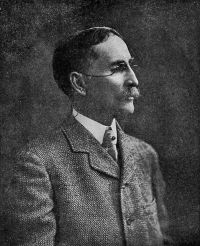 Birge Harrison,
Landscape Painting
(1909)
“ I then and there made up my mind that if it ever came my turn to instruct young students I should endeavor to teach them those things for which we painters of the older generation had to grope blindly for years, unaided and in the dark—things which are of equal value and importance in a picture with good drawing, good composition, and good color, but which, for some reason, have never been taught in the regular art schools. ”
Ernest Knaufft, Drawing for Printers
“ In these you will find the foundation of our teaching—that is, we do not say that a human face must be made by putting in a black line running obliquely from the nose to the lip, made with such or such a pen, such or such a crayon, ink, or charcoal, but we point out the line in nature, and say that because it is found in nature, artists put it in their drawings. When not found in a face, as that of a young person, then it is left out in a good artist’s drawing of a young face. ”
Harold Speed, The Practice and Science of Drawing
“ The drawings of many modern artists are full of attempts to express tone and colour effects, things entirely outside the true province of drawing. The small but infinitely important part of nature that pure drawing is capable of conveying has been neglected, and line work, until recently, went out of fashion in our schools. ”
Henry Blackburn, The Art of Illustration
“ It is not the fault of the masters in our schools of art that students are taught in most cases as if they were to become painters, when the only possible career for the majority is that of illustration, or design. The masters are, for the most part, well and worthily occupied in giving a good groundwork of knowledge to every student, as to drawing for the press. ”
Hinda M. Hands, Church Needlework: A manual of practical instruction
“ This is why I would strongly urge all who wish to enrich their embroideries with the human figure to practise drawing first. I would further suggest that the drawing should be chiefly from the antique, and the study altogether more with regard to typical than individual forms, as this training is not for the painting of ‘pictures,’ but for the sake of knowing what are the elements of human beauty and how they ought to be applied or modified. Neither am I including the study of design, which, as I have before remarked, is a study in itself. ”
F. Marion Crawford, Ave Roma Immortalis, Vol. 2
“ One chief part of their art lay in drawing and modelling, another in casting metals, another in chiselling, and they were certainly the draughtsmen of an age in which the art of drawing was practically lost among painters; and it was because they learned how to draw that so many of them became great painters when the originality of two or three men of genius had opened the way. ”
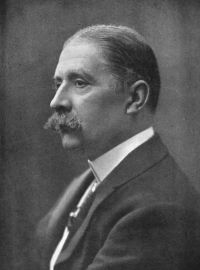 Sir Leslie Ward,
Forty years of 'Spy'
“ My aptitude and love for drawing were not encouraged at school at the request of my father, but I was always caricaturing the masters, and having the result confiscated. It was inevitable, living as I did in an atmosphere of art, loving the profession, and sitting to my parents, that I should grow more and more interested and more determined to become a painter myself, although strangely enough I never had a lesson from either my father or mother. ”
 Angela Brazil,
The Girls of St. Cyprian's: A Tale of School Life
“ She knew that the skill of her pupils was not equal to evolving the figures for themselves, but she considered that in this way they would gain a far better knowledge of the requirements of composition than by a mere slavish reproduction of a drawing intact. ”
Related terms
Authors who wrote about “drawing master”
Harold SpeedGeorge SheringhamJohn Rowland Fothergill and Joseph Gregory HornerJohn RuskinErnest KnaufftLeta S. Hollingworth Charles Donagh MaginnisHenry BlackburnSir Leslie WardDorothy FurnissA. Horsley HintonW. Cosmo MonkhouseEdward Armitage
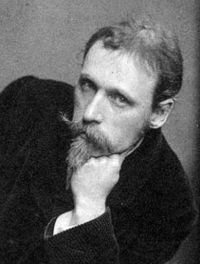 Walter Crane
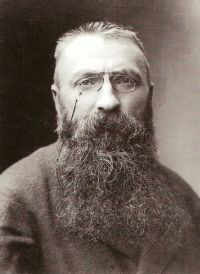 Auguste RodinFrederick WhitneyT. Martin WoodDaniel Burleigh Parkhurst
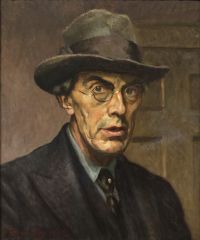 Roger Fry
 Leonardo da Vinci
John RuskinErnest KnaufftLeta S. HollingworthCharles Donagh MaginnisHenry BlackburnSir Leslie WardDorothy FurnissA. Horsley HintonW. Cosmo MonkhouseEdward ArmitageWalter CraneAuguste RodinFrederick WhitneyT. Martin WoodDaniel Burleigh ParkhurstRoger FryLeonardo da Vinci