
“ Meanwhile the poet’s rich, resonant voice filled the studio with an agreeable and rambling monotone:“Verse is a vehicle for expression; expression is a vehicle for verse; sound, in itself, is so subtly saturated with meaning that it requires nothing of added logic for its vindication. Sound, therefore, is sense, modified by the mysterious portent of tone. Thank you for understanding, thank you for a thought—very, very precious, a thought beautiful.” ”
Tonalism
Definition and stakes
Tonalism, the artistic focus on tone and color harmony to evoke emotion and meaning, connects sound, visual beauty, and poetic expression. Writers such as Robert W. Chambers emphasized tone's ability to infuse sound with "mysterious portent," while Blackwood's Magazine associated poetry's musicality with enhanced emotional depth.
John Fielder Porte linked music's "ideal significance" to spiritual richness, and De Witt H. Parker observed how color and sound communicate delicate emotions beyond words. This theme unites literature, music, and visual art, demonstrating how tonal subtleties shape human experience across various creative fields.
Quotes about “tonalism”
Various, Blackwood's Edinburgh Magazine…
“ Verse, then, is a language seized upon by the soul gratifying itself in the indulgence of its own emotions, under a law of beauty. Thus we have seen a power introduced into human discourse, by a cause that hardly promised such wonderful effects. A modulation of sounds, a musical rising, and falling, and flowing, fitted for expressing a fervour, a boldness, an enthusiasm in the thinking, suddenly transforms the whole character of composition, creates or infuses a new spirit of thought. A kind of literature is produced, of a peculiar, and that the highest order—Poetry. ”
Various, The Galaxy, June 1877
“ Of course it cuts me to the heart to show that my criticaster was thoroughly ignorant of the very meaning of the word that he used—a word which is the name of a principle of paramount importance and significance in the art of music, which, I believe, he in some sort professes. But the demands of truth are inexorable. Tonality is something which cannot be magnificent or splendid; nor can it be attributed to a composer as being in the slightest degree a claim to admiration. ”
Various, Graham's Magazine, Vol. XXX, No…
“ They evince refinement of thought and sentiment, richness and warmth of fancy, and singular delicacy and strength in the use of language. Perhaps the finest characteristic of their diction is the feeling they display of the harmony of sound and color, in the expression of thought and emotion. The music of the verse corresponds to the imagery which flushes through it, and thus the figures which the poet’s prolific fancy conjures up, are all endowed with life and motion—or rather seem to make the harmony in which they move. ”
Various, The Little Review, December 1914…
“ Latterly two voices have come to me, one affirming that I was right in my prejudice that all durable verse should have content as well as form, should have meaning as well as sound—though in closest union with the sound,—that, in short, the poet should be a thinker as well as a craftsman; an emotional thinker, of course, if that term be permitted, but not a mere clairaudient wielder of words. And then I heard a voice which bid me forget all that and list to Long breaths, in a green and yellow din. ”
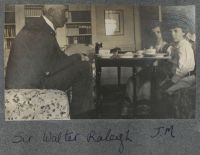 Sir Walter Alexander Raleigh,
Style
Sir Walter Alexander Raleigh,
Style
“ Of no less import is the power of melody which chooses, rejects, and orders words for the satisfaction that a cunningly varied return of sound can give to the ear. Some critics have amused themselves with the hope that here, in the laws and practices regulating the audible cadence of words, may be found the first principles of style, the form which fashions the matter, the apprenticeship to beauty which alone can make an art of truth. ”
“ The just notion and office of the modern song, as we think of it, is to be the embodiment and expression, in beauty, of some one of those sentiments or thoughts, gay, moral, pensive, joyous, or melancholy, which are as natural and appropriate, in particular circumstances, or to certain occasions, as the odor to the flower; rising at such seasons, into the minds of all classes of persons, instinctive and unbidden, yet in obedience to some law of association which it is the gift of the poet to apprehend. ”
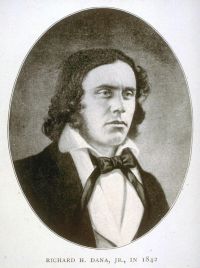 Richard Henry Dana,
To Cuba and Back
Richard Henry Dana,
To Cuba and Back
“ It was low, yet audible, composed, reverent: neither the familiar, which offends so often, nor the rhetorical, which always offends, but that unconscious sustained intonation, not of speech, but of music, which frequent devotions in company with others naturally call out; showing us that poetry and music, and not prose and speech, are the natural expressions of the deepest and highest emotions. ”
De Witt H. Parker, The Principles of Aesthetics
“ But when, as in art, contemplation, the filling of the mind with the object, is the aim, the power to move of the sensuous surface of things may come again into its rights.The emotional response to color, vague and abstract and objectless, is, like music, incapable of adequate expression in words, and for the same reason. Words are capable of expressing only the larger and fairly well-defined emotions; such subtle shadings and complex mixtures of feeling as are conveyed by color and sound are mostly beyond their ken. ”
John Fielder Porte, Edward MacDowell: A Great American Tone Poet…
“ To hear and enjoy music seems sufficient to many persons, and an investigation as to the causes of this enjoyment seems to them superfluous. And yet, unless the public comes into closer touch with the tone poet than the objective state which accepts with the ears what is intended for the spirit, which hears the sounds and is deaf to their import, unless the public can separate the physical pleasure of music from its ideal significance, our art, in my opinion, cannot stand on a sound basis. ”
 Helen Stuart Campbell,
Anne Bradstreet and her time
(1891)
Helen Stuart Campbell,
Anne Bradstreet and her time
(1891)
“ The power of words fitly set has made itself known, and a word has come to be judged like a note in music—as a potential element of harmony—a sound that in its own place may mean any emotion of joy or sorrow, hate or love. ”
Mrs. George Sheldon Downs, Redeemed
“ They were, in truth, beautiful poems in color, to feast the eye, elevate and refine the thought—"songs without words," to make glad and uplift all who were able to appreciate in any degree the divinity of art. ”
Alfred M. Williams, Studies in Folk-Song and Popular Poetry
“ Of their absolute genuineness there can be no question. They have all the internal evidence in their construction and language, the simplicity and abruptness of thought, the imperfection of utterance combined with untaught eloquence and strength, the occasional vulgarity by the side of an equally great delicacy, the simple and powerful melody, and all the characteristics of popular poetry, which are as unmistakable as the perfumes of the flowers of the field. ”
 Georg Wilhelm Friedrich Hegel,
The Philosophy of Fine Art, volume 3…
Georg Wilhelm Friedrich Hegel,
The Philosophy of Fine Art, volume 3…
“ This triple mode of seizing on reality offers art the well-known division into first, the plastic arts, which elaborate their content for vision in the external form and colour of objects, secondly, in the art of sound, music, and thirdly, into poetry, which as the art of speech uses tone merely as a symbol, in order, by means of it, to address itself directly to what is ideal in the contemplation, emotion, and imagination of our spiritual life. ”
Various, The Catholic World, Vol. 01, April to September…
“ Is there not more of that reverence and that relish which constitute the classical taste to be derived from the concentration of thought and feelings which the perusal of the simple unmarred and unoverlaid text produces; when you can ponder on a verse, can linger over a word, can repeat mentally and even orally with your own deliberation and your own emphasis, whenever dignity, beauty, or wisdom invite you to pause, or compel you to ruminate? ”
Alfred M. Williams, Studies in Folk-Song and Popular Poetry
“ But in spite of this discredit, which was more of a personal literary quarrel than a critical attack upon the quality of the poetry itself, its value was at once instinctively recognized as a new and original revelation, as an appeal to sensibilities in human nature which had been stifled by the narrow and dry reasoning of English and Continental poetry at the time, and as a breath from the wide air of nature itself. ”
Oscar W. Firkins, From Florence Coates to Amy Lowell… (1916)
“ Be this as it may, she is modern to excess in her free verse and her polyphony, in her fearlessness in theme and diction, and in the curious theory and practice which reduces the world to a set of pigments and makes the passions and interests of mankind a footnote or postscript to the silvering of a cloud or the curve of an eyelash. ”
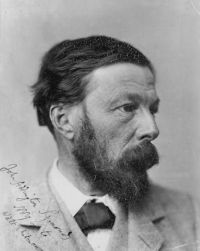 John Addington Symonds,
Sketches and Studies in Italy and Greece…
John Addington Symonds,
Sketches and Studies in Italy and Greece…
“ How can we answer these questions except by supposing that music was for him the utterance through art of some emotion? The final fact of human nature is emotion, crystallising itself in thought and language, externalising itself in action and art. ”
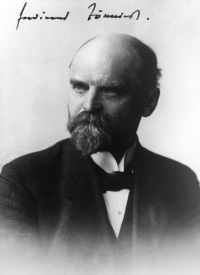 Ferdinand Tönnies,
Philosophical Terminology — I.
Ferdinand Tönnies,
Philosophical Terminology — I.
“ It is a part of the art of the orator, to awaken and to maintain by the right application, emphasis and accentuation of such words, the “mood” which prepares his hearers to accept his thoughts and to follow his counsels. 46. Artistic and poetic language is essentially allied to religious and all ceremonial speech. It, too, gets its original power and validity from the popular belief for which that is real and true which endures as image and simile in poetic language. Credulous imagination fills the world with living active spirits ”
Alfred M. Williams, Studies in Folk-Song and Popular Poetry
“ But in such a struggle the voice of the people could not fail to find expression by the means which the history of mankind has shown to be the most natural expression of emotion and enthusiasm, and their songs, however imperfect, either as literature or popular poetry, are the most genuine expression of the feelings and thoughts which filled their hearts and minds, and have a genuineness which informs the rude or inadequate words, and are a most important illustration of the history of that tremendous conflict. ”
Jane Campbell, Florence Earle Coates (1895)
“ There remain, however, poetic springs deep in human consciousness; and though thought and sentiment may be intelligently expressed in prose, it is the welding of thought to rhythm, the union of the pleasures of intellect and of sense which appeal most strongly to our perception of the beautiful. ”
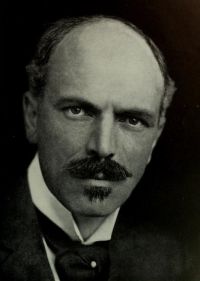 Maurice Hewlett,
Last Essays of Maurice Hewlett
Maurice Hewlett,
Last Essays of Maurice Hewlett
“ If you were an Epic poet, you invoked the Muse and stated the theme in which you desired her assistance; if you wrote prose narrative, you began with “Once upon a time,” or “There was a man,” and went on from there. You began, in fact, at the beginning; but if you were romantically inclined you contrived somehow to insinuate a hint of colour and what the artists call atmosphere. Whichever you were, poet or prosateur, like a musician, you had a prelude, and gave it as much work as it was capable of bearing, and sometimes rather more than it could bear. ”
De Witt H. Parker, The Principles of Aesthetics
“ The meaning of words would permit the poet to bring before the mind all possible objects, events, and ideas, but the music of words would be incongruous with most of them. Events narrated must be stirring, thoughts uttered must be emotionally toned, things described must be related to human life and action. Poetry may desert the royal themes of long ago—arma virumque cano, maenin aeide thea—and relate the lowly life of common folk, even the sordid life of the poor and miserable, but when doing so throws over it the musical glamour of verse and arouses the heat of sympathy and passion. ”
James Davies, Hesiod, and Theognis (1873)
“ And while the language of the Muses thus defines the poet's aim, when awakened from a rude shepherd-life to the devout service of inspired song, it implies, rather than asserts, a censure of the kinds of poetry which admit of an easier and freer range of fancy. ”
Edmund J. Myer, The Renaissance of the Vocal Art
“ The truth in tone, or the idealized tone, is beautiful and soulful, and demands for its production and use all the forces that Nature has given to the singer,—physical, mental, and emotional or spirituelle. Unmusical, muscular tone is not the true tone. It contains much that it should not have on the physical side, and lacks much that it should have on the spirituelle. As a rule, it means nothing; in fact, it is often simply a noise. The idealized tone always represents a thought, an idea, an emotion; it is the expression of the inner—the higher—man; it is, in reality, self-expression. ”
Alfred M. Williams, Studies in Folk-Song and Popular Poetry
“ It derives its power from the magic melody as much as from the feeling or the intelligible sense of the words, and its effect is indefinable by any law of the understanding. In its highest estate it combines the most penetrating feeling with not only perfect but magic melody, but it sometimes comes in a wild refrain, in which the meaning merely floats in the words, and the rhythm, the accent, the song itself, so to speak, is predominant. ”
De Witt H. Parker, The Principles of Aesthetics
“ Self-expression that does not attain to objectivity is incomplete as art. Even music and lyric poetry are something more than mere feeling. In all genuine art, experience takes on permanence and form—a synthesis, a total meaning, supervenes within the flux of impressions and ideas and moods, not excluding, but embracing and controlling them. ”
Various, The Catholic World, Vol. 20, October 1874‐March 1875
“ Is it not evident that a new order of ideas, a new social element, and a novel spirit, were introduced in music by the fact alone of the creation of a tonality, and that dissonance, modulation, transition, the leading or sensible note, the impassioned accent (mark the words) , were but the material clothing, the means, the outward expression, thanks to which this new principle—namely, the moi humain—which had already, so to speak, broken through the upper strata of thought, made for itself a vent by means of the art of music? ”
Louis Spohr, Louis Spohr's Autobiography
“ From this it is evident, that this intonation is natural to the human ear, if it is not accustomed from early youth to the attemperated system of tones. These nature-singers would sound as false to our tone-scale, [Pg 241] as we to theirs. But it is nevertheless specially remarkable, and almost disquieting, that in order to attain our present richness of harmony, we have been obliged to deviate from the Tone-scale given to us by nature. ”
Stuart Sherman, John Masefield (October 2016)
“ Here in the interpretation through the medium of an alien tongue of the music and ideals of one poet by another, we have that transformation which is the object but too often the despair of translation. ”
De Witt H. Parker, The Principles of Aesthetics
“ Yet, as I have tried to show, when meaning is made central, sound may fit it closely, and when the meaning is emotional, the music of sound may echo its cry, and the image, instead of rebelling, may serve. Emotional thought is the essence of poetry and the link between its music and its pictures. ”
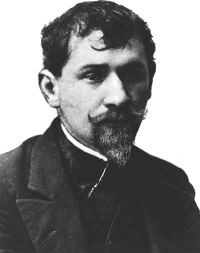 Stanisław Przybyszewski,
Anthology of Modern Slavonic Literature in Prose and Verse
(1919)
Stanisław Przybyszewski,
Anthology of Modern Slavonic Literature in Prose and Verse
(1919)
“ With the loss of its sound value, the word has by no means lost its emotional value, but this has become deposited, has, so to speak, separated itself from the word, and has created in music its own form of being, independent from the word. ”
Georg Wilhelm Friedrich Hegel,
The Philosophy of Fine Art, volume 3…
“ In poetry, as we have found already in our general differentiation of the several arts, tone is not as such elicited and artistically produced by various humanly constructed instruments, but the articulate sound of the human organ of speech is reduced to the mere symbol of speech, retaining thereby nothing more than the value of a sign of ideas, which is by itself devoid of significance. ”
Hutcheson Macaulay Posnett, Comparative Literature (1886)
“ Sever such relations between sound and idea by the separate consideration of each in scientific analysis, and you reach the inartistic or analytic conception of prose as the proper instrument of reflection and totally unconnected with poetic form—you Aristotelise your prose; and poetry, so far as it depends on the harmony of sound and idea, vanishes before a "philosophic" contempt which would ridicule or deny altogether the subtle relations of sound and idea in the languages of social groups. ”
 Francis William Lauderdale Adams,
Essays in Modernity: Criticisms and Dialogues
(1899)
Francis William Lauderdale Adams,
Essays in Modernity: Criticisms and Dialogues
(1899)
“ Such are the verses 'In Memory of Barry Cornwall,' 'Inferiæ,' 'A Ballad of François Villon,' 'Song,' 'Choriambics,' 'At Parting,' and the 'Dedication.' But even in these the old complaint has to be made of want of artistic self-restraint, want of the sense of perfect parts in a perfect whole. There is scarcely a poem in the book from which some lovely or splendid snatch of song cannot be taken, but the nucleus inspiration is so often lost in a side-play of colour, scent, and sound. ”
De Witt H. Parker, The Principles of Aesthetics
“ Although each tone, as separate and individual, possesses its own feeling in its own right, the tonal effects are immensely accentuated by contrast with one another,—the high against the low, the poor against the rich, the loud against the soft—and through the summation, by means of repetition, of the influences of many tones of like character; the full meaning of music depends upon the relations of tones, especially the temporal relations. ”
