Electromagnetic oscillation

Definition and stakes

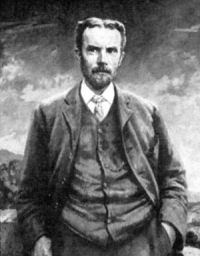
Portrait of James Clerk Maxwell James Clerk Maxwell,  A Dynamical Theory of the Electromagnetic Field (1865)

“ The general equations are next applied to the case of a magnetic disturbance propagated through a non-conductive field, and it is shown that the only disturbances which can be so propagated are those which are transverse to the direction of propagation, and that the velocity of propagation is the velocity v, found from experiments such as those of Weber, which expresses the number of electrostatic units of electricity which are contained in one electromagnetic unit. ”
Source: Wikisource

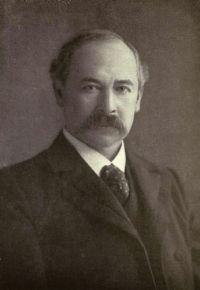
Portrait of Edward Salisbury Dana Edward Salisbury Dana,  A century of science in America (1918)

“ The last-named investigators increased the size of the oscillator until it was possible to measure the frequency by photographing the spark in the secondary with a rotating mirror. The positions of nodes and loops were obtained by means of a bolometer after the secondary had been tuned to resonance with the vibrator. The velocity thus found for electromagnetic waves along wires is within one-tenth of one percent of the accepted value of the velocity of light. ”
Source: Gutenberg

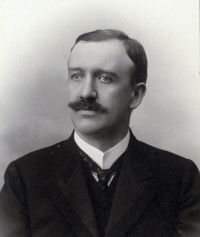
Paul Langevin,  The Evolution of Space and Time

“ Except for this very special case, it is easy to see that the electromagnetic conception requires a major overhaul of the notion of world. The equations of electromagnetism imply, in their usual form, that an electromagnetic disturbance, e.g. a light wave, propagates in vacuum with the same velocity in all directions, equal to three hundred thousand kilometers per second. ”
Source: Wikisource

Get perspective with Kwize: daily news enlightened by great literature