Oscillator

Definition and stakes

Max Planck,  Eight Lectures on Theoretical Physics… (1915)

“ In accordance with the theory of Maxwell, the energy of vibration of the oscillator by no means remains constant in general, but an oscillator by virtue of its vibrations sends out spherical waves in all directions into the surrounding field and, in accordance with the principle of conservation of energy, if no actions from without are exerted upon the oscillator, there must necessarily be a loss in the energy of vibration and, therefore, a damping of the amplitude of vibration is involved. ”
Source: Wikisource

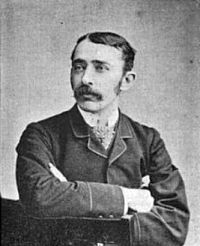
Portrait of Edward Salisbury Dana Edward Salisbury Dana,  A century of science in America (1918)

“ These oscillators are supposed to act quite normally in every respect except emission; here the radiation demanded by the electrodynamic equations is cast aside, and an oscillator is supposed to emit at once all its energy after it has accumulated an amount equal to some integral multiple of hν. A form of the theory which does not contain this improbable contradiction of the firmly established facts of electrodynamics introduces the quantum into the specification 383of the energy of vibration which is permitted to each oscillator. ”
Source: Gutenberg

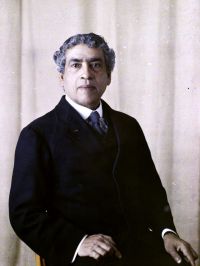
Portrait of Henri Poincaré Henri Poincaré,  The Foundations of Science: Science and Hypothesis…

“ The analysis of the facts permits us to be still more precise. Imagine, for example, a Hertzian oscillator, like those used in wireless telegraphy; it sends out energy in every direction; but we can provide it with a parabolic mirror, as Hertz did with his smallest oscillators, so as to send all the energy produced in a single direction. ”
Source: Gutenberg

Get perspective with Kwize: daily news enlightened by great literature