End (ethics)

Definition and stakes

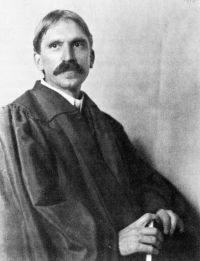
Portrait of John Dewey John Dewey,  Outlines of a Critical Theory of Ethics

“ The moral end, the acting from regard [92] for law as law, is presented to each individual by himself, entirely apart from his relations to others. That he has such relations may, indeed, furnish additional material to which the law must be applied, but is something to which the character of the law is wholly indifferent. The end is not in itself a social end, and it is a mere accident if in any case social considerations have to be taken into account. It is of the very quality of the end that it appeals to the individual as an isolated individual. ”
Source: Gutenberg

Durant Drake,  Problems of Conduct: An Introductory Survey of Ethics

“ It is strictly true that THE end, human welfare, justifies any means necessary to attain it. Whatever pain must be caused to bring about the greatest possible human happiness is thereby exempt from reprobation. Whatever conduct is necessary for that supreme end BECOMES morality, or virtue; for that is precisely what morality IS. For example, it is undoubtedly necessary at times to murder, to steal, and to lie for the sake of human welfare ”
Source: Gutenberg

Joseph Rickaby,  Moral Philosophy: Ethics, Deontology and Natural Law

“ A free act is an act which so proceeds from the will that under the same antecedent conditions it might have not proceeded.
An act may be more or less voluntary, and more or less free.
5. Moral Philosophy is divided into Ethics, Deontology, and Natural Law. Ethics consider human acts in their bearing on human happiness; or, what is the same thing, in their agreement or disagreement with man's rational nature, and their making for or against his last end. Deontology is the study of moral obligation, or the fixing of what logicians call the comprehension of the idea I ought.
”
Source: Gutenberg

Get perspective with Kwize: daily news enlightened by great literature