Extrinsic evidence

Definition and stakes

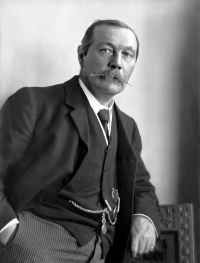
Portrait of G. E. Moore G. E. Moore,  Philosophical Studies

“ New evidence may be discovered or men may learn to make a better use of evidence already in existence. But is it certain that this will always happen? Is it certain that every question, about which historians have doubted, will some day be able to be settled by verification of one or the other hypothesis? Surely the probability is that in the case of an immense number of events, with regard to which we should like to know whether they happened or not, it never will be possible for any man to verify either the one hypothesis or the other. ”
Source: Gutenberg

Benj. N. Martin,  Choice Specimens of American Literature…

“ After all the evidence is collected from every quarter, then it is the proper business of the understanding or judgment to compare and balance evidence, and to form a decisive opinion or belief, according to apparent truth. We have no more right to judge without evidence than we have to judge contrary to evidence; and we have no more right to doubt without, or contrary to, evidence, than we have to believe without, or contrary to, evidence. We have no right to keep ourselves in a state of doubt or uncertainty, when we have sufficient evidence to come to a decision. ”
Source: Gutenberg

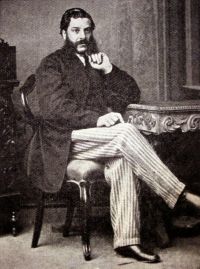
Portrait of B. L. Farjeon B. L. Farjeon,  Samuel Boyd of Catchpole Square…

“ The piecing together of the loose bits of evidence which we hunt up, a bit here, a bit there, arguing upon it, drawing conclusions from it, rejecting what will not fit, filling up the empty spaces, until we present the whole case without a crack in it for a guilty man to slip through--that is what we call circumstantial evidence, and it is really a science, doctor. ”
Source: Gutenberg

Get perspective with Kwize: daily news enlightened by great literature