“ When the butterfly plunges its long tube into the flower—when the fly intoxicates itself with a drop of syrup, using its proboscis to pump it up—and when the flea thrusts its rostrulum into our flesh, and quaffs our life-blood as though it were nectar,—let us not forget the mouth is the organ employed in each of these cases, varied and altered in form though it certainly be. ”
Flesh fly
Definition and stakes
The theme of “flesh fly” has been addressed by authors such as Howard Williams, Philip Schaff, John Calvin, Virginia Woolf and Various. It is often associated with terms like insect, system, lung, respiration and animal.
Quotes about “flesh fly”
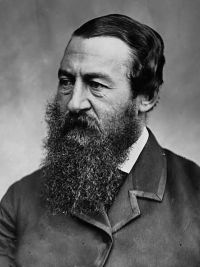 Sir Samuel White Baker,
The Nile Tributaries of Abyssinia…
“ When this fly attacks an animal, or man, it pierces the skin instantaneously, like the prick of a red-hot needle driven deep into the flesh, at the same time the insect exerts every muscle of its body by buzzing with its wings as it buries the instrument to its greatest depth. ”
 Jean-Henri Fabre,
The Life of the Fly; With Which are Interspersed Some Chapters of Autobiography
“ Any flesh of one of the higher animals suits the fly's family. Will it be the same if the food supplied be of a lower organism and consist of fish, for instance, of frog, mollusk, insect, centipede? Will the worms accept these viands and, above all, can they manage to liquefy them, which is the first and foremost condition? I serve a piece of raw whiting. The flesh is white, delicate, partly translucent, easy for our stomachs to digest and no less suited to the grub's dissolvent. It turns into an opalescent fluid, which runs like water. ”
Anonymous, The Senses and the Mind
“ We cannot for a moment doubt that insects smell; that ants and bees are greatly directed by this sense in their search after food; that carrion-loving beetles are thereby guided from a distance to their repast; that the flesh-fly is led to putrescent animal substances; and we know that the flesh-fly is sometimes deceived by the smell of certain plants emitting a cadaverous odour, and deposits her eggs upon them, the larvæ perishing for want of proper food. ”
 James Joyce,
A Portrait of the Artist as a Young Man
(1916)
“ Our flesh shrinks from what it dreads and responds to the stimulus of what it desires by a purely reflex action of the nervous system. Our eyelid closes before we are aware that the fly is about to enter our eye. ”
Jean Louis Armand de Quatrefages de Bréau, Popular Science Monthly (1873)
“ In proportion as the animal grows, this organ is filled with a liquid which, in passing through the spinners, the orifice of which you see, dries in the air, and forms a thread. This thread constitutes the silk. The nervous system of the animal, placed below the digestive tube is with insects, as with all animals, of the highest importance. It is the nervous system which seems to animate all the other organs, and particularly the muscles. The latter are what we call flesh or meat. They are in reality the organs of movement, with our caterpillar as with man himself. ”
 Philip Schaff,
Nicene and Post-Nicene Fathers…
(1885)
“ For it is found chiefly in flowers, not to speak of blood and countless things almost the same as blood in flesh or coming from it, and yet you cannot feed on flowers. And even if you were to eat flesh, you would certainly not take with your gruel the scales of fish, or some worms and flies, though these all shine with a light of their own in the dark. ”
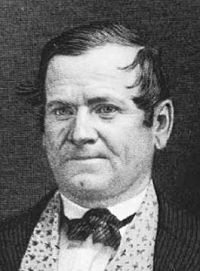 Orson Hyde,
Latter Day Saints' Messenger and Advocate…
“ A sort of flies shall go forth among the people, and bite them, and cause worms to come in their flesh, and their flesh shall fall from their bones; and their eyes shall fall out of their sockets; and they shall desire to die ”
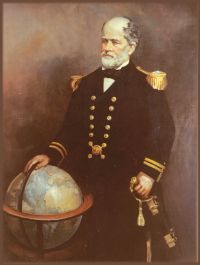 Matthew Fontaine Maury,
M F Maury address - Philodemic Society
(1846)
“ Every moment millions and millions of pounds of this exhausted matter are cast into the air. From the lungs and organs of respiration of each one of you here present, there are thrown off nearly 1000 lbs. per annum of what to each has been flesh and blood. Imagine, then, the quantity from the whole animal kingdom, including every living creature, from the smallest insect up to lordly man ”
Frederic Colby Lucas, A Guide for the Study of Animals
“ Notice the division of the body into three regions: head, thorax, and abdomen. The six legs, the large wings, and the small feelers may be easily found, as are the large eyes, the extensible mouth, and beneath the larger wings the small undeveloped ones looking like tiny knobs. State the general color of your specimen and give any special markings on its body. Is the body smooth or has it a covering of any kind? Do you regard the fly as a cleanly animal? Why? Under what conditions does the fly use its legs? its wings? What enables it to walk upside down? ”
 Sabine Baring-Gould,
Yorkshire Oddities, Incidents and Strange Events
(1900)
“ Nature has here inverted her own order, and turned the convex inwards, while nobler organs, obedient to her will, maintain life by the gentle exercise of their wonted functions in a lower region. If the integument of the bowels can be called flesh, it is the only flesh on the body ”
 Andrew Dickson White,
The Warfare of Science
“ If we have all, men and monkeys, women and baboons, oysters and eagles, all 'developed' from an original monad and germ, then St. Paul's grand deliverance—'All flesh is not the same flesh. There is one kind of flesh of men, another of beasts, another of fishes, and another of birds. ”
John Anderson, The course of creation (1851)
“ Fishes, birds, quadrupeds, all manifest a divergence from each other in the first action of the respirating organs—in the nervous system—and in all the apparatus connected with the movements of the heart and blood-vessels. There is no structural interchange, in the minutest part, that distinguishes the orders of the perfect animal in any of the antecedent fœtal conditions ”
Edward Wilson Landor, The Bushman — Life in a New Country
“ Now I could not conceive how creatures with long sharp claws, though provided with flexible wrists or joints, should be able to take up the newly produced little lump of inanimate flesh, and thrust a long, soft, yielding nipple down into the depths of the stomach. ”
Various, Poets of John Company (1921)
“ Let thine own flesh my maw refresh, Weighed down against the bird." He carved the flesh from off his side. And threw it in the scale. While women's cries smote on the skies With loud lament and wail. ”
John M. Tyler, The Whence and the Whither of Man
“ But in the highest worms we are beginning to see signs that muscles are predominating in the body; and we feel that, while mutually helpful, the digestive system exists for the muscles, and these latter are becoming the aim of development. From worms upward there is a marked advance in physical activity and strength. The muscles thicken and are arranged in heavier bands. Skeleton and locomotive appendages and jaws follow in insects and vertebrates. The direct battle of animal against animal, and of strength opposed to strength or activity, becomes ever sharper. ”
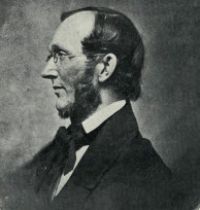 Francis Bowen,
A Theory of Creation: A Review of 'Vestiges of the Natural History of Creation'
“ In the insect tribe, the respiratory function, instead of being performed by one set of lungs for the whole body, is carried on through a series of minute and highly ramified tubes, which traverse every part of the body, and open to the air by a great number of orifices. ”
 Aristotle,
On the Vital Principle
(1855)
“ The flesh is the muscular substance, and as it envelopes, so to say, the body, it was probably supposed to be the seat or cause of the sense, as every part is sensible to Touch; and the analogue of flesh is the colourless substance of the Insanguinea insects, &c [2] And there is a close analogy between the two substances, “as the muscles of the highest class of animals, during their development pass through the soft, colourless, homogeneous and gelatinous condition of the Invertebrata, before assuming the red colour. ”
 Oscar Wilde,
Ballad of Reading Gaol
(1898)
“ And all the while the burning lime Eats flesh and bone away, It eats the brittle bone by night, And the soft flesh by the day, It eats the flesh and bones by turns, But it eats the heart alway. ”
Various, Blackwood's Edinburgh Magazine…
“ But there is this difference between the action of the earth and that of a living creature, that while the exerted limb marks its bones and tendons through the flesh, the excited earth casts off the flesh altogether, and its bones come out from beneath. ”
Anthony Carlisle, Philosophical Transactions of the Royal Society (1805)
“ It is worthy of remark that a confined air, and a confined respiration, ever precede these phenomena: the animal retires from the open atmosphere, his mouth and nostrils are brought into contact with his chest, and enveloped in fur; the limbs become rigid, but the blood never coagulates during the dormant state. On being roused, the animal yawns, the respirations are fluttering, the heart acts slowly and irregularly, he begins to stretch out his limbs, and proceeds in quest of food. ”
 Ida Pfeiffer,
A Woman's Journey Round the World
“ The moment a person feels an itching in these parts he must immediately look at the place; if he sees a small black point surrounded by a small white ring, the former is the flea, and the latter the eggs which it has laid in the flesh. ”
 Virginia Woolf,
Mrs. Dalloway
(1925)
“ Scientifically speaking, the flesh was melted off the world. His body was macerated until only the nerve fibres were left. It was spread like a veil upon a rock. ”
Ernest G. Martin, Physiology: The Science of the Body
“ Animals that are flesh eaters are not considered fit for food, except in the case of fish and birds, and the flesh that these eat is not commonly thought of as being such, since it consists mostly of the flesh of insects, frogs, and fish themselves. ”
Edwin Tenney Brewster, Natural Wonders
“ In place of lungs, insects have breathing holes like a leaf. We human beings, and our four-footed cousins, all backboned animals in fact, do not manage in any of these ways. We breathe the air into our lungs. There, instead of dissolving it in the watery part of the blood, we turn it over to the red corpuscles, which are especially made to do this very thing and do it particularly well. These minute, coin-like corpuscles carry the air all over the body, and deliver it over to the cells as they need it. ”
Anthony Florian Madinger Willich, Domestic Encyclopædia (1802)
“ Through these concave bones, the air communicates with the lungs, that are grown together with the back and the ribs; being connected with different cellular webs, which serve as reservoirs of air.—The flesh of birds also resembles that of the mammillary tribe ”
George W. Hunter, A Civic Biology, Presented in Problems
“ The one-celled animal responds to the presence of food, to heat, to oxygen, to other conditions in its surroundings. An earthworm is repelled by light, is attracted by food. All animals, including man, are put in touch with their surroundings by what we call the organs of sensation. The senses of man, besides those we commonly know as those of sight, hearing, taste, smell, and touch, are those of temperature, pressure, and pain. It is obvious that such organs, if they are to be of use to an animal, must be at the outside of the body. ”
 Alvin Davison,
Health Lessons, Book 1
“ All animals must breathe. If our breath is shut [Pg 102] off only four or five minutes, death results. In the earthworm the oxygen goes right through the skin into the blood. Bugs and flies have several little openings along the sides of the body which lead into tubes branching throughout the body to carry air. ”
 Knut Hamsun,
Growth of the Soil
“ But as for that they're no more so than the flies. How it may be with flies, I can't say, if they get the gout, or feel giddy, or what. But never hit out at a fly, for 'twill only make him worse—remember that, boys! ”
 H. G. Wells,
Text Book of Biology, Part 1: Vertebrata
“ For instance, when the foot of a frog, or the hand of a soundly sleeping person, is tickled very gently, the limb is moved away from the irritation, without any mental action, and entirely without will being exercised. And when we go from light into darkness, the pupil of the eye enlarges, without any direct consciousness of the change of its shape on our part. Similarly, the presence or food in the pharynx initiates a series of movements-- swallowing, the digestive movements, and so on-- which in health are entirely beyond our mental scope. ”
 James Duncan,
The Naturalist's Library
(1840)
“ Thirdly, the nervous system may exercise a certain influence upon the production of the light; for as it is the chief agent of all the voluntary actions of the body, it will also necessarily exercise an influence upon the voluntary suppression of the light, if the insect stop this influence by checking respiration in the way in which it causes the nerve to act upon the muscle in muscular motion. ”
George Adams, Essays on the Microscope
“ From the extreme transparency of its skin, the internal parts may be seen to greater advantage than in any other insect; as, the various ramifications of the veins and arteries, in which a kind of regular pulsation may be observed, as well as the peristaltic motion of the intestines, which is continued from the stomach to the tail. When the louse feeds, the blood rushes like a torrent into the stomach, moving with so strong a propulsion and contraction, as appears very curious. ”
 G. T. Bettany,
Life of Charles Darwin
“ Animals live on other animals or on plants. Here were plants living on animals, and keeping down their number. Moreover, without a nervous system, the action of the parts of a sun-dew leaf was proved to be as apparently purposive as the combined action of the limbs of an animal. Without a stomach, the sun-dew poured forth a digestive fluid as effective in extracting and fitting the nutritious matter of the insect for its own purposes as that of an animal. ”
Sir Kenneth James Beatty, Human Leopards
“ The more important persons present named in turn the particular piece of flesh they wanted, and the remainder of the body was divided among those of lesser importance. A fire was lighted, over which a certain quantity of flesh was cooked, but a number of the members appeared to have vied with each other in seeing what quantity of raw flesh they could eat. ”
 Catharine Esther Beecher,
American Woman's Home: Or, Principles of Domestic Science…
“ Gradually the busy little cells arrange themselves to build up heart, lungs, brain, stomach, and limbs, for which the yelk and white furnish nutriment. There is a small bag of air fastened to one end inside of the shell; and when the animal is complete, this air is taken into its lungs, life begins, and out walks little chick, all its powers prepared, and ready to run, eat, and enjoy existence. ”
Samuel Christian Schmucker, The Meaning of Evolution
“ Now a pumping motion of the abdomen will be apparent, and this continues its accordion-like action until it becomes more and more distended. The insect only gives up its task when the entire abdomen is swollen into a great red ball of blood. ”
 William Henry Hudson,
British birds
(1921)
“ There is, of course, the essential resemblance that is shown between all animals that have definite organs which are set apart for respiration: the feathery gills of the marine worms, the closely set branchiæ of the fish, the lungs of the bird and of the mammal, are all constructed upon one plan, so far as essentials are concerned. ”
 Herbert Spencer,
Essays on Education and Kindred Subjects
“ To this class of cases, in which involuntary motions are accompanied by sensations, has to be added another class of cases, in which involuntary motions are unaccompanied by sensations:—instance the pulsations of the heart; the contractions of the stomach during digestion. Further, the great mass of seemingly-voluntary acts in such creatures as insects, worms, molluscs, are considered by physiologists to be as purely automatic as is the dilatation or closure of the iris under variations in quantity of light ”
 William Whewell,
History of scientific ideas
(1858)
“ The heart and the organs of the circulation are a sort of center for the vegetative functions, as the brain and the trunk of the nervous system are for the animal functions. Now we see these two systems descend in the scale, and disappear the one with the other. In the lowest animals, when there are no longer any distinct nerves, there are also no longer distinct fibres, and the organs of digestion are simply hollowed out in the homogeneous mass of the body. The muscular system disappears even before the nervous, in insects ”
 C. Lloyd Morgan,
Animal Life and Intelligence
“ The countenance pales, the lips tremble, the pupils of the eyes become dilated, and there is an uncomfortable sensation about the roots of the hair. The bowels are often strongly affected, the heart palpitates, respiration labours, the secretions of the glands are deranged, the mouth becomes dry, and a cold sweat bursts from the skin. The muscles cease to obey the will, and the limbs will scarcely support the weight of the body. ”
 Thomas Henry Huxley,
Life and Letters of Thomas Henry Huxley…
“ I have had an affection of the muscles of one side of my body, the proper name of which I do not know, but the similitude thereof is a bird of prey periodically digging in his claws and stopping your breath in a playful way. ”
Related terms
Authors who wrote about “flesh fly”
 Howard WilliamsPhilip Schaff
 John CalvinVirginia WoolfVariousSir Samuel White BakerAnonymousJames JoyceMatthew Fontaine MauryFrederic Colby LucasJean-Henri FabreAndrew Dickson WhiteSabine Baring-GouldAristotleEdward Wilson LandorOscar WildeIda PfeifferErnest G. MartinJean Louis Armand de Quatrefages de BréauOrson Hyde
