Fossilization

Definition and stakes

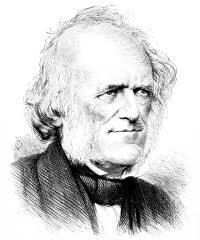
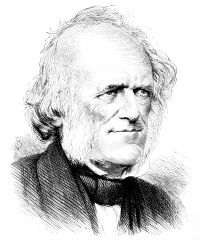
Portrait of Nathaniel Southgate Shaler Nathaniel Southgate Shaler,  Outlines of the Earth's History…

“ In all cases the fossilization of any form depends upon the accumulation of sediment before the processes of destruction have overtaken them, and among these processes we must give the first place to the creatures which subsist on shells, bones, or other substances of like nature which find their way to the ocean floor. In the absolute darkness, the still water, and the exceeding cold of the deeper seas, animals find difficult conditions for development. ”
Source: Gutenberg

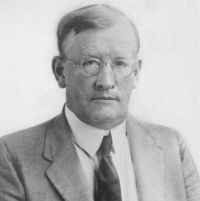
William J. Miller,  Geology: The Science of the Earth's Crust

“ Organic remains, dating as far back as tens of millions of years, have been preserved in the rocks of the earth in various ways. A very common kind of fossilization is the preservation of only the hard parts of organisms. Thus the soft parts have disappeared by decomposition, while the hard parts, such as bones, shells, etc., remain. In many cases practically complete skeletons of large and small animals which lived millions of years ago have been found intact in the rocks. Fossils which show none of the original material, but only the shape or form, are also very abundant. ”
Source: Gutenberg

Portrait of A. S. Packard A. S. Packard,  Lamarck, the Founder of Evolution…

“ After describing the mode of formation of minerals, including agates, flint, geodes, etc., he discusses the process of fossilization by molecular changes, silicious particles replacing the vegetable or animal matter, as in the case of fossil wood.
While, then, the products of animals such as corals and molluscs are limestones, those of vegetables are humus and clay; and all of these deposits losing their less fixed principles pass into a silicious condition, and end by being reduced to quartz, which is the earthy element in its purest form.
”
Source: Gutenberg

Get perspective with Kwize: daily news enlightened by great literature