Benjamin Franklin,
Silence Dogood, No. 8
(1722)
Benjamin Franklin,
Silence Dogood, No. 8
(1722)
“ 'Without Freedom of Thought, there can be no such Thing as Wisdom; and no such Thing as publick Liberty, without Freedom of Speech; ”
Freedom of thought, the individual's right to hold or consider ideas independently of others, underpins many liberties, including expression and faith. Authors like Benjamin Franklin linked it to wisdom and public liberty, while Albert Camus framed it as essential to personal independence.
John Stuart Mill emphasized its role in promoting intellectual diversity, and John Dewey connected it to wider struggles for social and political emancipation. The concept, grounded in philosophical and legal traditions, remains a cornerstone of human rights, as seen in international agreements and national charters, illustrating its lasting importance as both a fundamental freedom and a driver of societal advancement.
Benjamin Franklin,
Silence Dogood, No. 8
(1722)
“ 'Without Freedom of Thought, there can be no such Thing as Wisdom; and no such Thing as publick Liberty, without Freedom of Speech; ”
Émile Armand, On Sexual Liberty (1916)
“ Considered instead, from the particular point of view, ceasing to be an abstraction, and becoming a way, a means, liberty is understood. It is thus that we call for the freedom of thought, which is to say the power, without external hindrance, to express thoughts in speech or in writing, in the manner in which they present themselves in the mind. It is thus the integral expression of the thought which is the goal pursued, and not liberty. ”
 Ambrose Bierce,
The Letters of Ambrose Bierce, With a Memoir by George Sterling
Ambrose Bierce,
The Letters of Ambrose Bierce, With a Memoir by George Sterling
“ It is not freedom of act—not freedom of living, for which I contend, but freedom of thought, of mind, of spirit; the freedom to see in the horrible laws, prejudices, custom, conventionalities of the multitude, something good for them, but of no value to you in your art. ”
 Alfred H. Lloyd,
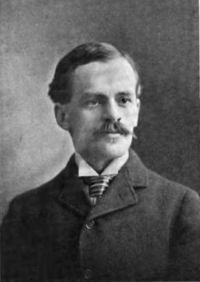
The will to doubt
Alfred H. Lloyd,
The will to doubt
“ As to the first of these, the freedom of thought, mind by being relieved from all danger of any arbitrary interference from the physical world, has at once the conscious right of independent procedure and the positive assurance of its thinking, thus free and independent, being quite practical or applicable; for plainly the freedom is in, not from, the material world. ”
 John Dewey,
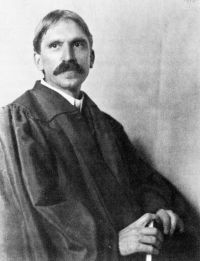
Human Nature and Conduct: An introduction to social psychology
John Dewey,
Human Nature and Conduct: An introduction to social psychology
“ The significance of the traditional discussion of free will is that it reflects precisely a separation of moral activity from nature and the public life of men.One has to turn from moral theories to the general human struggle for political, economic and religious liberty, for freedom of thought, speech, assemblage and creed, to find significant reality in the conception of freedom of will. Then one finds himself out of the stiflingly close atmosphere of an inner consciousness and in the open-air world. ”
 Albert Camus,
The Myth of Sisyphus
(1942)
Albert Camus,
The Myth of Sisyphus
(1942)
“ The only conception of freedom I can have is that of the prisoner or the individual in the midst of the State. The only one I know is freedom of thought and action. ”
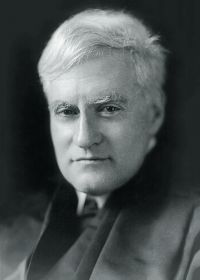 Benjamin N. Cardozo,
Palko v. Connecticut — Opinion of the Court
Benjamin N. Cardozo,
Palko v. Connecticut — Opinion of the Court
“ This is true, for illustration, of freedom of thought and speech. Of that freedom one may say that it is the matrix, the indispensable condition, of nearly every other form of freedom. ”
 John Stuart Mill,
On Liberty
(1869)
John Stuart Mill,
On Liberty
(1869)
“ This, then, is the appropriate region of human liberty. It comprises, first, the inward domain of consciousness; demanding liberty of conscience, in the most comprehensive sense; liberty of thought and feeling; absolute freedom of opinion and sentiment on all subjects, practical or speculative, scientific, moral, or theological. The liberty of expressing and publishing opinions may seem to fall under a different principle, since it belongs to that part of the conduct of an individual which concerns other people ”
Josef Donat, The Freedom of Science
“ The regrettable conception of truth proper to the modern freedom of thought, leads to that flippancy with which our time is prone to treat the highest questions. Why conscientiousness and anxious care? ”
 Bertrand Russell,
Free thought and official propaganda
Bertrand Russell,
Free thought and official propaganda
“ We are faced with the paradoxical fact that education has become one of the chief obstacles to intelligence and freedom of thought. ”
Irwin Edman, Human Traits and their Social Significance
“ Throughout history there has been a long struggle for freedom of thought and discussion, and there have been great landmarks in the degree with which freedom was attained, and the fields wherein it was permitted. ”
Josef Donat, The Freedom of Science
“ This is modern freedom, a hybrid of freedom and bondage, of sophistry and contradiction, of arrogance and barrenness of thought, which will exert its rule over the minds as long as they are guided by half-thinking. ”
 Georg Wilhelm Friedrich Hegel,
Hegel's Philosophy of Mind
Georg Wilhelm Friedrich Hegel,
Hegel's Philosophy of Mind
“ The essential freedom of will is, and must always be, a thought: hence the way by which will can make itself objective mind is to rise to be a thinking will,—to give itself the content which it can only have as it thinks itself.True liberty, in the shape of moral life, consists in the will finding its purpose in a universal content, not in subjective or selfish interests. ”
 Friedrich Schiller,
Aesthetical Essays of Friedrich Schiller
Friedrich Schiller,
Aesthetical Essays of Friedrich Schiller
“ Just this want of connection, this anarchy, in the phenomena, making them useless to the understanding, is what makes them valuable to reason. The more they are disorderly the more they represent the freedom of nature. In a sense, if you suppress all connection, you have independence. Thus, under the idea of liberty, reason brings back to unity of thought that which the understanding could not bring to unity of notion. It thus shows its superiority over the understanding, as a faculty subject to the conditions of a sensuous order. ”
John Stuart Mill,
Autobiography
“ I looked forward, through the present age of loud disputes but generally weak convictions, to a future which shall unite the best qualities of the critical with the best qualities of the organic periods; unchecked liberty of thought, unbounded freedom of individual action in all modes not hurtful to others ”
 Boris Sidis,
The Source and Aim of Human Progress…
(1919)
Boris Sidis,
The Source and Aim of Human Progress…
(1919)
“ The freedom of the seemingly false opinion and our tolerance of it and our willingness to meet with it in the open help test the validity of truth while keeping alive the critical sense which is the main spring of all advancement of human thought and is the vital point, the very soul, of all human progress. ”
Georg Wilhelm Friedrich Hegel,
The Philosophy of Fine Art, volume 1…
“ But over and above this, on closer inspection, we find that it is universally the rational—that is to say ethical relations in practical life, truth in thought—which constitutes the content of freedom. ”
 Thomas Hill Green,
Lectures on the Principles of Political Obligation
Thomas Hill Green,
Lectures on the Principles of Political Obligation
“ The exercise, manifestation, expression of this consciousness through a freedom secured in the way described is necessary to its real existence, just as language of some sort is necessary to the real existence of thought, and bodily movement to that of the soul. ”
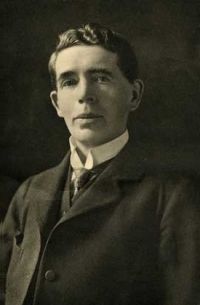 J. B. Bury,
A History of Freedom of Thought
(1913)
J. B. Bury,
A History of Freedom of Thought
(1913)
“ The truth is that, in examining principles, the word just is misleading. All the virtues are based on experience, physiological or social, and justice is no exception. Just designates a class of rules or principles of which the social utility has been found by experience to be paramount and which are recognized to be so important as to override all considerations of immediate expediency. ”
 F. H. Bradley,
Ethical Studies — Essay V.
(1876)
F. H. Bradley,
Ethical Studies — Essay V.
(1876)
“ He sees instincts are better and stronger than so-called ‘principles.’ He sees in the hour of need what are called ‘rights’ laughed at, ‘freedom,’ the liberty to do what one pleases, trampled on, the claims of the individual trodden under foot, and theories burst like cobwebs. ”
 Charles Kingsley,
Town Geology
Charles Kingsley,
Town Geology
“ The art of seeing, the art of knowing what you see; the art of comparing, of perceiving true likenesses and true differences, and so of classifying and arranging what you see: the art of connecting facts together in your own mind in chains of cause and effect, and that accurately, patiently, calmly, without prejudice, vanity, or temper—this is what is wanted for true freedom of mind. But accuracy, patience, freedom from prejudice, carelessness for all except the truth, whatever the truth may be—are not these the virtues of a truly free spirit? ”
Henry Herbert Williams, 1911 Encyclopædia Britannica (1911)
“ But can it be maintained that the same truth holds good of our consciousness of freedom? Is it possible to hold that determinist arguments are of so convincing a character as to enable us to perceive at the moment of action the untrustworthy nature of our consciousness that we are free to choose between alternatives and to grasp beneath the appearance the underlying necessity which rules our wills? Our actual consciousness of freedom is not seriously disputed. ”
 Johann Gottlieb Fichte,
Sun-Clear Statement — First Conversation
(1868)
Johann Gottlieb Fichte,
Sun-Clear Statement — First Conversation
(1868)
“ The absolute freedom arbitrarily to give a determined direction to your mind, and keep it in that direction, is an essential condition, not only of philosophical, but even of healthy common thinking. But in the hope that you will, at least during our present investigation, keep these foreign images away from your mind, and resist that blind operation of an association of ideas, I will drop this doubtful point of sensuous representation, and solely make use of your confession concerning the freedom of argument. ”
Louise Manly, Southern Literature From 1579-1895
“ That form which we have substituted, restores the free right to the unbounded exercise of reason and freedom of opinion. All eyes are opened, or opening, to the rights of man. The general spread of the light of science has already laid open to every view the palpable truth, that the mass of mankind has not been born with saddles on their backs, nor a favored few booted and spurred, ready to ride them legitimately, by the grace of God. ”
 Ralph Waldo Emerson,
Natural history of intellect, and other papers
(1893)
Ralph Waldo Emerson,
Natural history of intellect, and other papers
(1893)
“ The revelation of thought takes us out of servitude into freedom. ”
 Carl Schurz,
Speeches, correspondence and political papers of Carl Schurz
(1913)
Carl Schurz,
Speeches, correspondence and political papers of Carl Schurz
(1913)
“ We have not yet seen how a free people exercises its freedom. We have not seen in real life the practical application of the principles which we preach. Here all is spread before our gaze in a vast tableau. ”
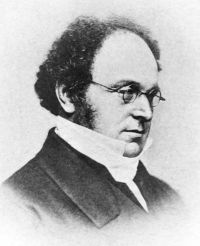 Augustus De Morgan,
A Budget of Paradoxes — 1864
(1872)
Augustus De Morgan,
A Budget of Paradoxes — 1864
(1872)
“ If there be anything I hate more than another it is the proposal to place any persons, especially those who allow freedom to me, under any abridgment of their liberty to think, to infer, and to publish. ”
Robert Chenault Givler, The ethics of Hercules (1924)
“ Our freedom is not complete, it is in the making.... The process by which freedom is won is the process of enlightenment. It is the truth that sets men free, the clear perception of moral relations and moral laws, the understanding of human nature and its true needs. ”
Johann Gottlieb Fichte,
On the Nature of the Scholar — Lecture III.…
“ Whatever may now dwell within him,—or, more strictly speaking, whatever he might have acquired in the course of his progressive culture,—he is unable to explain clearly either to himself or others, or to make it the deliberate rule of his actions and thus realize it in the world. He wants the two necessary elements of the true life of the Idea,—clearness and freedom. ”
Johann Gottlieb Fichte,
The Vocation of the Scholar — Lecture II. The Vocation of Man in Society
(1794)
“ We now inquire, How can we distinguish a phenomenon in our experience produced by necessity, from a phenomenon produced by freedom? I can by no means be immediately conscious of a freedom which exists out of myself, I cannot even be conscious of a freedom which exists within myself, that is, of my own freedom; for essential freedom is the first condition of consciousness, and hence cannot lie within its sphere of observation. ”
John Henry Muirhead, 1911 Encyclopædia Britannica (1911)
“ To the older idealism as to the new the essence of mind or spirit is freedom. But the guarantee of freedom is to be sought for not in the denial of law, but in the whole nature of mind and its relation to the structure of experience. ”
 Walter Pater,
Marius the Epicurean — Volume 1
Walter Pater,
Marius the Epicurean — Volume 1
“ Liberty of soul, freedom from all partial and misrepresentative doctrine which does but relieve one element in our experience at the cost of another, freedom from all embarrassment alike of regret for the past and of calculation on the future: this would be but preliminary to the real business of education—insight, insight through culture, into all that the present moment holds in trust for us, as we stand so briefly in its presence. ”
Johann Gottlieb Fichte,
A Criticism of Philosophical Systems
“ In one word, they are a knowledge which we can get only from ourselves. Everything depends upon this, that by the constant use of freedom, with clear consciousness of this freedom, we should become thoroughly conscious and enamored of this our freedom. ”
Giovanni Gentile, The Reform of Education
“ But on the other hand, every one of us has to admit that the experience of life has confirmed the belief in our freedom which for a moment had been shaken by doubt and perplexity; and that faith, instinctive and incoercible, outlives every time the onslaughts of negation.By liberty we mean that power peculiar to man by which he moulds himself into his actual being and originates the series of facts in which every one of his actions becomes manifest. ”
The German Classics of the Nineteenth and Twentieth Centuries…
“ This inner focus, this simple region of the claims of subjective freedom, the home of volition, resolution, and action, the abstract sphere of conscience—that which comprises the responsibility and moral value of the individual—remains untouched and is quite shut out from the noisy din of the world's history—including not merely external and temporal changes but also those entailed by the absolute necessity inseparable from the realization of the idea of freedom itself. ”
Walter Pater,
Miscellaneous Studies; a series of essays
“ In all education we assume, in some inexplicable combination, at once the freedom and the necessity of the subject of it. And who on a survey of life from outside would willingly lose the dramatic contrasts, the alternating interests, for which the opposed ideas of freedom and necessity are our respective points of view? ”
 Robert Green Ingersoll,
The Ghosts, and Other Lectures
Robert Green Ingersoll,
The Ghosts, and Other Lectures
“ Standing in the presence of the Unknown, all have the same right to think, and all are equally interested in the great questions of origin and destiny. All I claim, all I plead for, is liberty thought and expression. ”
Chautauqua Institution, The Chautauquan, Vol. 05, April 1885
“ Where there is conscious freedom, not only to act as he wills, but to will obedience to the dictates of conscience, character is possible. The freedom spoken of, and without which there can be no obligation or responsibility, is, of course, human freedom. ”
M. Valentine, Theoretical Ethics
“ And thus, not only the untutored consciousness, but one trained to the sharpest and deepest self-inspection, will be found a full witness to free-will as a capacity of alternative choice. (2) The implications of the natural constitution of the world. Mankind are in fact framed into and held under the principle of freedom. The whole system of which man forms a part answers to the testimony of consciousness. ”
 James Frederick Ferrier,
An Introduction to the Philosophy of Consciousness
(1883)
James Frederick Ferrier,
An Introduction to the Philosophy of Consciousness
(1883)
“ Thus, then, we have now shown in what way a correct conception of human liberty is to be framed; or, in other words, we have pointed out the grounds upon which man's freedom is possible. It is possible, because the particular act described as identical and convertible with it, namely, an act of determinate antagonism against the natural or unconscious man, can, at any rate, be conceived. But admitting that it may be conceived, we must now ask, Is it also practised? Is Human Liberty actual as well as possible? ”
 Raymond E. Banks,
Ticket to the Stars
Raymond E. Banks,
Ticket to the Stars
“ If you liked some idea—freedom, equal rights, the dignity of man, there was always some person or some institution around that spoiled it. You were always striving for some perfection and yet you knew you could never reach it. ”
Leander Ker, The Responsibilities of the American Youth (1850)
“ The first essential for the preservation and extension of liberty is universal and increasing intelligence, in perfect freedom of mind and conscience. But the most essential requisite for the preservation of these is the universal diffusion of virtue. ”
“ To regard the course of the world as the development of some blind force which works on according to universal laws, devoid of insight and [82] freedom, devoid of interest in good and evil, are we to consider this unjustifiable generalisation of a concept, valid in its own sphere, as the higher truth? ”
Leonard E. Read, Essays on Liberty (1959)
“ For, if one is aware that these know-hows will naturally, yes, automatically, arrange themselves into creative and productive patterns in response to human necessity and demand—that is, in the absence of governmental or any other coercive master-minding—then one will possess an absolutely essential ingredient for freedom: a faith in free men. ”
 Joseph Dietzgen,
The Positive Outcome of Philosophy
Joseph Dietzgen,
The Positive Outcome of Philosophy
“ And we must grant to an individual the theoretical freedom which cannot be taken from it in practice, we must admit that it is as free now as it has ever been, that laws must be adapted to the needs of the social individual and not to the vague, unreal, and impossible abstractions, such as justice or morality. What is justice? The embodiment of all that is considered right, an individual conception, which assumes different forms in different persons. ”
Robert Green Ingersoll,
The Ghosts, and Other Lectures
“ By physical liberty I mean the right to do anything which does not interfere with the happiness of another. By intellectual liberty I mean the right to think right and the right to think wrong. Thought is the means by which we endeavor to arrive at truth. If we know the truth already, we need not think. ”
Johann Gottlieb FichteHenry Herbert WilliamsThomas Hill GreenAlbert CamusGiovanni GentileWalter Charles MurrayJosef Donat Theodore Parker
 Irvah Lester Winter
 Immanuel KantAlfred H. Lloyd
 Swami Vivekananda
 Albert Taylor BledsoeRobert Green IngersollRalph Waldo EmersonBertrand RussellJohn Stuart Mill
 Thomas Jefferson
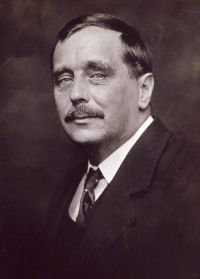 H. G. Wells
 Fyodor Dostoyevsky